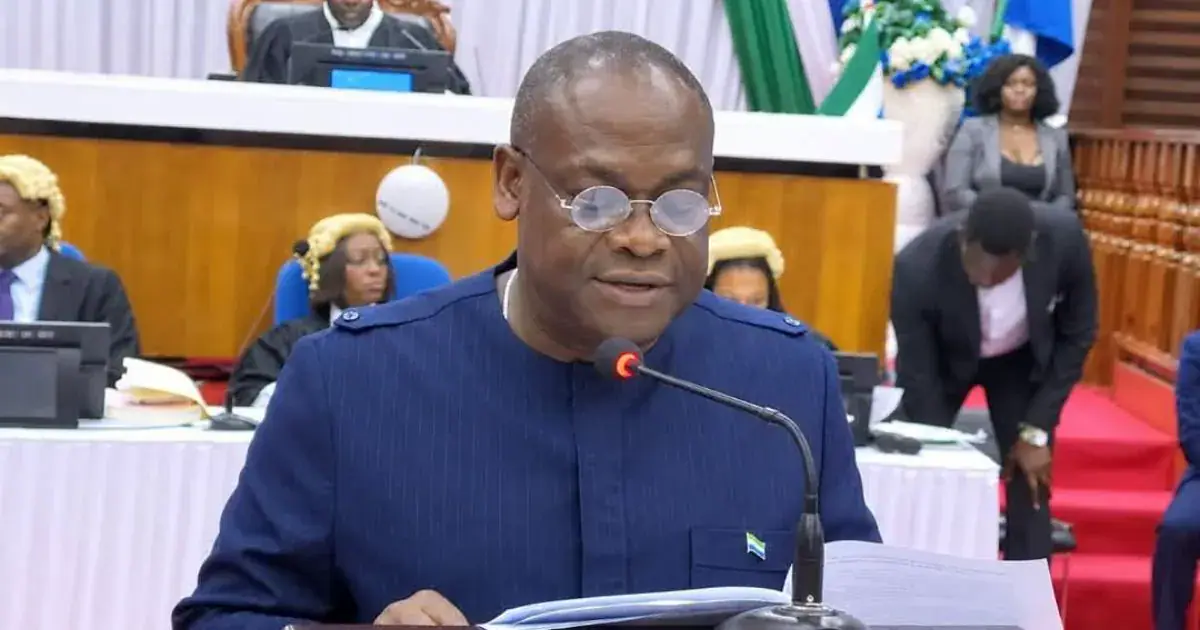
The Parliament of Sierra Leone has passed the Finance Bill 2027 with amendments following an extensive debate among members from both the ruling Sierra Leone People's Party (SLPP) and opposition All People's Congress (APC). The bill was debated and passed on Thursday, November 26, 2026. It seeks to provide the legal framework for the government's revenue and taxation proposals for the 2027 financial year.
Finance Minister Karefa Ansumana Francis Kargbo presented the bill for its second reading, stating it was designed to give legal effect to the government's proposed revenue and taxation measures. The proposals include amendments to the Income Tax Act, 2000, and the Customs Act, 2011. The bill also aims to improve monitoring of tax exemptions, introduce an annual poll tax, and implement electronic tax administration and performance-based incentives for revenue-generating Ministries, Departments and Agencies (MDAs).
The Minister said the reforms were necessary to close revenue loopholes, strengthen local industries, and reduce the country's dependence on external borrowing. Chairman of Parliament's Finance Committee, Hon. Keikura C. Vandi, welcomed the bill, describing it as important to strengthening Sierra Leone's fiscal position. However, he raised concerns over revenue shortfalls recorded by the National Revenue Authority (NRA) during the first half of 2026.
Deputy Speaker Hon. Ibrahim Tawa Conteh raised concerns about customs clearance procedures and the proposed financial requirements for clearing and forwarding agents. He argued that importers and clearing agents should not be penalized for delays beyond their control. Conteh also called for a review of duty-free concessions granted through MDAs and stronger parliamentary scrutiny of investment agreements.
Opposition Deputy Leader II, Hon. Aaron Koroma, called for a comprehensive review of tax waivers and concessions, arguing that excessive exemptions were depriving the country of much-needed revenue. Hon. Mustapha Sellu of Moyamba District questioned whether the government had consulted Paramount Chiefs, Local Government Councils, and the Ministry of Local Government before proposing increases in local taxes.
The debate also highlighted concerns about tax compliance, customs brokerage requirements, port congestion, and the taxation of online businesses. Deputy Leader of Government Business, Hon. Bashiru Sidikie, called for stronger financial scrutiny of agreements presented to Parliament for ratification. Acting Leader of the Opposition, Hon. Daniel Brima Koroma, called for firm action against companies defaulting on their tax obligations.
The Finance Bill 2027 was passed with amendments after contributions from members across the political divide. Leader of Government Business, Hon. Mathew Sahr Nyuma, defended the proposed reforms, saying they were necessary to address longstanding weaknesses in domestic revenue mobilization. The bill aims to address the country's financing gap of about NLe2.9 billion and promote fair competition and accountability within government institutions.
Key points
- The Finance Bill 2027 aims to provide a legal framework for the government's revenue and taxation proposals for the 2027 financial year.