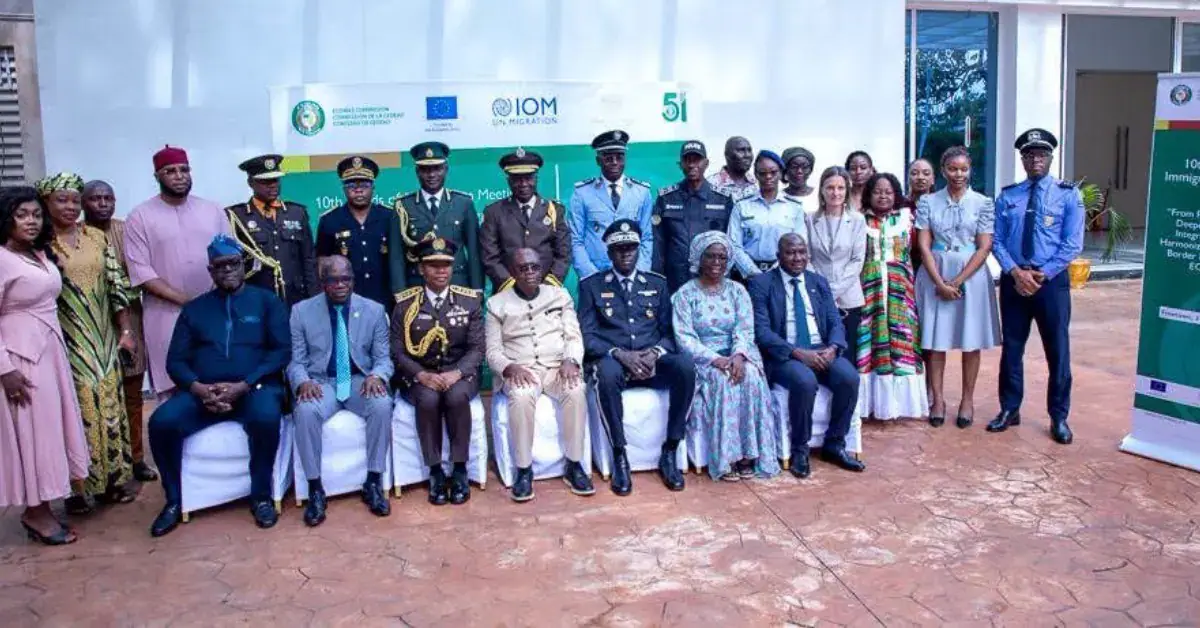
Sierra Leone recently hosted the 10th Annual ECOWAS Heads of Immigration Meeting, bringing together immigration chiefs and stakeholders from across West Africa. The two-day meeting, held at the Bintumani Conference Centre in Freetown, focused on deepening regional integration through harmonized migration and border management. The theme of the meeting, “From Policy to Practice: Deepening Regional Integration through Harmonized Migration and Border Management,” underscored the need for practical implementation of free-movement policies.
In his welcome address, Sierra Leone’s Chief Immigration Officer Dr. Moses Tiffa Baio expressed hope that the meeting would produce tangible resolutions to improve immigration service delivery across the region. He emphasized the importance of moving beyond policy discussions to practical solutions. The meeting was attended by delegates from ECOWAS member states, who discussed ways to address existing border management challenges and ensure that the benefits of ECOWAS free movement are felt by ordinary citizens.
Delivering the keynote address on behalf of President Julius Maada Bio, Minister of Internal Affairs Morie Lengor reaffirmed Sierra Leone’s commitment to regional integration. He urged ECOWAS member states to translate existing free-movement agreements into meaningful benefits for citizens. Lengor acknowledged persistent challenges at regional borders, including delays, unofficial payments, and inconsistent recognition of travel documents.
Minister Lengor outlined five major reforms being undertaken by Sierra Leone to improve its immigration system. These include replacing the 1965 immigration law with the proposed Sierra Leone Immigration Service Act, 2026, and transforming the Immigration Department into a more professional service. Additionally, Sierra Leone is expanding digital immigration services, decentralizing passport services, and strengthening border security and infrastructure.
The Minister proposed five commitments for ECOWAS member states, including the recognition of National Biometric Identity Cards at all official border posts and interconnected immigration databases. He also called for coordinated border operations, zero tolerance for extortion, and stronger joint action against cross-border crimes. Lengor emphasized the need for each commitment to have a responsible institution, implementation timeline, and progress report.
In a goodwill message, International Organization for Migration (IOM) Chief of Mission, Dimanche Sharon, emphasized that regional integration must be measured by the actual experiences of travellers. She disclosed that approximately 92 per cent of migrants and travellers moving within ECOWAS countries between 2021 and 2023 originated from within the region. Sharon identified three priorities, including using reliable migration data to guide investment and measure progress.
The meeting is expected to produce actionable recommendations to address existing border management challenges and ensure that the benefits of ECOWAS free movement are felt by ordinary citizens. ECOWAS Commission Director of Free Movement of Persons and Migration, Albert Siaw-Boateng, described the 1979 ECOWAS Protocol on Free Movement as a cornerstone of regional integration. The meeting concluded with a call for stronger regional cooperation and harmonized border procedures to facilitate free movement and combat transnational crime.
Key points
- Sierra Leone hosts 10th ECOWAS Heads of Immigration Meeting to strengthen regional border cooperation.
- Meeting focuses on harmonized migration and border management to deepen regional integration.
- ECOWAS member states urged to translate free-movement agreements into meaningful benefits for citizens.