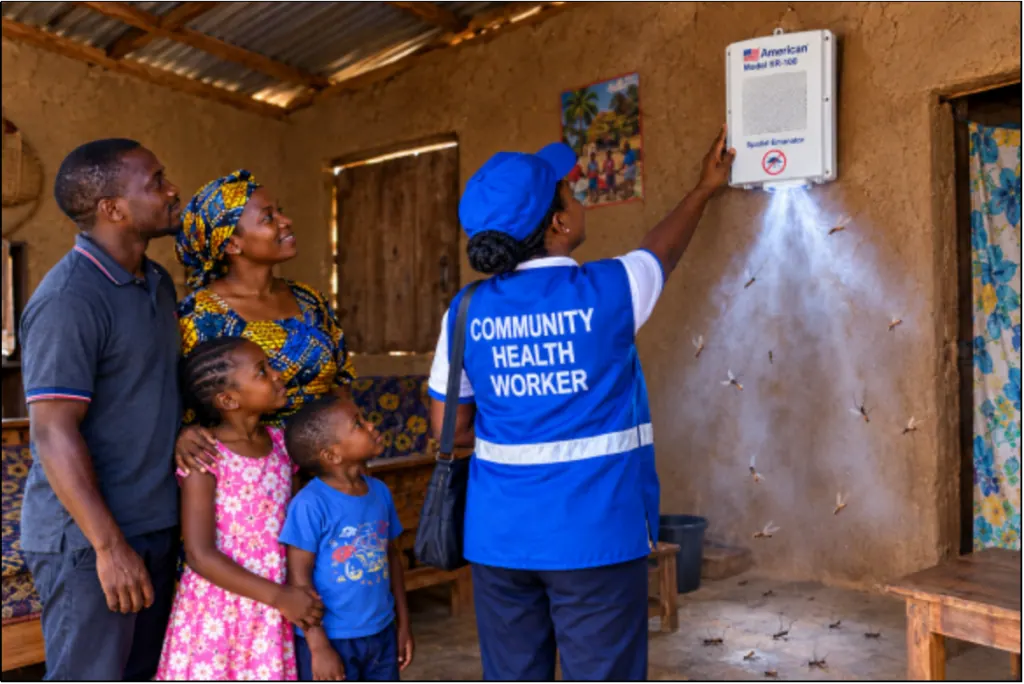
The Ministry of Health in Sierra Leone, in collaboration with the National Malaria Control Programme and various partners, has launched an initiative to enhance household malaria protection in rural areas. From October 6 to 20, over 101,000 Spatial Emanators will be distributed to eligible households in the Sittia and Dema Chiefdoms in Bonthe District and the Yoni Mabanta and Poli Chiefdoms in Tonkolili District. These devices release insecticide into the air to deter mosquitoes from biting indoors.
Trained community health workers will carry out house-to-house installations of the Spatial Emanators, explaining their use alongside existing malaria prevention methods, such as insecticide-treated nets and indoor spraying. The Ministry emphasizes that these devices offer added protection but should complement rather than replace other strategies, including preventive treatment for pregnant women and infants, routine testing, and the forthcoming malaria vaccine.
Malaria presents a significant public health challenge in Sierra Leone, with over eight million people living in high-transmission areas in 2024, according to the WHO's 2025 malaria profile. Around two million malaria cases were reported that year, although reported case numbers dropped by about 14% in 2024, indicating progress in the fight against the disease.
The US government supports this initiative, building on years of malaria control efforts in Sierra Leone. The distribution of Spatial Emanators aims to protect every household, particularly vulnerable populations, while reinforcing the commitment to bring malaria prevention into people's homes. Community education is essential for the initiative's success, with health workers guiding families on the proper use of the devices.
The campaign highlights that technology alone cannot eradicate malaria; success relies on strong government leadership, supported health workers, engaged communities, and families implementing recommended prevention strategies. By installing these Spatial Emanators, the effort aims to add a vital level of household safety during peak mosquito activity at night, complementing existing prevention methods like insecticide-treated nets.
For many families, these emanators will integrate malaria prevention into their daily lives and sleeping areas. The Ministry clarifies that while these devices offer added protection, they should not replace other strategies. The initiative also emphasizes the importance of community health workers in guiding families on the proper use of the devices and other prevention methods.
The distribution of Spatial Emanators is part of Sierra Leone's multifaceted approach to malaria prevention, which is crucial for safeguarding children, pregnant women, and entire families from this pervasive disease. From October 6 to 20, health workers will ensure the devices are correctly fitted and provide families with the necessary information for effective use.
Key points
- Over 101,000 Spatial Emanators will be distributed to eligible households in Bonthe and Tonkolili districts.
- The initiative aims to add a vital level of household safety during peak mosquito activity at night.
- Community education and strong government leadership are essential for the initiative's success.