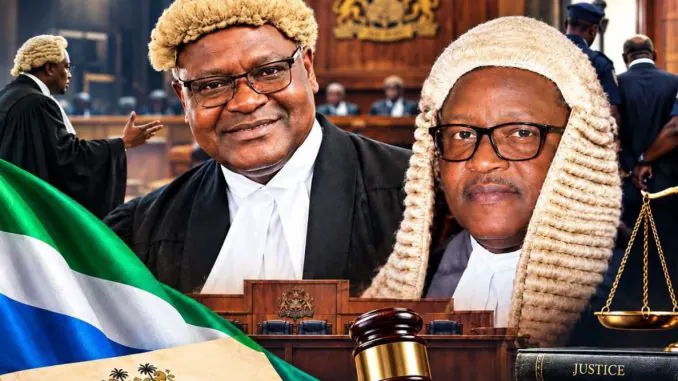
A recent courtroom confrontation in Sierra Leone has sparked concerns about the integrity of the judiciary and public trust in the legal system. On October 7 and 8, 2026, senior counsel Joseph Fitzgerald Kamara engaged in a tense exchange with the Chief Justice over the Constitution of Sierra Leone (Amendment) Act, 2025. The dispute began when Kamara challenged the Chief Justice's comments, leading to a firm response from the Chief Justice.
The confrontation escalated, and on October 8, 2026, Kamara was reprimanded by the Chief Justice for his conduct, resulting in his removal from the courtroom and commitment to custody for contempt. The Chief Justice deemed Kamara's apology insufficient, leading to the custodial punishment. This incident has raised significant questions about how a constitutional court can balance its authority with the need for courtroom scrutiny.
The General Legal Council has urged the Supreme Court to reconsider the contempt finding and custodial punishment. The Council noted the incident's discourteousness and its negative impact on the legal profession. They emphasized that judicial authority must be respected but not wielded without proportionate measures. The powers of contempt are intended to protect the justice system, not to shield judges from critical debates.
The incident highlights the importance of restraint from both the Bench and the Bar. The ongoing scrutiny could either reinforce judicial authority or compromise it if discussions devolve into personal conflicts rather than remaining centered on legal principles. The integrity of the legal process relies on both parties adhering to professional standards while engaging in necessary challenges to maintain justice.
The case has significant legal implications, as it raises questions about the balance between judicial integrity and courtroom decorum. The Supreme Court must navigate this complex issue to ensure that the justice system is protected while allowing for necessary scrutiny and critique. The General Legal Council's call for reflection on the incident acknowledges that both courtroom conduct and the need for critique are essential for a healthy legal environment.
Public focus should remain on the legal questions at hand rather than the personalities involved. The situation illustrates the delicate balance between judicial authority and the need for critical debates in the courtroom. Ultimately, the integrity of the legal process relies on both parties adhering to professional standards while engaging in necessary challenges to maintain justice.
The Supreme Court's decision on this matter will have far-reaching implications for the judiciary and the legal profession in Sierra Leone. The court's response to the General Legal Council's urging will be closely watched, as it will set a precedent for future cases and help to determine the balance between judicial authority and courtroom scrutiny.
Key points
- The confrontation between Kamara and the Chief Justice has raised questions about judicial authority and courtroom decorum in Sierra Leone.
- The General Legal Council has urged the Supreme Court to reconsider the contempt finding and custodial punishment.
- The incident highlights the importance of restraint from both the Bench and the Bar in maintaining the integrity of the legal process.