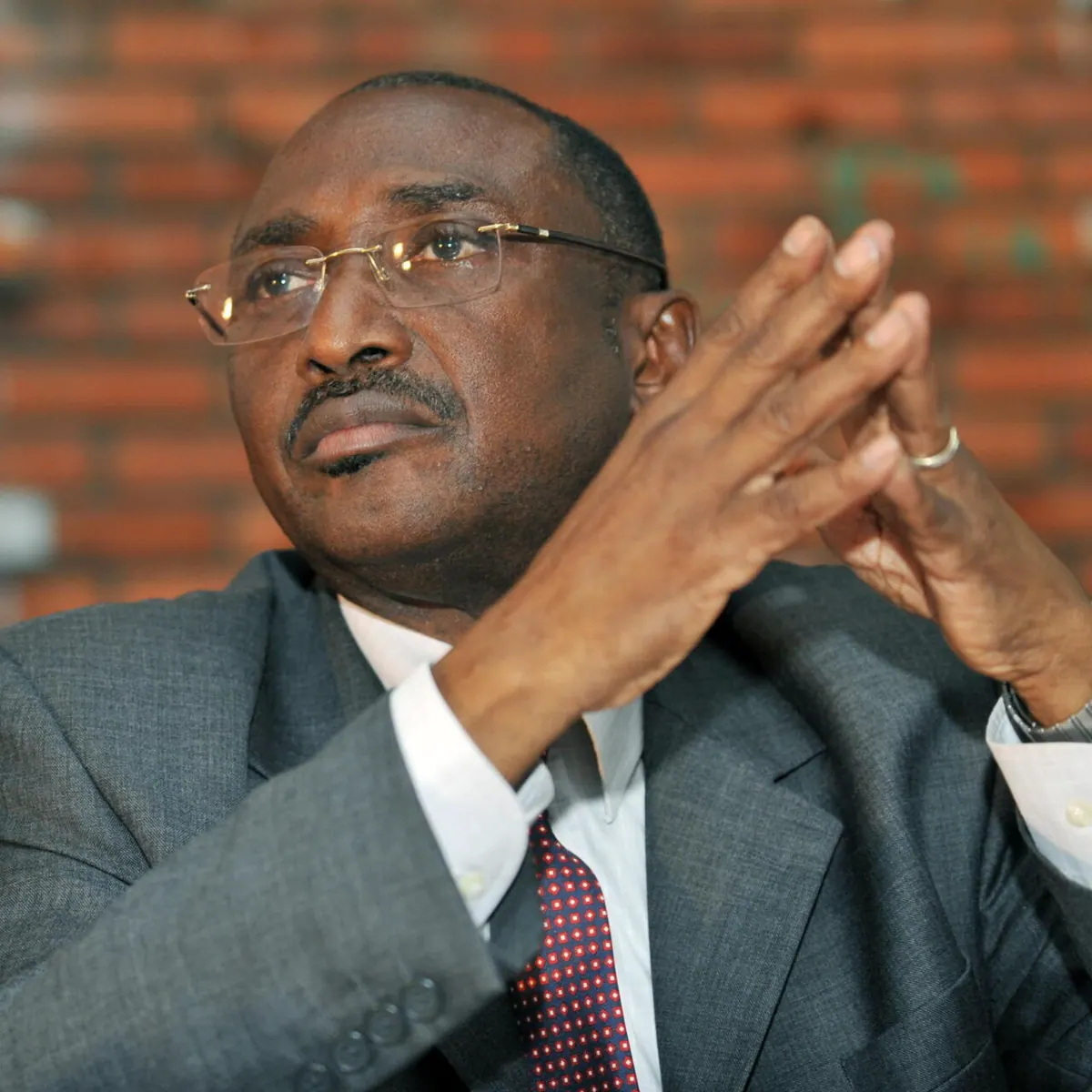
Sidya Touré, a key figure in Guinean politics, passed away on September 25, 2026, in Paris, France. Born on August 15, 1945, in Dimbokro, Côte d'Ivoire, to Guinean parents, Touré had a distinguished career spanning multiple decades and countries. He was a high-ranking official in Côte d'Ivoire, an entrepreneur, and served as Prime Minister of Guinea under President Lansana Conté. Touré was also the president of the Union of Republican Forces (UFR), a major opposition party in Guinea.
Touré's early life and education played a significant role in shaping his career. He studied in France, where he earned a law degree in business and a diploma from the National School of the Treasury in Paris in 1972. Upon returning to Côte d'Ivoire, he began his career as an inspector of the Treasury. He then rose through the ranks of the economic and financial administration, holding positions such as deputy director of External Finances and Credit, and director of general administration at the Ministry of Commerce.
In the 1980s, Touré's career took a new turn when he became director of cabinet to Séri Gnoléba, the minister of state responsible for negotiating Côte d'Ivoire's external debt rescheduling. Over seven years, he was deeply involved in strategic issues related to public finances, external debt, and international negotiations. This experience solidified his profile as a technocrat and expert in economic and financial matters, particularly in the context of his later collaboration with Alassane Ouattara, who would become a key figure in Ivoirian politics.
Touré's association with Alassane Ouattara continued when he joined Ouattara's team as cabinet director in November 1990, after contributing to the coordination of the economic monitoring committee established under the program of economic stabilization and recovery. He remained in this position until December 8, 1993, further establishing himself in Ivoirian economic and administrative decision-making circles. After years in Ivoirian public service, Touré turned to the private sector, founding the Société financière et industrielle du golfe de Guinée (SOFIG) in 1994.
In 1996, Touré's career took another significant turn when President Lansana Conté appointed him Prime Minister of Guinea. His appointment came at a challenging time for the country, which was seeking to strengthen its public finance management and administration. With his experience gained in Côte d'Ivoire, Touré focused on economic, administrative, and infrastructure issues. He served as Prime Minister until March 1999, nearly three years after taking office.
Following his departure from government, Touré established himself as a leading figure in Guinean politics, leading the Union of Republican Forces (UFR). He became a key opposition figure and participated in major political events in the country. His trajectory was marked by periods of rapprochement and confrontation with successive powers in Conakry. For several years, Touré remained a major actor in Guinean political debate.
The death of Sidya Touré marks the end of a significant chapter in Guinean public life. His career, intertwined with major economic and political developments in West Africa, spanned multiple roles, from high administration in Côte d'Ivoire to the prime ministership in Guinea and leadership of the UFR. At 81, Touré passed away in Paris, leaving behind a career built at the crossroads of two countries: Guinea, where he emerged as a leading political figure, and Côte d'Ivoire, where he forged much of his administrative and economic experience.
Key points
- Sidya Touré died on September 25, 2026, in Paris, France, at the age of 81.
- Touré served as Prime Minister of Guinea from 1996 to 1999 under President Lansana Conté.
- He was a key figure in both Guinean and Ivoirian politics, with a career spanning multiple decades and roles.