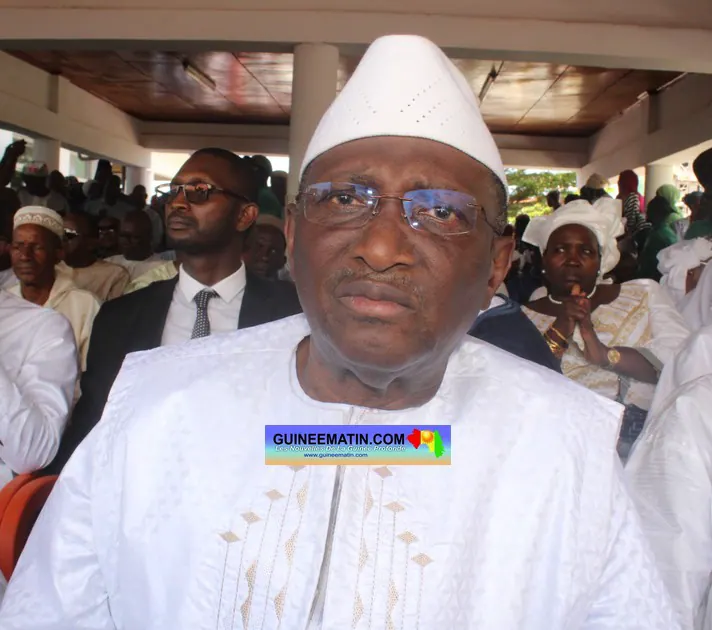
Sidya Touré, a prominent figure in Guinean politics, died on September 25, 2026, at 11 PM in Conakry, and then at 3 AM on September 26 in Paris. He was admitted to the American Hospital in Neuilly-sur-Seine, where his brother, Ibrahima Kassory Fofana, was also being treated. Touré's death has sparked an outpouring of tributes from across the country. He was 81 years old.
Touré served as Prime Minister of Guinea from July 1996 to March 1997. He was appointed by President Lansana Conté to help address the country's socio-economic challenges and political tensions. At the time of his appointment, Touré was relatively unknown in Guinea, but his reputation as a technocrat and economist earned him widespread support. His government, composed of technocrats, was seen as a breath of fresh air.
Born in 1945, Touré had a long career in public service, starting in the 1970s in Côte d'Ivoire. He served as Director of Cabinet for Prime Minister Alhassane Dramane Ouattara from 1990 to 1993. His appointment as Prime Minister of Guinea was seen as a strategic move by President Conté to bring stability to the country. Touré's discourse emphasized his economic focus and his relationships with leaders of major political parties.
Touré's government implemented several reforms, but his tenure was also marked by controversy. One notable issue was the disagreement between President Conté and the President of the National Assembly, Elhadj Boubacar Biro Diallo. Diallo publicly disputed Conté's claim that he had consulted with him before appointing Touré as Prime Minister. This marked the beginning of a rift between the two leaders.
Despite the challenges, Touré's government achieved some notable successes. His technocratic approach and inclusive cabinet were seen as positive steps towards addressing Guinea's development challenges. However, his time in office was relatively short-lived, and he was eventually replaced. Touré went on to become a key opposition figure and leader of the UFR.
Touré's legacy in Guinean politics is complex and multifaceted. While some view him as a missed opportunity for presidential leadership, others acknowledge his contributions to the country's development. His passing has sparked an outpouring of tributes from across the country, reflecting his significant impact on Guinean politics.
As the country mourns the loss of Sidya Touré, his family, colleagues, and admirers are reflecting on his life and legacy. His contributions to Guinea's development and his role in shaping the country's politics will be remembered for years to come. The government has announced plans for a state funeral, which will be attended by dignitaries from across the region.
Key points
- Sidya Touré died on September 25, 2026, in Paris at the age of 81.
- He served as Prime Minister of Guinea from July 1996 to March 1997.
- Touré was a prominent figure in Guinean politics and leader of the Union of Republican Forces (UFR).