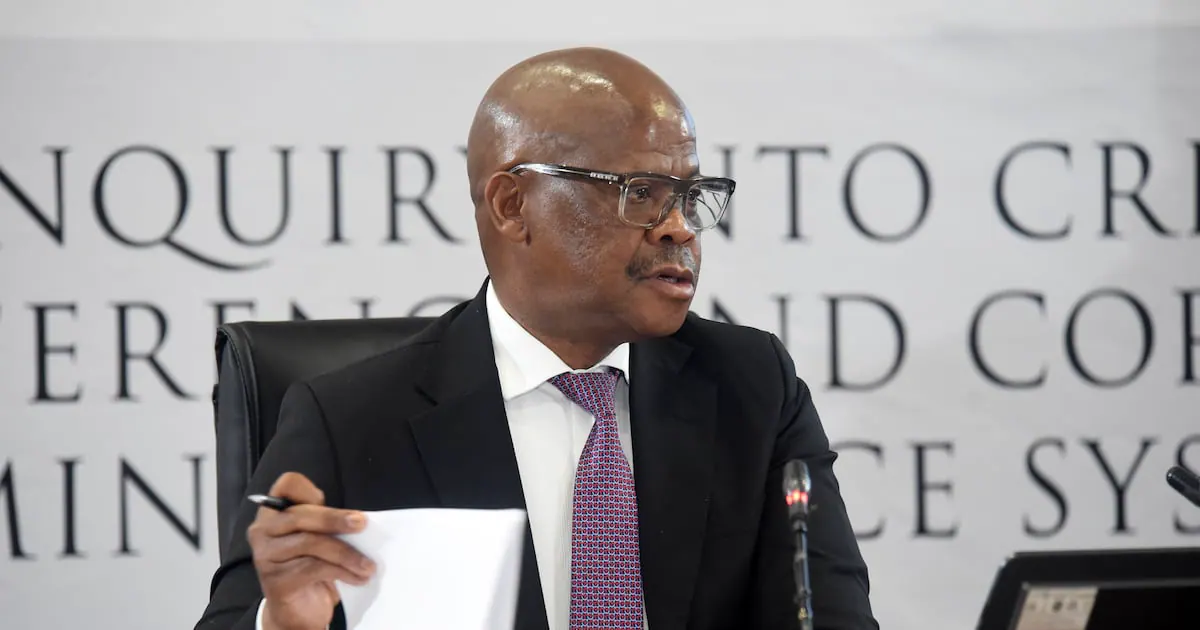
Joe “Ferrari” Sibanyoni, a key figure in a high-profile extortion case, has raised concerns about the use of evidence obtained from his cellphone at the Madlanga commission. The commission is investigating allegations of criminality and political infiltration within the criminal justice system in South Africa. Sibanyoni claimed that the data downloaded from his cellphone was acquired during a criminal investigation in Kwaggafontein, where he faces charges of extortion and money laundering.
Sibanyoni formally objected to the commission relying on any cellphone content obtained through the seizure in the Kwaggafontein criminal proceedings. He stated that using this evidence would be an abuse and violation of his privacy and constitutional rights. Sibanyoni reserved the right to challenge this reliance, including by way of urgent application to the appropriate court if necessary. This objection was raised on Tuesday as he continued giving evidence before the commission.
The Madlanga commission is probing serious allegations, and Sibanyoni's case is part of a broader investigation into extortion and money laundering. In the Kwaggafontein case, Sibanyoni, along with Bafana Sindane, Mvimbi Masilela, and Philemon Msiza, are accused of extorting R2m from businessman Thomas Ntuli between 2022 and 2025. The accused individuals have been implicated in a series of serious crimes, and the commission's findings could have significant implications for the criminal justice system.
Sibanyoni also raised an objection to what he described as the “flighting” of information, referring to the public disclosure and use of evidence extracted from his cellphone during proceedings held in his absence. He argued that he could not properly respond to, provide context for, or challenge evidence presented to the commission without his knowledge or when he was not present. This objection highlights concerns about the handling of sensitive information and the potential for prejudice against Sibanyoni.
Sibanyoni requested that cellphone-derived evidence not be used or referred to during proceedings he does not attend. This request aims to ensure that he has a fair opportunity to respond to the evidence against him and to challenge it if necessary. The commission will need to consider Sibanyoni's objections and determine how to proceed with the case, balancing the need for a thorough investigation with the rights of the accused individuals.
The Madlanga commission's investigation into the criminal justice system is ongoing, and several high-profile cases are being examined. Sibanyoni's objections to the use of his cellphone data reflect broader concerns about the handling of evidence and the protection of individual rights. As the commission continues its work, it will be essential to address these concerns and ensure that the investigation is conducted fairly and transparently.
The commission is yet to cross-examine Sibanyoni based on his statements and the evidence that they have obtained against him. The outcome of this case and the commission's findings could have significant implications for the individuals involved and for the broader criminal justice system in South Africa. Sibanyoni's case is just one part of a larger investigation, and the commission's work will continue to be closely watched by stakeholders and the public.
Key points
- Joe Sibanyoni objects to the use of evidence from his cellphone at the Madlanga commission, citing violation of his privacy and constitutional rights.
- Sibanyoni faces charges of extortion and money laundering in the Kwaggafontein case, along with Bafana Sindane, Mvimbi Masilela, and Philemon Msiza.
- The Madlanga commission is investigating allegations of criminality and political infiltration within the criminal justice system in South Africa.