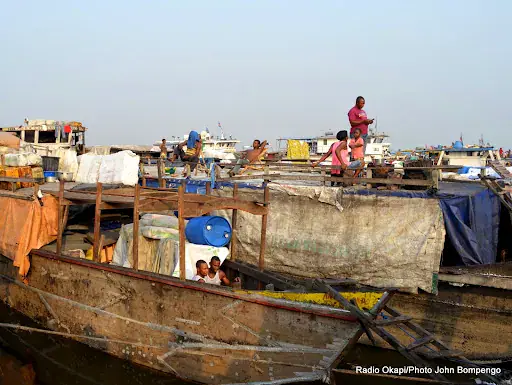
The Democratic Republic of Congo's government has banned wooden boats from navigating the Congo River, a move that has raised concerns among shipping companies operating in the Maniema province. The ban, which came into effect on November 10, 2026, aims to reduce the number of accidents and fatalities on the river. However, shipping companies argue that the ban will severely impact the supply of goods to the province, which is heavily reliant on river transport.
The president of the Maniema section of the Congo Shipowners' Association, Hamadi Hemedi, has expressed concerns that the ban will lead to supply chain disruptions in the province. He noted that wooden boats transport around 12,000 tonnes of goods per month, while the state-owned railway company, Société nationale des chemins de fer du Congo (SNCC), can only transport 700 tonnes per year. Hemedi argues that the SNCC's capacity is insufficient to meet the needs of the population.
The Maniema province is landlocked and lacks adequate road infrastructure, making it heavily dependent on river transport for supplies. The province's residents rely on goods transported by wooden boats, which are now banned from operating on the Congo River. Hemedi has called on the government to reconsider its decision, taking into account the needs of the population and the economic realities of the province.
The government has granted a three-month reprieve to some wooden boats, allowing them to continue operating on inland waterways, subject to certain safety conditions. However, inter-provincial travel on the Congo River remains banned for wooden boats. The government aims to gradually deploy metal boats to replace the banned wooden ones. Hemedi argues that the SNCC's boats cannot compensate for the loss of wooden boats on the Kindu-Ubundu axis.
The ban on wooden boats has been implemented in response to a surge in accidents and fatalities on the Congo River. The government has reported significant loss of life and property damage in accidents involving wooden boats. The new regulations require metal boats to operate between 6 am and 6 pm, with passengers and crew wearing life jackets, and to adhere to authorized tonnage and docking points.
The shipping industry has warned of potential shortages of essential goods in the Maniema province if the ban on wooden boats is not lifted or modified. Hemedi has urged the government to find a solution that balances safety concerns with the needs of the population. The situation remains uncertain, with the three-month reprieve for some wooden boats set to expire soon.
The government faces pressure to review its decision, with some stakeholders arguing that it will have a devastating impact on the local economy. The province's residents and businesses are anxiously waiting for a resolution to the crisis, which could have far-reaching consequences for the region's economic development.
Key points
- The ban on wooden boats on the Congo River has raised concerns about supply chain disruptions in the Maniema province.
- The province is heavily reliant on river transport, with wooden boats transporting 12,000 tonnes of goods per month.
- The government has granted a three-month reprieve to some wooden boats, allowing them to continue operating on inland waterways.