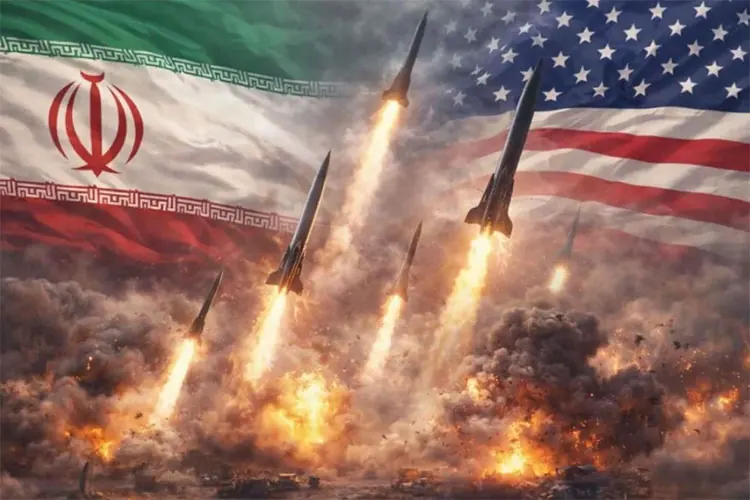
In a recent opinion piece, analyst Mohamed Salim Qalala outlined a significant transformation in the Middle East's geopolitical landscape. By 2026, the region is expected to witness a substantial shift, driven by Iran's resilience in the face of US-Israeli aggression. This change is anticipated to render previous Western projects, aimed at controlling the region, obsolete. The notion of a "New Middle East" is set to give way to a new regional identity, encompassing countries from China to the Red Sea.
Historically, the concept of the Middle East was shaped by colonial powers, with the region being divided into the "Far East," "Near East," and "Middle East." The Israeli-Palestinian conflict has been a focal point of Western interests in the region, with Israel serving as a strategic asset for maintaining control. However, with the rise of Iran and the growing resistance movement, the regional dynamics are undergoing a significant transformation.
The idea of a "New Middle East" was first proposed by Israeli politician Shimon Peres in the 1990s. The concept envisioned Israel leading a regional development project, backed by Gulf states and Arab human resources. However, this initiative was met with widespread resistance from the Palestinian population and ultimately failed. The US subsequently launched its own version, dubbed the "Greater Middle East," which aimed to include countries such as Turkey, Iran, and Afghanistan.
Despite these efforts, the region has continued to experience turmoil, with the US-led invasion of Iraq in 2003 and the subsequent rise of extremist groups. In response, the US and Israel shifted their strategy, adopting a policy of "creative chaos" aimed at channeling popular discontent into sectarian conflicts. However, this approach has also yielded unintended consequences, including the strengthening of resistance movements.
A recent development, the India-Middle East-Europe Economic Corridor project, was launched in 2023, aiming to connect Indian ports with those in the UAE and Israel. However, this initiative was swiftly thwarted by the ongoing conflict in Gaza and the resilience of the Iranian government. The Palestinian resistance movement has once again played a crucial role in challenging Western interests in the region.
The evolving regional dynamics have significant implications for global politics. The growing partnership between China and countries in the Middle East is expected to contribute to a more multipolar world order. As the global landscape continues to shift, the concept of West Asia is gaining traction as a unified regional identity, potentially paving the way for greater cooperation and stability.
Analysts believe that the emerging regional dynamics will have far-reaching consequences for global politics. The decline of Western influence in the Middle East and the rise of new regional players are expected to contribute to a more balanced global landscape. As the situation continues to unfold, one thing is clear: the Middle East as we know it is undergoing a significant transformation, with the concept of West Asia poised to play a major role in shaping the region's future.
Key points
- The concept of West Asia is gaining traction as a unified regional identity.
- Iran's resilience in the face of US-Israeli aggression is driving the shift in regional dynamics.
- The growing partnership between China and countries in the Middle East is expected to contribute to a more multipolar world order.