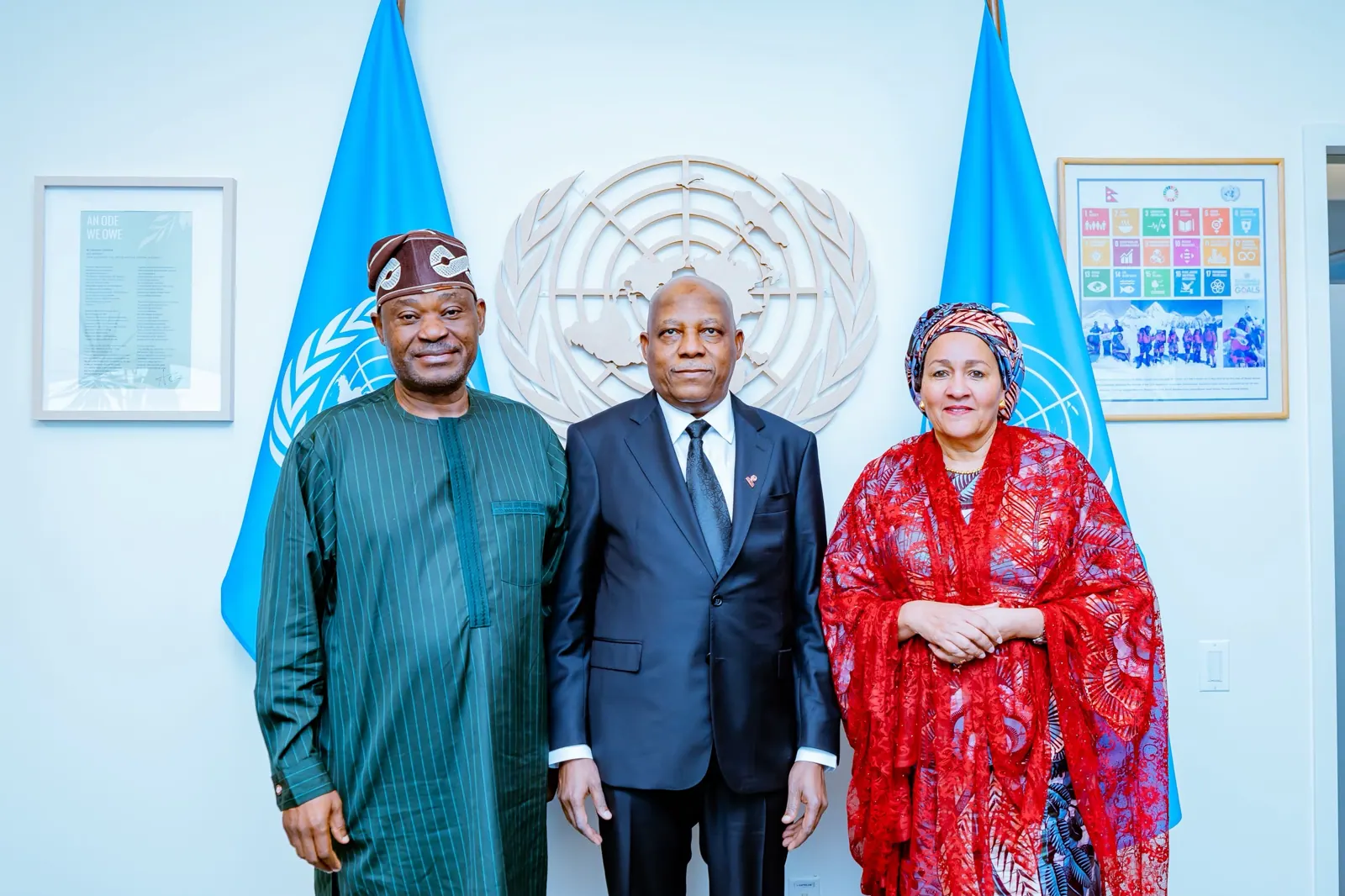
Nigeria's Vice President Kashim Shettima has emphasized the need for urgent reforms to give Africa a meaningful voice in decisions affecting international peace, security, and development. During a meeting with UN Deputy Secretary-General Amina Mohammed on the sidelines of the 81st United Nations General Assembly in New York, Shettima reaffirmed Nigeria's commitment to reforming the global institution. He argued that Africa's exclusion from permanent membership in the UN Security Council undermined the legitimacy of global governance.
Shettima challenged the global order that expects Africa to shoulder the burdens of international peace and security while denying the continent permanent representation on the UN Security Council. He stated that a continent cannot be summoned to bear the burdens of the international order and then denied an equal hand in directing it. The Vice President commended UN Secretary-General António Guterres for his sustained advocacy for a more representative Security Council.
The Vice President's remarks came amid renewed calls for restructuring the UN Security Council to address longstanding concerns about the representation of Africa and other underrepresented regions. Shettima said Nigeria would continue to support reforms aimed at making international institutions more representative, responsive, and credible. He argued that the composition of global decision-making bodies must reflect present-day geopolitical and demographic realities.
Beyond the question of representation, Shettima called attention to the need to uphold international law and protect human dignity amid growing geopolitical tensions and conflicts. He praised Guterres for defending the principles of the UN Charter, particularly at a time when some countries were drifting away from their international obligations. Shettima warned that international diplomacy risked losing its moral purpose if world leaders failed to recognise the human consequences of armed conflicts.
The Vice President emphasised that the plight of vulnerable people should remain central to discussions on international security. He said the mother searching for her child, the family driven from home, and the hungry child awaiting food must never become abstractions in the language of states. Shettima maintained that the credibility of the international system would ultimately depend on its ability to respond fairly to human suffering.
Reaffirming Nigeria's commitment to multilateral cooperation, Shettima said the country would remain a dependable partner in efforts to rebuild trust among nations and address challenges ranging from hunger and violence to exclusion. He added that international cooperation must be guided by shared responsibility and a recognition that human suffering anywhere should concern the international community.
Earlier, Mohammed expressed appreciation to President Bola Tinubu and the Nigerian government for their continued support for the United Nations and her work as the organisation's Deputy Secretary-General. The meeting formed part of Nigeria's diplomatic engagements on the sidelines of the 81st UN General Assembly, with the country's delegation reiterating its support for reforms to strengthen international cooperation and make global institutions more inclusive.
Key points
- Nigeria's Vice President Kashim Shettima calls for urgent reforms to give Africa a voice in UN Security Council decisions.
- Shettima challenges the global order that expects Africa to shoulder international peace and security burdens without permanent representation.
- The Vice President reaffirms Nigeria's commitment to reforming the global institution and making international institutions more representative.