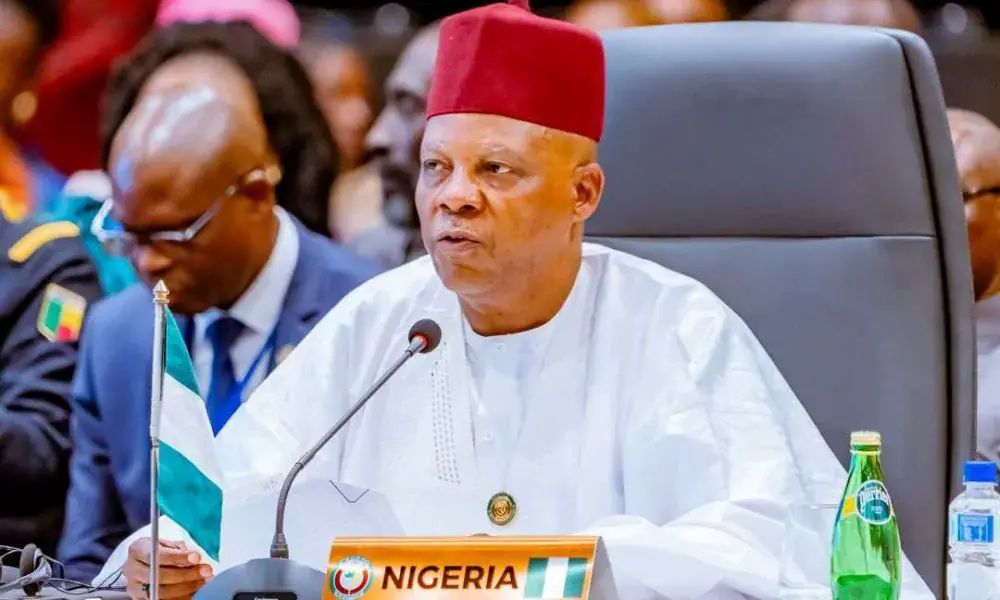
Vice-President Kashim Shettima has called on Nigerians, particularly professionals, business leaders, and members of the middle class, to critically evaluate government policies rather than defending them uncritically. He made this statement at The Duke's Masterclass 2026, held at the Transcorp Hilton in Abuja, where he was represented by his Special Adviser on Economic Affairs, Dr. Tope Fasua. Shettima emphasized that constructive criticism and responsiveness to citizens' concerns are crucial to sustaining confidence in the ongoing economic reforms.
Shettima defended the administration's major economic decisions, including petrol subsidy removal, foreign exchange market liberalization, fiscal restructuring, and revenue mobilization. He described these measures as necessary to correct longstanding distortions and strengthen Nigeria's productive capacity. The Vice-President stated that the success of these economic policies would depend not only on their implementation but also on the government's ability to demonstrate tangible benefits and address the difficulties confronting citizens.
The Vice-President stressed that the government must do more than announce policies; it must communicate its objectives clearly, provide credible evidence of progress, and listen to the experiences of Nigerians grappling with the effects of the reforms. He challenged professionals, members of the elite, and the middle class to engage citizens constructively rather than dismissing their concerns or offering unconditional support for government decisions.
Shettima identified banking, financial technology, oil and gas, agriculture, real estate, construction, commodity exports, and the creative industry as sectors capable of attracting investment and generating employment. However, he acknowledged persistent obstacles, including unreliable electricity, inefficient transportation, insecurity, limited access to finance, and weaknesses in education and public institutions.
The Vice-President also warned about the risks of misinformation in the digital age, noting that artificial intelligence and social media were making misinformation increasingly sophisticated. He called on public institutions to strengthen information verification, correct false claims transparently, and communicate through trusted channels, emphasizing that accuracy should take precedence over speed.
Shettima advocated for improved digital literacy and responsible use of artificial intelligence to help citizens distinguish credible information from fabricated content. He also called for stronger domestic production, expanded exports, and greater support for small businesses, stressing the importance of ensuring that economic opportunities reach women, young people, and rural communities.
Key points
- The Vice-President emphasized the need for constructive criticism and responsiveness to citizens' concerns to sustain confidence in the ongoing economic reforms.
- Shettima identified key sectors capable of attracting investment and generating employment, including banking, financial technology, and agriculture.
- The Vice-President warned about the risks of misinformation in the digital age and advocated for improved digital literacy and responsible use of artificial intelligence.


