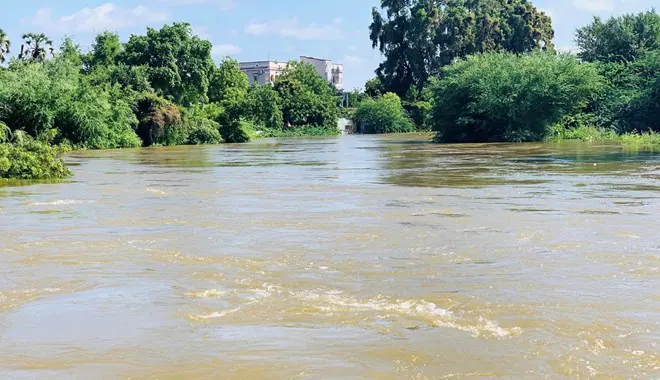
The Somali Disaster Management Agency (SODMA) has issued a warning that the Shabelle River has breached its banks at 366 critical locations, raising fears of flooding as heavy rains and El Niño conditions are expected. SODMA Commissioner Mohamud Moallim Abdulle stated that the condition of the river and years of neglect have increased the risk of flooding, particularly for communities living near the river. The breaches are considered major and dangerous points that require immediate attention.
According to SODMA, the Shabelle River has long suffered from the buildup of silt and sediment in its channel, which has increased the risk of flooding in riverine areas. The agency noted that essential maintenance, including dredging and sediment removal, has not been carried out consistently for nearly 40 years. This lack of maintenance has exacerbated the flood risk, and officials warned that thousands of people and their livestock are at risk.
Insecurity in areas along the river remains a major challenge to flood prevention efforts. Abdulle cited sections of the river that pass through areas controlled or influenced by al-Shabab, making it difficult for government agencies and other stakeholders to carry out maintenance and clearing operations. The area between Jalalaqsi and Mahadaay was given as an example, where parts of the river channel have been filled with soil and converted into a roadway.
The Shabelle River is vital to thousands of families who depend on agriculture and livestock, especially communities living along its banks. Government agencies are under pressure to strengthen flood preparedness as people in low-lying areas remain vulnerable to heavy rains and rising river levels. Officials emphasized the need for urgent action to mitigate the flood risk and protect the livelihoods of communities dependent on the river.
Officials warned that stronger El Niño-related rains could increase flooding in parts of Somalia, particularly in south-central regions. Such flooding could displace communities, damage infrastructure and agricultural land, disrupt health services, destroy water and sanitation facilities, and increase the risk of disease outbreaks. The Somali government and humanitarian agencies are working to enhance flood preparedness and response measures.
In recent years, flooding from the Shabelle River has displaced thousands of people and destroyed homes and farmland. The humanitarian impact of flooding is a major concern, with communities in riverine areas facing significant risks to their livelihoods and well-being. SODMA and other stakeholders are working to provide support to affected communities and prevent further displacement.
The Somali government is working to address the flood risk through enhanced preparedness and response measures. SODMA is leading efforts to strengthen flood mitigation and response capacities, with support from humanitarian agencies and development partners. Key stakeholders are working together to protect communities and prevent humanitarian crises in the face of flood risks.
Key points
- The Shabelle River has breached its banks at 366 critical locations, raising fears of flooding as heavy rains and El Niño conditions are expected.
- Insecurity in areas along the river remains a major challenge to flood prevention efforts.
- Stronger El Niño-related rains could increase flooding in parts of Somalia, particularly in south-central regions.