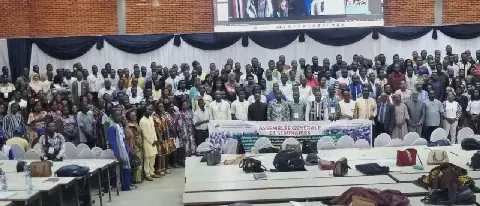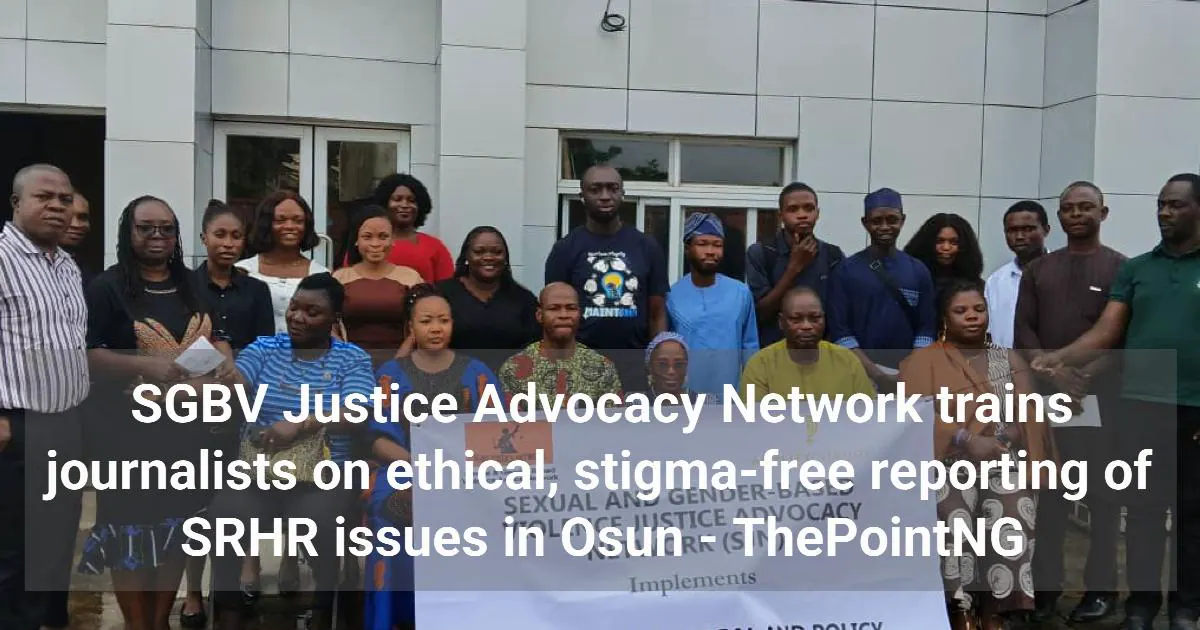
The Sexual & Gender-Based Violence Justice Advocacy Network has organized a training for journalists and content creators in Osun State on rights-based reporting of Sexual and Reproductive Health and Rights (SRHR) and Gender-Based Violence (GBV) issues. The training, held in Osogbo, was conducted in collaboration with the Community Advancement Initiative for Self-Reliance. The program aimed to strengthen participants' capacity to report accurately, ethically, and responsibly on SRHR issues.
The training was part of the Network's ongoing commitment to strengthening networks and empowering stakeholders to advance SRHR in Western Nigeria. The program focused on rights-based SRHR reporting and the ethical coverage of reproductive health issues in the state. Organizers expected the training to build the capacity of journalists and content creators on rights-based reporting, improve understanding of SRHR frameworks and global best practices, and promote ethical and stigma-free coverage of sensitive reproductive health issues.
The National Coordinator of the Sexual & Gender-Based Violence Justice Advocacy Network, Jerome Uneje, emphasized the importance of reporting SRHR issues ethically through a human rights lens. Uneje said the initiative aimed to ensure that SRHR issues are reported in a way that protects the rights of survivors, particularly those of SGBV incidents. The media, Uneje added, remains a critical partner in countering misinformation and building a movement for reproductive rights and justice.
Consultant for the training, Mr. Olusola Olufemi Taiwo, urged media professionals to familiarize themselves with the national guideline on safe termination of pregnancy, which has been domesticated by some states, including Ogun, Osun, Akwa Ibom, and Anambra. Taiwo said the guideline provides legal and medical indications under which safe services can be accessed in health facilities. He advised that anyone seeking information should consult qualified healthcare professionals and facilities for appropriate guidance.
Participants at the training pledged to sensitize members of the public through ethical reports and responsible content on reproductive health issues discussed at the session. The organisers expressed hope that the training would lead to more accurate, rights-based, and survivor-centered reporting that protects the dignity of survivors and improves reproductive health outcomes in Osun and across Western Nigeria.
The SGBV Justice Advocacy Network is a coalition of seven member organizations comprising women's rights groups, women-led enterprises, media practitioners, and other key stakeholders working collaboratively to prevent and respond to sexual and gender-based violence. The Network aims to promote reproductive rights, reduce the high prevalence of maternal mortality, and advance access to justice for survivors across Nigeria.
The training is expected to strengthen media engagement in advancing SRHR advocacy and amplifying community voices for improved reproductive health outcomes. By empowering journalists and content creators with the skills and knowledge to report on SRHR issues responsibly, the Network hopes to contribute to a more informed and supportive environment for reproductive health and rights in Nigeria.
Key points
- The training aimed to promote ethical and stigma-free coverage of sensitive reproductive health issues.
- The national guideline on safe termination of pregnancy provides legal and medical indications under which safe services can be accessed in health facilities.
- The Network hopes to contribute to a more informed and supportive environment for reproductive health and rights in Nigeria.