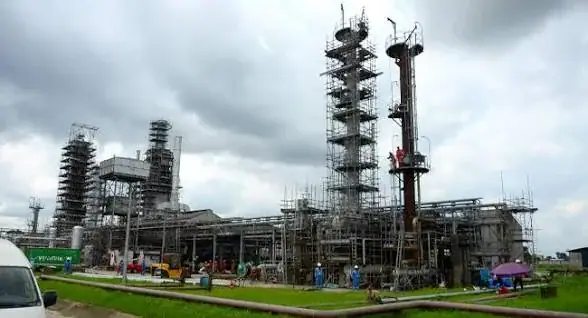
Nigeria's modular refining sector is expected to expand in 2027 with seven new refineries projected to commence operations. These refineries will have a combined capacity of 83,000 barrels per day. According to Argus Media's George Maher-Bonnett, the expansion is part of the changing dynamics in Nigeria's petroleum products market. The market is experiencing rising local refining capacity and declining fuel demand.
Currently, four modular refineries are operating in Nigeria with a combined capacity of 32,000 barrels per day. The new refineries are expected to more than double this capacity. However, details about the proposed refineries, such as their owners, locations, and individual capacity figures, have not been disclosed. The presentation by Maher-Bonnett was made at the OTL Africa Downstream conference in Lagos.
The growing role of the Dangote Petroleum Refinery is also improving Nigeria's self-sufficiency in petroleum products. Despite a decline in fuel demand, the Dangote refinery is operating at a high rate with steady petrol output. This reduces the need to import petroleum products from Europe into West Africa. The Dangote refinery has a capacity of 700,000 barrels per day.
The decline in fuel demand in Nigeria is attributed to higher flat prices. The only government intervention during this period was an NNPC price reduction. The presentation highlighted that the economics of shipping petroleum products from Europe to West Africa and the US has weakened. Freight costs further affect the competitiveness of these routes.
Ghana's refining capacity is also growing, with the 45,000-barrel-per-day Tema refinery ramping up production. This improves Ghana's self-sufficiency in petroleum products. The changes in Nigeria and Ghana are part of a broader shift in the West African petroleum products market.
The expected expansion of modular refining capacity in Nigeria comes as the country's petroleum products market adjusts to increased domestic production. Changing international trade flows also influence this market. The role of modular refineries is expected to grow as Nigeria's refining capacity increases.
George Maher-Bonnett's presentation, titled 'African Energy Outlook', provided insights into the changing dynamics of Nigeria's petroleum products market. The presentation highlighted the growth of modular refineries and the Dangote refinery's contribution to Nigeria's self-sufficiency. The outlook suggests that Nigeria's refining capacity will continue to evolve in the coming years.
Key points
- Seven new modular refineries are set to begin operations in Nigeria in 2027 with a combined capacity of 83,000 barrels per day.
- The Dangote Petroleum Refinery is operating at a high rate, improving Nigeria's self-sufficiency in petroleum products.
- Nigeria's fuel demand has declined due to higher prices, with the only government intervention being an NNPC price reduction.