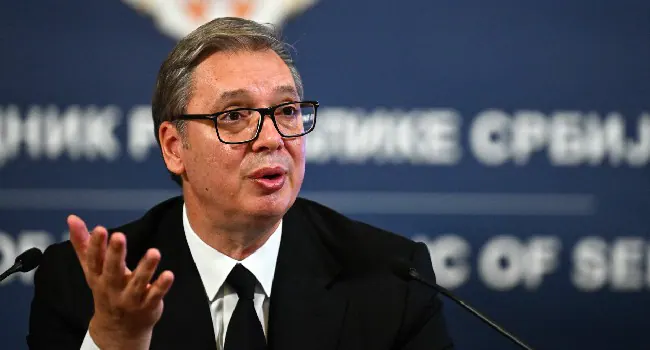
Serbian President Aleksandar Vucic announced his resignation on Sunday, September 28, 2026, in Belgrade, seven months before his second and final five-year term was due to expire. This move sets the stage for a snap parliamentary election scheduled for October 25. Vucic is expected to contest the parliamentary election as the candidate of his Serbian Progressive Party (SNS) for the prime minister’s position. His resignation allows him to participate in the parliamentary election as an ordinary citizen.
Addressing supporters outside the Presidency building in Belgrade, Vucic expressed pride in the achievements made during his time in office. He stated that he had served Serbia faithfully and was proud of what they had accomplished together. Vucic’s resignation marks the end of his second presidential term, and he is constitutionally barred from seeking a third term. This development allows him to pursue the prime ministerial position if his party forms the next government.
Under Serbia’s constitutional arrangements, Parliament Speaker Ana Brnabic will serve as acting president following Vucic’s resignation until a new president is elected. The presidential election must be completed within 90 days, with Vucic indicating that the first round would be held by the end of December. This sets the stage for two separate electoral contests: the October parliamentary election and an early presidential election expected before the end of December.
The Serbian government confirmed that the October 25 vote will elect members of the National Assembly. The parliamentary election comes amid sustained student-led protests and political tensions in Serbia. These protests intensified following the November 2024 collapse of a railway station canopy in Novi Sad, which killed 16 people and triggered widespread demonstrations and calls for political accountability.
Vucic’s SNS and its allies are expected to face opposition from student-led groups and other opposition parties in the October election. The student-led protests have been a significant challenge to the current government, and the upcoming elections will likely be influenced by these ongoing tensions. The protests have called for political accountability and have been a major factor in the current political climate.
Vucic dissolved parliament and called the snap parliamentary election earlier this month. This move was likely a response to the growing political tensions and protests in the country. The upcoming elections will be crucial in determining the future of Serbia and its government. The country is expected to see significant changes in the coming months, and the elections will play a major role in shaping its future.
The resignation of President Vucic and the upcoming elections have set Serbia on a path of significant change. The country will likely see a new president elected and a new government formed in the coming months. The outcome of the elections will have a major impact on Serbia’s future and its relations with other countries. The international community will be watching closely as Serbia navigates this period of change.
Key points
- Serbian President Aleksandar Vucic has resigned seven months before his term was set to expire.
- A snap parliamentary election is scheduled for October 25.
- An early presidential election is expected to be held before the end of December.