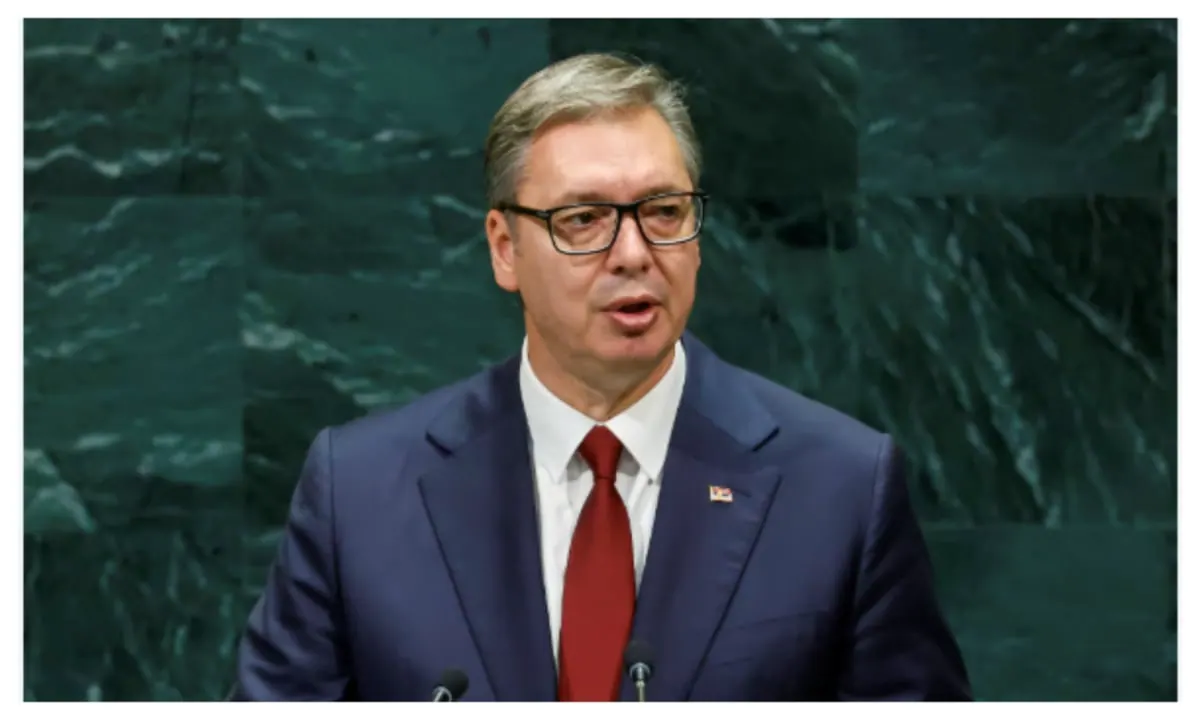
Serbia's President Aleksandar Vucic announced his resignation on Sunday, seven months before his term was set to expire. The 56-year-old Vucic, who has been serving his second and final five-year term, made the announcement amid campaigning for the October 25 snap parliamentary vote. This vote will elect 250 members of the National Assembly. Vucic's departure paves the way for early presidential elections and potentially allows him to be appointed Prime Minister if his party retains control.
In his resignation speech at the Presidency building in Belgrade, Vucic expressed pride in his accomplishments, stating, "I have faithfully served you and my fatherland, Serbia." He also mentioned that the first round of presidential elections will be held by the end of December. According to Serbia's constitution, the presidential election must be completed within 90 days, with a campaign period lasting between 30 and 60 days.
Outgoing parliament Speaker Ana Brnabic will serve as acting President until a successor is elected. Brnabic previously served as Prime Minister from 2017 until 2024. Her appointment ensures continuity in governance as the country prepares for the upcoming elections. The Serbian Progressive Party (SNS), led by Vucic, currently holds a significant lead in the polls.
Factor Plus polling indicates that Vucic's United Serbia, led by the SNS, enjoys 49% public support. In contrast, the youth-backed opposition group, known as the Student List, has around 37% popularity. This opposition movement emerged from the "Students in Blockade" group, which formed after the collapse of the Novi Sad railway station canopy in November 2024.
The Student List, comprising academics, public figures, and professionals, gathered nearly 70,000 signatures and was proclaimed as the third candidate on the ballot by the Electoral Commission. This group has been gaining momentum, particularly among young people, who are increasingly frustrated with corruption and the current political landscape.
Vucic's resignation and the upcoming elections have significant implications for Serbia's future. The country is expected to navigate a period of transition, with potential changes in leadership and governance. The SNS's ability to retain control and Vucic's possible appointment as Prime Minister will be closely watched.
As Serbia prepares for the presidential and parliamentary elections, the international community is monitoring the developments. The country's progress in addressing corruption, improving governance, and maintaining stability will be crucial in determining its future trajectory. The elections will provide insight into the Serbian people's preferences and the direction they envision for their country.
Key points
- Vucic's resignation sets the stage for early presidential elections and potentially allows him to become Prime Minister.
- The youth-backed opposition group, Student List, has gained significant popularity, particularly among young people.
- The Serbian Progressive Party (SNS) currently holds a 49% lead in the polls, according to Factor Plus polling.