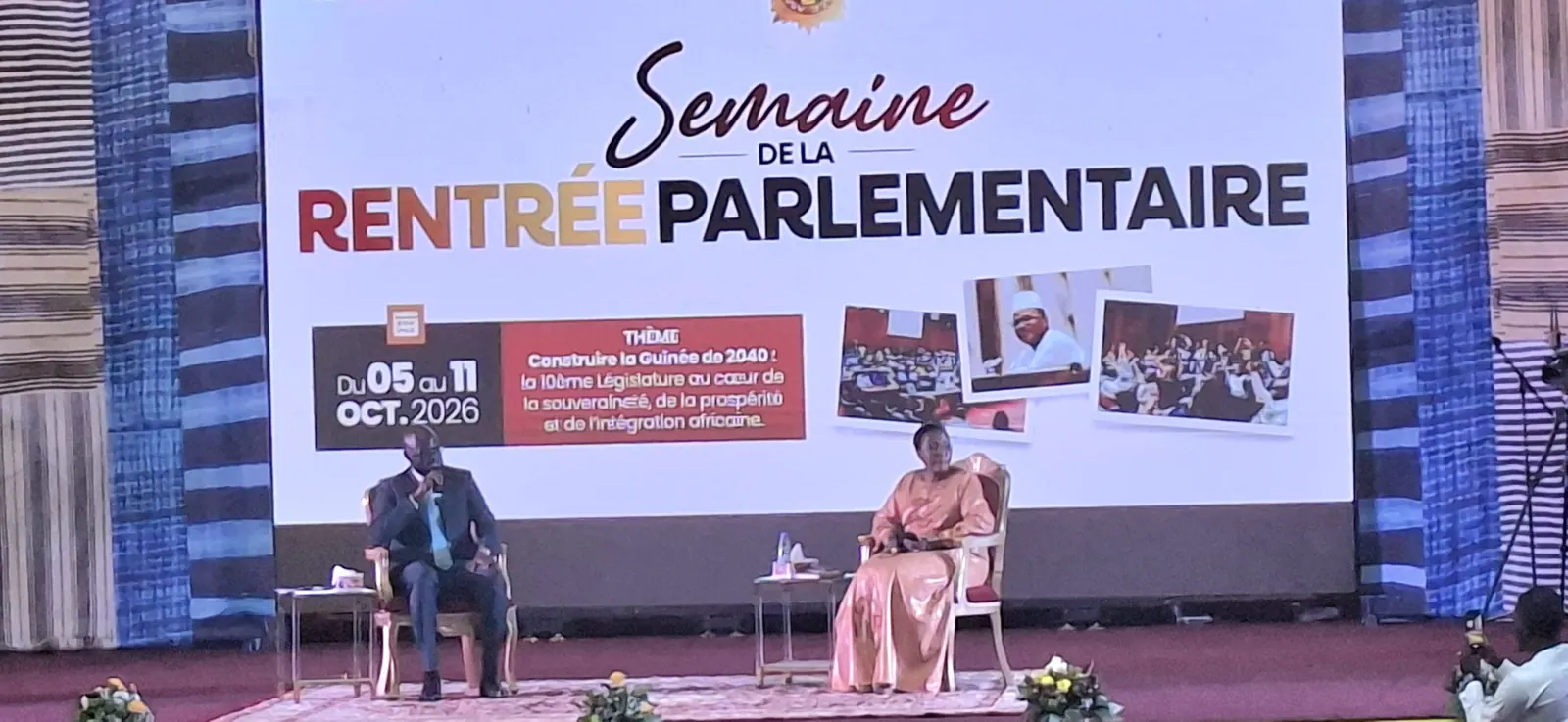
On October 6, Elhadj Malick N'diaye, Vice-President of the Senegalese National Assembly, spoke at a conference in Guinea on strengthening parliamentary oversight of government action. He emphasized the need for a more structured and regular performance-based monitoring approach. N'diaye praised the Guinean authorities for organizing conferences and panels to share experiences and best practices between institutions. This exchange aims to enhance the effectiveness of parliamentary oversight.
N'diaye noted that in many parliaments, including Senegal's, the oversight function is often overshadowed by legislative duties. However, he stressed that evaluating public policies and monitoring government action is crucial for good governance of public resources. The traditional political control approach focuses on verifying expenditures, whereas performance monitoring assesses the impact of spending on the population. This approach involves evaluating the resources mobilized, achievements, and actual impact.
The Senegalese National Assembly has taken steps to strengthen its oversight capacity. A 2016 constitutional reform introduced a public policy evaluation mission, which was operationalized in 2024. The Assembly established a Permanent Committee on Public Policy Evaluation, supported by a Directorate for Monitoring and Evaluation. This committee provides technical expertise to deputies, enabling them to analyze budget bills, conduct field missions, and verify policy implementation.
To enhance oversight, Senegal's parliament has also created a Budget Analysis Unit to help deputies understand complex financial documents. The Unit supports the work of parliamentary committees, which are now required to conduct regular field missions to verify policy implementation. N'diaye highlighted the importance of these missions, stating that committees should not only examine texts but also be present on the ground.
Another key innovation in Senegal's oversight approach is the regular hearing of ministers. Before the budget orientation debate, 25 ministers were questioned by technical committees on budget execution, achievements, and impacts. For example, the Minister of Vocational Training had allocated 15 billion CFA francs for 23 new centers, but only 18.32% of the credits had been executed at mid-term, falling short of the expected 45-50%.
The Senegalese system also relies on written questions, current affairs questions, hearings, information missions, and physical controls on the ground. N'diaye cited a fact-finding mission on the health sector, which resulted in a nearly 300-page report. He emphasized that effective oversight requires a comprehensive approach, encompassing planning, programming, budgeting, execution, monitoring, and evaluation.
In conclusion, N'diaye stressed that deputies must fully exercise their responsibility to ensure that public action is oriented towards effectiveness, transparency, and results for the benefit of citizens. By sharing Senegal's experience, he aims to inspire similar reforms in other countries, including Guinea. The exchange of best practices between institutions can help strengthen parliamentary oversight and promote good governance.
Key points
- Elhadj Malick N'diaye shares Senegal's experience in transitioning from political control to performance monitoring in parliamentary oversight.
- The Senegalese National Assembly has established a Permanent Committee on Public Policy Evaluation and a Budget Analysis Unit to support oversight work.
- Regular hearings of ministers and field missions have been introduced to verify policy implementation and promote transparency.