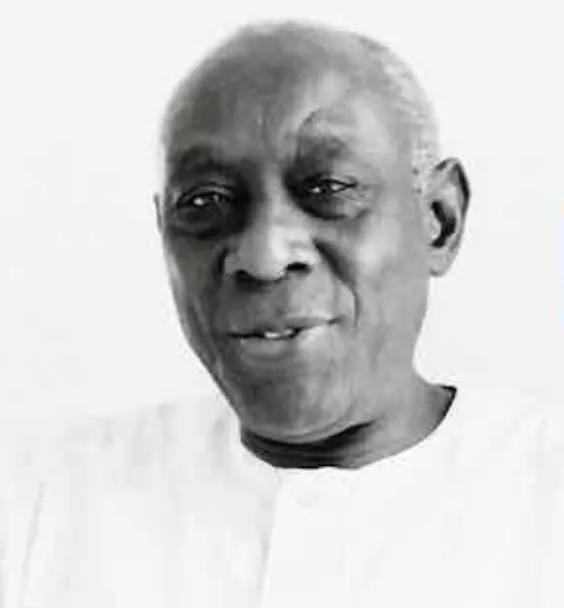
Cheikh Hamidou Kane, a prominent figure in Senegalese literature, has died, leaving behind a legacy of intellectual contributions. Born on April 2, 1928, in Matam, Senegal, Kane was a writer, philosopher, and high-ranking official whose work explored the intersection of traditional African culture and Western modernity. His literary career, though not prolific, was marked by significant contributions, including his acclaimed novel "L'Aventure ambiguë," published in 1961. Kane's work continues to influence contemporary thought on identity, culture, and modernity.
Kane's early life and education laid the foundation for his future success. He began his education in a Koranic school before attending a French school. After completing his secondary education at Lycée Van Vollenhoven in Dakar, Kane pursued higher studies at the Institut des Hautes Études de Dakar and later in Paris. At Lycée Louis-le-Grand and the Sorbonne, he studied law and philosophy, earning two licenses. He furthered his education at the École nationale de la France d'Outre-Mer, graduating with a brevet in 1959.
Upon his return to Senegal, Kane embarked on a distinguished administrative career, holding various positions, including Governor of the Thiès region and High Commissioner General for Planning. His international career was marked by significant roles, such as director regional for sub-Saharan Africa at UNICEF and responsibilities at the Centre de recherches pour le développement international. Kane also served as Minister of Industrial Development and Handicrafts and Minister of Planning and Cooperation.
Kane's literary work, though sparse, has had a lasting impact. "L'Aventure ambiguë," published in 1961, is widely regarded as a masterpiece of African literature. The novel explores the tensions between traditional and modern education through the story of Samba Diallo, a character closely modeled after Kane's own experiences. This work poses fundamental questions about accessing knowledge and modernity without losing one's cultural identity.
A notable aspect of Kane's literary career is his infrequent publication. For over three decades, "L'Aventure ambiguë" remained his only novel, earning him international recognition and the Grand Prix littéraire d'Afrique noire in 1962. Kane's decision to prioritize public service and international responsibilities over literary output contributed to his relatively short bibliography. His second and final novel, "Les Gardiens du Temple," was published in 1995, thirty-four years after his debut.
The impact of Kane's work extends beyond literature. His exploration of the intersection between tradition and modernity continues to resonate with contemporary intellectual debates. As a public servant, Kane's commitment to development and international cooperation has inspired generations of African leaders and intellectuals. His legacy as a writer, philosopher, and statesman ensures his continued relevance in discussions on identity, culture, and development.
Tributes have poured in from across Senegal and beyond, honoring Kane's memory and contributions. The Senegalese president saluted Kane as a "monument of African letters." As the nation mourns the loss of this intellectual giant, his work remains a testament to the enduring power of literature to shape our understanding of the world and ourselves.
Key points
- Cheikh Hamidou Kane's literary work explored the tensions between traditional African culture and Western modernity.
- Kane's commitment to public service and international cooperation inspired generations of African leaders and intellectuals.
- His legacy as a writer, philosopher, and statesman ensures his continued relevance in discussions on identity, culture, and development.