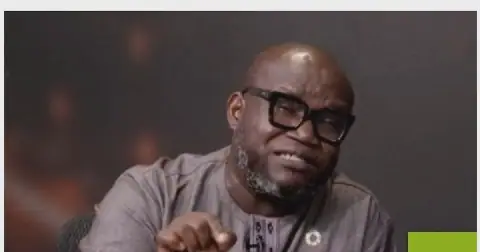
Professor Abdoul Aziz Ndiaye, head of the doctoral program in economics at the University of Gaston Berger (UGB) in Saint-Louis, has appealed to the executive and legislative branches to find a compromise to save the agreement Senegal reached with the International Monetary Fund (IMF) on managing the country's public debt. In an interview with journalists, Ndiaye emphasized the importance of this agreement for Senegal's international credibility. He made these remarks on the sidelines of the official launch of the 72-hour scientific rentrée of the Saint-Louis Economic Research Laboratory (LARES).
The IMF agreement, reached in September, provides for a $2.2 billion aid program from 2026 to 2029, aimed at supporting Senegal's economy, which is heavily burdened by debt estimated at 130% of GDP. Ndiaye stressed that the IMF's support offers Senegal not only financial assistance but also credibility on the international stage, enabling the country to continue borrowing at appreciable rates if the agreement is validated by the IMF's board of directors.
The academic urged the executive to provide the legislative body with all requested information, leading to the vote on the 2027 initial Finance Law. He emphasized that the supreme interest of Senegal should be above all other considerations. According to Ndiaye, the compromise between the executive and legislative powers is crucial to prevent the agreement from being compromised by institutional divergences.
Ndiaye highlighted that the IMF program is not just about the $2.5 billion in funds but about the credibility it offers Senegal. This credibility, he noted, would allow Senegal to continue borrowing at favorable rates. The professor's call for compromise comes at a critical time when the country is preparing for the implementation of the IMF program.
The University of Gaston Berger's economic research laboratory, where Ndiaye made these remarks, focuses on economic research and policy analysis. The 72-hour scientific rentrée, where Ndiaye's statement was made, is an event that marks the beginning of the academic year for the laboratory, focusing on themes related to Senegal's economic orientation.
The context of the IMF agreement is critical for Senegal, given its current economic challenges. The country's debt situation has been a significant concern, and the IMF program aims to provide a framework for managing this debt sustainably. Ndiaye's intervention underscores the importance of political consensus in achieving this goal.
As Senegal moves forward with the implementation of the IMF program, the compromise between the executive and legislative branches will be crucial. The validation of the agreement by the IMF's board of directors and the successful implementation of the program will depend on the country's ability to present a united front on economic policy.
Key points
- Professor Abdoul Aziz Ndiaye calls for compromise between Senegal's executive and legislative powers to save the IMF agreement.
Reporting sources
- Un universitaire appelle au compromis pour sauver l’accord avec le FMI · Agence de presse sénégalaise