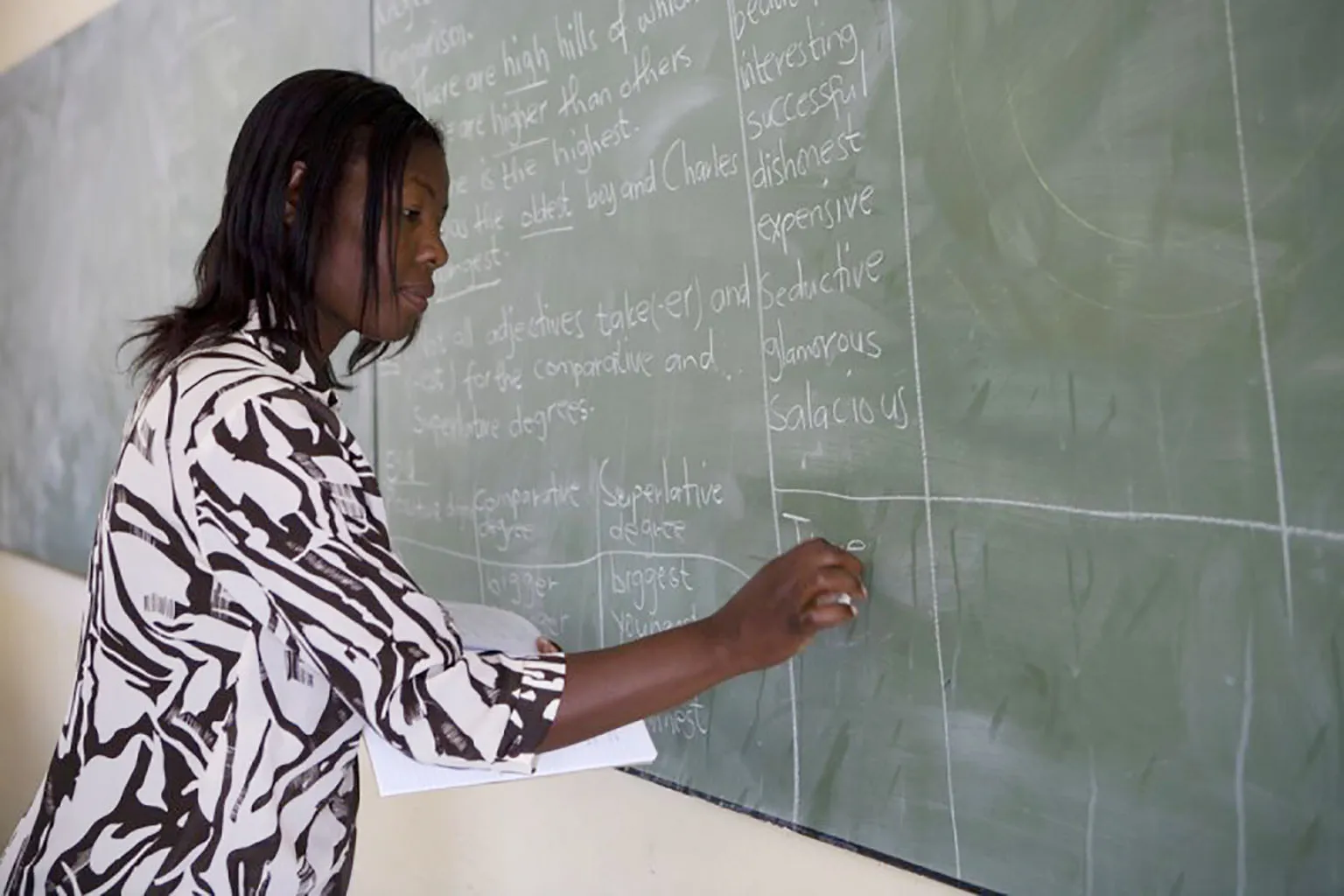
On October 5, 2026, teachers in Senegal returned to their schools, marking the beginning of the new academic year. At the Faculty of Educational Sciences and Technology (Fastef) in Dakar, the atmosphere was lively, with students and teachers engaging in conversations and exchanging greetings. The setting was a stark contrast to the quiet and peaceful environment that characterized the campus during the summer break.
The teachers from Lycée Thierno Saïdou Nourou Tall, a secondary school in Dakar, gathered at Fastef for their back-to-school event. The group, comprising men and women, was seen heading to the auditorium, where the school's administrators had organized a meeting to discuss the upcoming academic year. The teachers were in high spirits, chatting and laughing as they reunited after three months of summer break.
Cheikh Tidiane Fall, the headmaster of Lycée Thierno Saïdou Nourou Tall, addressed the gathering, highlighting the challenges that the school would face during the new academic year. He mentioned the need for rehabilitation of certain classrooms, provision of connected tablets to enhance teaching, and improving student performance. Fall also emphasized the importance of educational materials, such as fascicules, which are often created by teachers themselves.
At Lycée technique commercial Maurice Delafosse, another school in Dakar, the teachers also gathered for their back-to-school event. Despite the heavy rainfall that had hit the city the previous day, many teachers had still made it to the school. The courtyard had puddles of water, and students were busy collecting information from the notice boards.
The events at both schools highlighted the dedication and commitment of Senegalese teachers to education. Despite the challenges they face, including infrastructure and resource constraints, the teachers are eager to start the new academic year and make a positive impact on their students' lives.
The Senegalese education sector has been facing several challenges, including the recognition of certain private institutions. Recently, the Ministry of Education announced that 34 unrecognized private institutions had been served with warnings. This move aims to ensure that all educational institutions in the country meet the required standards.
As the teachers begin the new academic year, they are expected to play a crucial role in shaping the future of Senegalese students. With their dedication and hard work, the education sector in Senegal is likely to witness significant improvements. The government and other stakeholders must work together to address the challenges facing the sector and provide the necessary support to teachers and students alike.
Key points
- The Senegalese education sector faces challenges, including infrastructure and resource constraints.