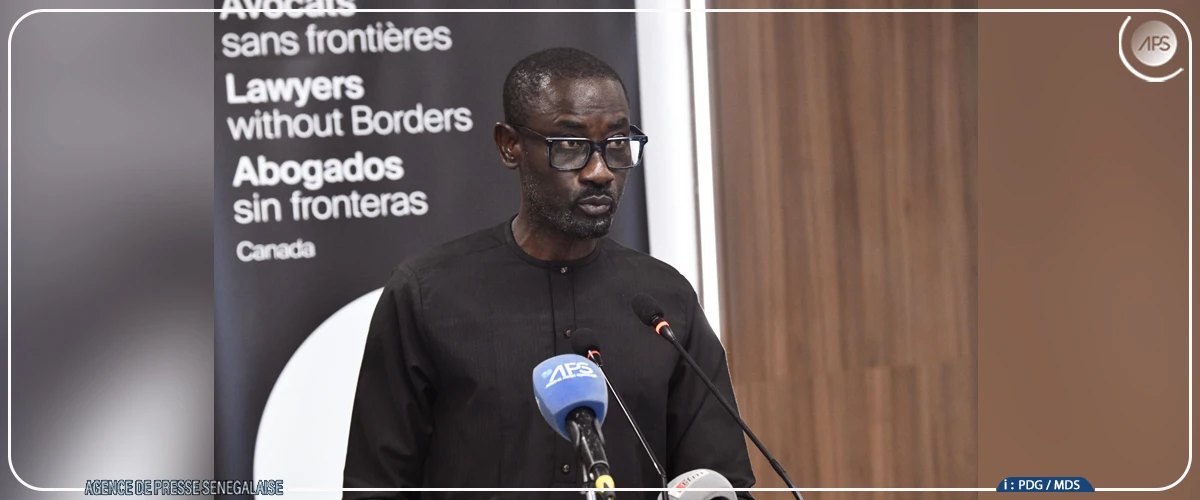
The Senegalese government has expressed its commitment to strengthening dialogue with civil society organizations to protect civic space and human rights defenders. According to Julien Ngane Ndour, Director of Human Rights at the Ministry of Justice, the state has a responsibility to make decisions but benefits from listening to the concerns of civil society before doing so. This approach is part of a broader effort to promote and protect human rights in the country.
The government's willingness to engage with civil society is reflected in the establishment of an annual dialogue day between the Ministry of Justice and human rights organizations. This initiative, scheduled to coincide with the African Human Rights Day on October 21, aims to make dialogue with civil society a regular and structured institutional event focused on achieving concrete results. By doing so, the government hopes to foster a more collaborative approach to human rights promotion and protection.
Another significant development is the creation of a national committee on penal policy, which includes a representative from civil society. Established by a ministerial decree on September 1, 2026, this committee is expected to ensure that civil society contributes to the design of public policies, rather than just being consulted after decisions have been made. This move is seen as a step towards more inclusive and participatory policy-making processes.
Despite these efforts, human rights defenders in Senegal continue to face significant challenges, including restrictions on freedoms, judicial harassment, disinformation campaigns, and online harassment. Ndour emphasized the need to strengthen protection for these defenders, highlighting that silencing one defender has a ripple effect, closing off a part of civic space. The government and civil society must work together to address these concerns and create a safer environment for human rights activism.
The Ministry of Justice's initiative has been welcomed by civil society organizations, which have long called for greater engagement and collaboration with the government on human rights issues. By working together, the government and civil society can identify areas of concern, develop effective solutions, and promote a culture of respect for human rights in Senegal. This partnership is seen as crucial for promoting social cohesion and stability in the country.
The regional workshop on sharing experiences and strengthening alliances between human rights defenders and civil society organizations is part of this effort. The event brought together stakeholders to discuss best practices, challenges, and strategies for promoting and protecting human rights in Senegal. Participants emphasized the importance of continued dialogue and collaboration to address the complex human rights challenges facing the country.
As Senegal continues to navigate its democratic trajectory, the government's commitment to engaging with civil society on human rights issues is seen as a positive step. By prioritizing dialogue and collaboration, the government can build trust with civil society and work towards creating a more just and equitable society for all. The success of these efforts will depend on the government's ability to follow through on its commitments and ensure that human rights are protected and promoted in practice.
Key points
- The Senegalese government has established an annual dialogue day with civil society organizations to promote and protect human rights.
- A national committee on penal policy has been created, including a representative from civil society, to ensure inclusive policy-making.
- Human rights defenders in Senegal continue to face significant challenges, including restrictions on freedoms and harassment.