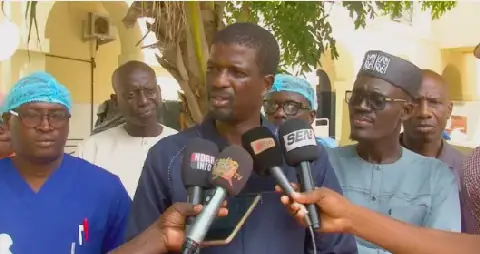
Senegal has taken a significant step in developing its refining capabilities by signing a protocol agreement with Turkish industrial group Yamata for the construction of a second oil refinery. The agreement was signed on September 23, 2026, in New York, on the sidelines of the 81st United Nations General Assembly. The new refinery will have a processing capacity of 4 million tons of crude oil per year. The agreement was signed by Mamadou Abib Diop, Director-General of the Société africaine de raffinage (SAR), and Cengiz Duyar, President and CEO of Yamata.
The project is estimated to cost between $2 and $3 billion, with Yamata responsible for engineering, procurement, and construction, as well as mobilizing financing from its financial partners. The refinery will primarily process crude oil from the Sangomar field but can also handle other types of crude from various sources. The project is part of Senegal's plan to increase its refining capacity and reduce dependence on imported refined products. The refinery will also undergo a modernization program, with work estimated at $300-500 million.
The construction of the second refinery is part of the SAR 2.0 project, aimed at increasing national refining capacity. In 2025, Mamadou Abib Diop expressed the ambition to enable Senegal to process more of its own oil and reduce dependence on imported refined products. The new refinery is expected to cover Senegal's fuel needs and potentially generate volumes for the sub-regional market. This development comes as Senegal has been producing oil since 2024, primarily from the Sangomar field.
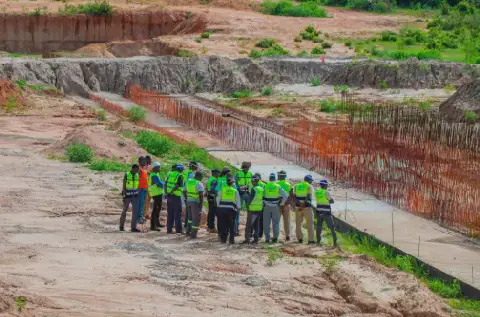
The project is expected to have significant employment implications, with over 15,000 direct jobs announced during the construction phase, focusing on local content. The project will require expertise in engineering, construction, maintenance, and industrial logistics. Beyond direct jobs, the refinery's development may lead to the emergence of related activities around the oil industry. The project also includes a petrochemical component, aiming to promote local transformation of petroleum derivatives and create new industrial sectors.
The agreement signed in New York marks the first step in realizing the second refinery. The next steps include finalizing engineering studies before construction begins. The project aligns with Senegal's goal of increasing its refining capacity and reducing dependence on imported products. President Bassirou Diomaye Faye presided over the signing ceremony, highlighting the project's significance.
The second refinery will complement the existing SAR refinery in Mbao, which will undergo modernization as part of the SAR 2.0 project. The modernization program aims to enhance the existing facility's capacity while developing a new infrastructure to significantly increase local crude oil processing. The project is expected to have a positive impact on Senegal's economy and energy sector.
The project's implementation will be carried out without a sovereign guarantee from the state. The project's success will depend on the effective collaboration between Yamata and SAR, as well as the mobilization of necessary financing. The project's development is expected to contribute to Senegal's economic growth and energy independence.
Key points
- The project is estimated to cost between $2 and $3 billion.
- The refinery will have a processing capacity of 4 million tons of crude oil per year.
- Over 15,000 direct jobs are expected during the construction phase.