The Senegalese university system is facing a significant challenge as the demand for higher education far exceeds the available capacity. According to recent statistics, there were 94,000 applications for only 57,000 available spots, highlighting a substantial gap between the two. This disparity is not merely a numbers issue but reflects a deeper structural problem that requires a comprehensive solution. The current situation underscores the need for a more sustainable and diversified approach to higher education.
The issue of saturation in Senegal's university system is not new, but it has reached a critical point. Between 1960 and 1969, Senegal produced 6,519 high school graduates, whereas between 2020 and 2025, this number skyrocketed to 455,035. This rapid growth has put immense pressure on the existing infrastructure, which is struggling to accommodate the increasing number of students. The situation is further complicated by the fact that the university system is still largely based on an elite model that is not equipped to handle such a large volume of students.
In response to the capacity constraints, the Senegalese government has previously experimented with financing students' enrollment in private institutions. Between 2013 and 2019, approximately 40,000 students benefited from this initiative, which cost the government around 54 billion FCFA. While the private sector has a role to play in higher education, relying on it as a long-term solution is not sustainable. The government needs to focus on building public capacity and diversifying the higher education landscape.
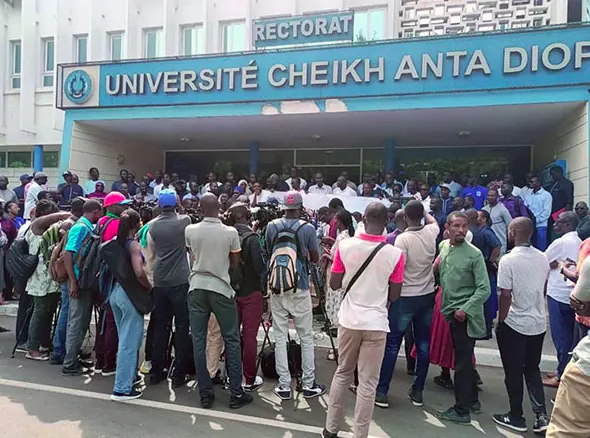
The current university calendar in Senegal is another factor contributing to the system's inefficiency. The academic year often extends beyond the traditional 12-month period, with students taking longer to complete their degrees. This has a ripple effect on the system's capacity, as cohorts accumulate and compete for limited resources. To address this issue, the government has taken steps to restore a more regular academic calendar, with the 2026-2027 academic year set to begin on October 15 at the University Cheikh Anta Diop.
A major obstacle to addressing the challenges facing Senegal's university system is the lack of accurate data. The Direction générale de l'Enseignement supérieur (DGES) has acknowledged that the absence of an integrated governance system for higher education and research hampers the sector's management. To rectify this, the government needs to establish a national registry of higher education enrollments, both public and private, linked to a unique student identifier.
The DGES has warned that if current trends continue, Senegal's university system will face severe challenges by 2036, including saturation, declining education quality, weakened research, and increased territorial inequalities. To mitigate these risks, the government must invest in infrastructure and adopt a more diversified approach to higher education, incorporating various types of institutions and programs.
Ultimately, Senegal's university system needs a fundamental transformation to accommodate the growing demand for higher education. This will require a shift from the current elite model to a more inclusive and diversified system that includes academic universities, technical institutes, vocational training, and hybrid programs. By doing so, the government can ensure that all students have access to quality higher education and that the system is equipped to meet the needs of a rapidly growing student population.
Key points
- The Senegalese government needs to adopt a more diversified approach to higher education to address the current saturation and demand outstripping capacity.