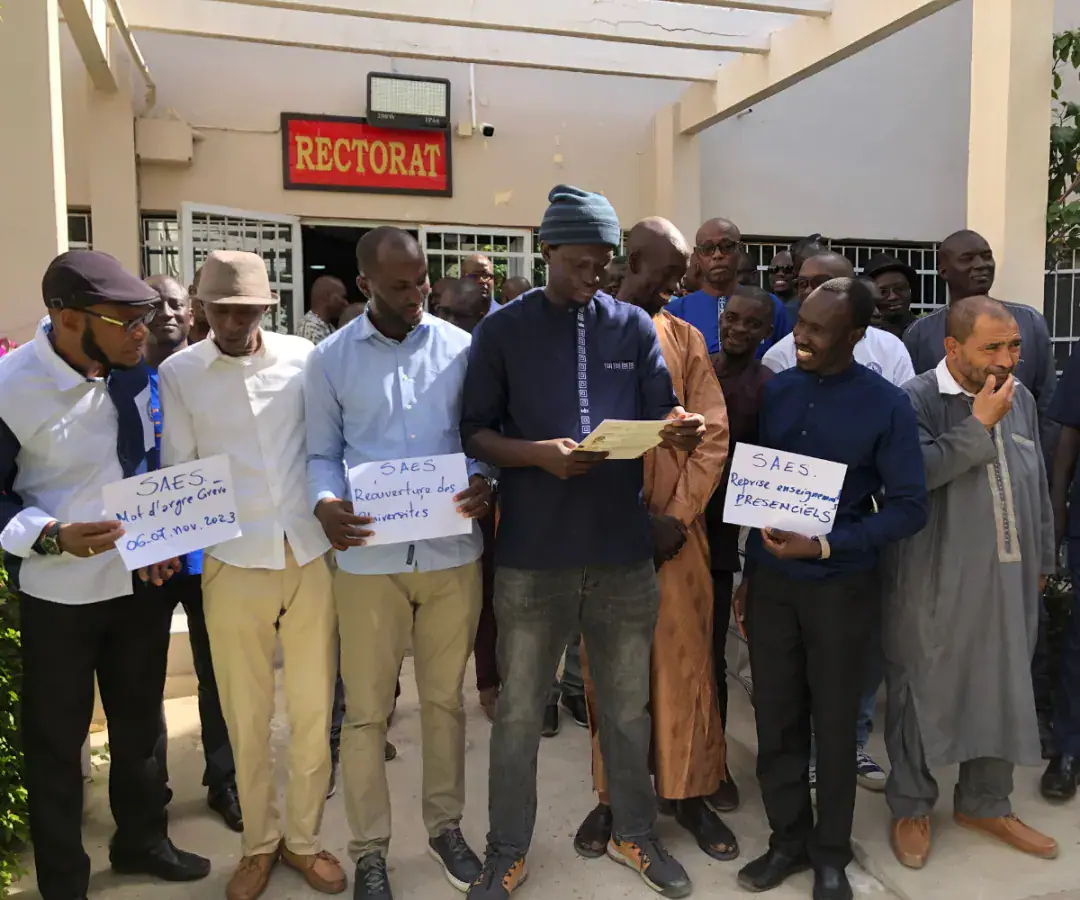
The Syndicat autonome de l'enseignement supérieur (SAES) has expressed deep concerns over the state of Senegal's public universities, citing a stark mismatch between the number of students being admitted and the actual capacity of the institutions. This issue was highlighted during a national conference held at the University Assane SECK de Ziguinchor, where the union's leaders and representatives from various campuses gathered to discuss the sector's challenges. The SAES has described the situation as "insustainable" and has called for immediate action to address these systemic problems.
According to the SAES, the problems plaguing the universities are multifaceted. They include not only the significant disparity between student enrollment and institutional capacity but also severely degraded working and study conditions. These issues span pedagogical, administrative, and human aspects, indicating a broad crisis that affects the quality of education and research. The union has emphasized that these challenges are not isolated incidents but symptoms of a deeper, longstanding neglect of the sector.
The SAES has formulated a series of demands aimed at addressing these challenges. Financially, the union is seeking the immediate reimbursement of social contributions deducted from the salaries of teachers and researchers over several years. Administratively, they are calling for the prompt processing of promotion acts for teachers and researchers by the Ministry of Higher Education, Research, and Innovation and the Prime Minister's office. These demands reflect the union's broader concerns about the management and governance of the university sector.
A significant aspect of the SAES's criticism is directed at the CAMES (Conseil africain et malgache pour l'enseignement supérieur), an accreditation system that the union believes has become overly bureaucratic and archaic. The SAES argues that this system hinders the career progression of researchers and undermines the scientific sovereignty of member states. They accuse CAMES of acting with a "dictatorial" approach, supported by some national actors, which they believe stifles innovation and the development of young researchers.
The SAES's criticisms are set against the backdrop of a protocol agreement signed on January 6, 2023. The union believes that the government has not fulfilled its commitments under this agreement, particularly in preventing CAMES from overstepping its mandate and supplanting national educational authorities. This situation, the SAES warns, could jeopardize Senegal's national research strategy and the future of its young researchers.
According to the SAES, the current crisis is the result of over a decade of governmental shortcomings, including delays in delivering university infrastructure, a freeze on recruitment, and opaque university budgets. The union is taking a firm stance, reaffirming its commitment to the stability of the higher education sector while urging its members to remain vigilant and prepared for further action. They are calling for a collective effort to safeguard the public university system.
The SAES's leadership, including Liboire SAGNA, is vocal about the need for immediate and decisive action to address these challenges. They are seeking not only financial and administrative reforms but also a fundamental shift in how the university sector is governed and accredited. The situation remains critical, with the SAES prepared to escalate its protests and demands to ensure that the concerns of educators and researchers are heard and addressed by the authorities.
Key points
- The SAES criticizes CAMES for its bureaucratic and archaic accreditation system.
- The union demands immediate reimbursement of deducted social contributions and prompt processing of promotions.
- The crisis in Senegal's universities is attributed to over a decade of governmental shortcomings.
Reporting sources
- WalFadjri · WalFadjri