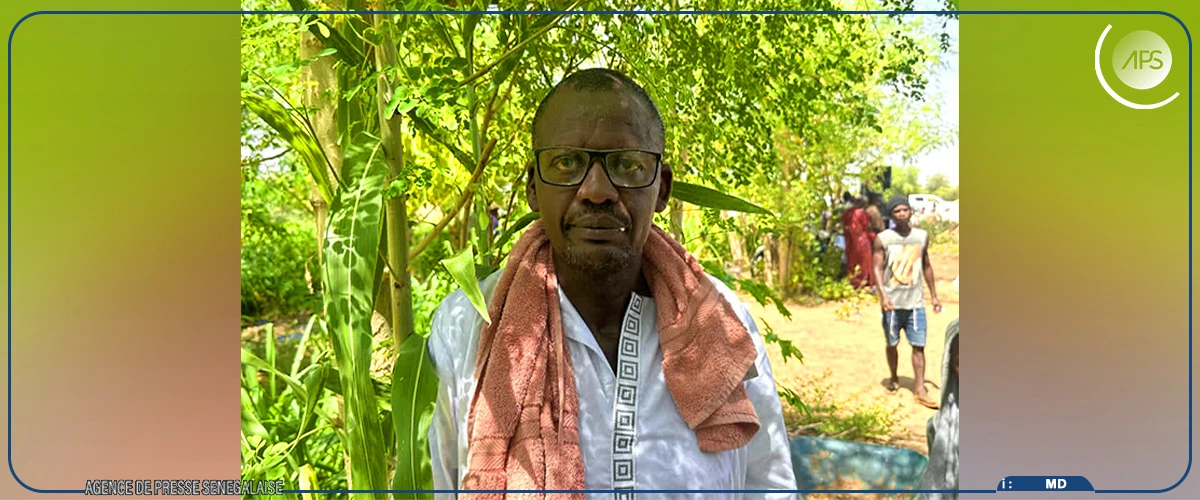
In Thilogne, a region in northern Senegal, an association of young people and women is working to establish a significant agroecological center on 40 hectares of land. The Association des fils de Mollé et Golléré Thilogne aims to use agriculture as a tool for local development and job creation, providing an alternative to irregular migration. With support from its members and diaspora communities, the association has started developing the agricultural perimeter.
The association has made notable progress, with various fruit trees, vegetable crops, and potato production already underway. The site features diverse species such as fruit trees, banana plants, lemon trees, papaya trees, mango trees, and moringa. However, the site's full potential remains untapped due to water supply constraints. Two mini-boreholes, about 40-50 meters deep, are currently available but insufficient to irrigate all plots simultaneously.
Water scarcity is a significant challenge for the project, forcing the farmers to implement a strict water management system. Crops are irrigated on a rotational basis to avoid depleting the available resources. According to Silèye Thiam, the association's treasurer, this approach means that only some plots can be watered on a given day. The farmers hope that drilling a deeper borehole will help unlock the site's full potential.
A proposed borehole, approximately 180 meters deep, with a 100-cubic-meter pump and storage ponds, could enable the association to exploit the entire 40 hectares. El Hadji Amadou Diallo, president of the Association Mollé et Golléré de Thilogne, emphasizes that sufficient water resources would allow for large-scale irrigation and unlock the site's potential. The association's efforts focus on diversifying agricultural production in the region.
Despite water constraints, the project's results are encouraging, with various crops thriving on the site. The banana plant, for example, has been successfully cultivated in an area where it is not commonly grown. The association has also experimented with other crops, including potatoes, which have yielded impressive results. One hectare of potatoes produced 25 tons, far exceeding initial expectations.
The potato harvest was easily sold, with a strong demand during the Ramadan period. This experience has confirmed the existence of a regional market for the association's products. The project's leaders plan to expand potato and onion cultivation, increasing the area dedicated to these crops while continuing to develop arboriculture and vegetable production.
The agroecological project aims to provide economic opportunities for local youth, offering an alternative to irregular migration. By creating jobs and stimulating local economic growth, the association hopes to encourage young people to stay in their communities. With four permanent employees and additional seasonal workers, the project has already made a positive impact on the local community.
Key points
- The association's agroecological project aims to transform 40 hectares of land in Thilogne into a sustainable agricultural hub.
- Water scarcity is a significant challenge for the project, but a proposed deeper borehole could help unlock the site's full potential.
- The project provides economic opportunities for local youth, offering an alternative to irregular migration and stimulating local economic growth.