The Senegalese Ministry of National Education has announced the creation of over 5,000 terminology cards and booklets in Wolof, Pulaar, and Seereer languages under the SENTERMINO project. This initiative aims to strengthen the quality of learning and overcome linguistic barriers in classrooms. The project is a collaboration between the Institut Fondamental d'Afrique Noire Cheikh Anta Diop (IFAN), the Ecole Supérieure Polytechnique (ESP), UNESCO, and the Institut de la Francophonie pour l'Education et la Formation (IFEF).
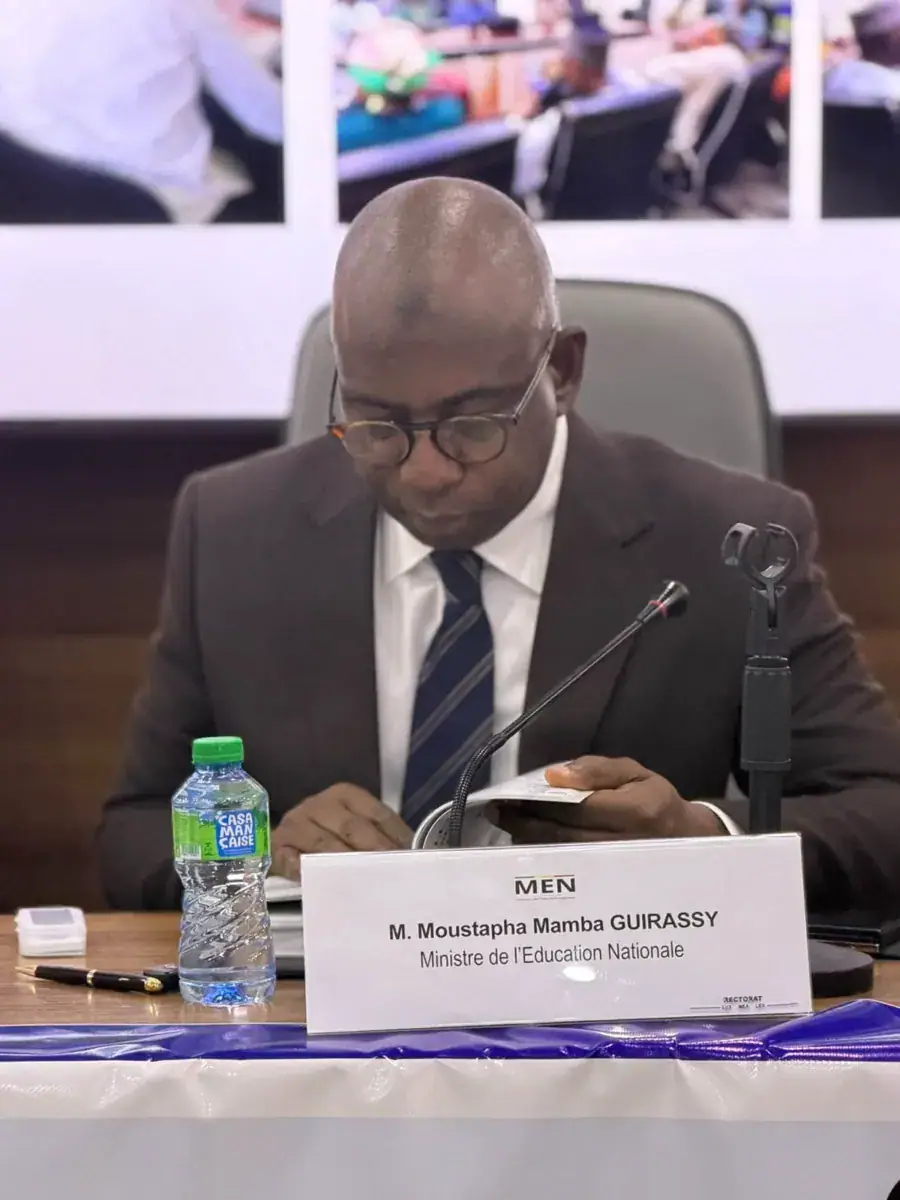
The SENTERMINO project was presented by Minister of National Education, Moustapha Mamba Guirassy, during an atelier at the University Cheikh Anta Diop de Dakar (UCAD). The project uses digital technology and scientific research to support national languages, facilitating the teaching of sciences in schools. According to the minister, the project is an essential tool for the Senegalese education system, which is undergoing a major overhaul and implementing the Modèle Harmonisé d'Enseignement Bilingue au Sénégal (MOHEBS).
The first phase of the SENTERMINO project has resulted in the creation of over 5,000 terminology entries in Wolof, Pulaar, and Seereer languages. These resources have been officially handed over to the minister during the atelier, which also marked the launch of the SENTERMINO-EDSAN (2027-2029) initiative. This new phase aims to extend the project to six national languages and new areas of knowledge.
The SENTERMINO project is part of a broader effort to improve education quality in Senegal. The project provides teachers and students with dictionaries, terminology cards, and booklets to support bilingual education. According to the minister, this initiative will help to address the challenges faced by students and teachers in using national languages in the classroom.
The atelier was attended by various stakeholders, including educators, researchers, and policymakers. The event provided a platform for participants to discuss the project's progress and its potential impact on the education sector. The SENTERMINO project is seen as a key initiative in promoting the use of national languages in education and improving learning outcomes.
The project's focus on national languages is critical in Senegal, where linguistic diversity is a significant challenge in education. By providing terminology cards and booklets in local languages, the SENTERMINO project aims to make education more accessible and effective for students. The project's success could have implications for education policy and practice in other countries with similar linguistic challenges.
The SENTERMINO project has the potential to contribute to the development of a more inclusive and effective education system in Senegal. With the support of international partners, including UNESCO and IFEF, the project is well-positioned to make a positive impact on education outcomes. Key stakeholders will continue to monitor the project's progress and assess its impact on the education sector.
Key points
- The SENTERMINO project has created over 5,000 terminology cards and booklets in three national languages to support bilingual education in Senegal.