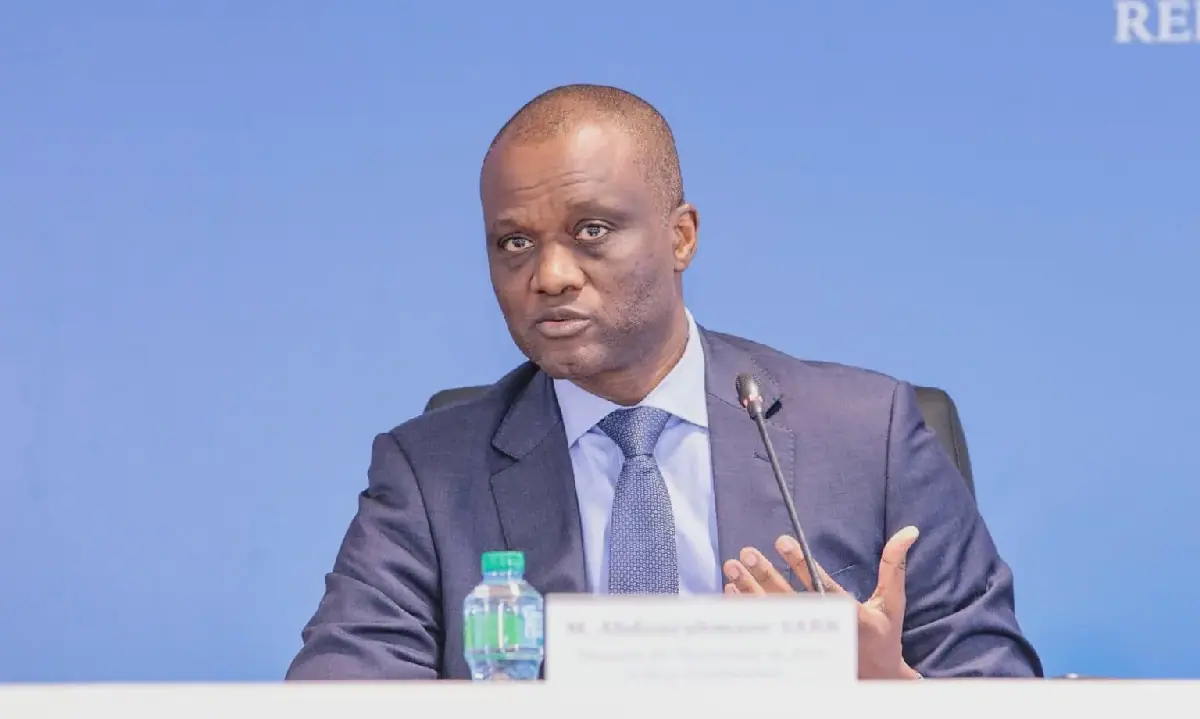
The rejection of Senegal's 2026 supplementary budget by the National Assembly has sparked reactions from various quarters. Former Minister of Economy Abdourahmane SARR has weighed in on the debate, calling for transparent financial management based on reliable budget data. He praised the parliamentary debate as a demonstration of the country's democratic institutions at work. However, SARR emphasized that the tensions surrounding the budget must prompt Senegal to reassess its financing strategy and better manage its economic trajectory.
Abdourahmane SARR looked back on the period from 2019 to 2024, urging a break from what he described as opaque practices. He stressed the need for Senegal to have its own economic and financial data, free from dependence on external actors to determine the actual state of public accounts. The former minister recalled that his department's macroeconomic report in March 2026 aimed to reduce the deficit to 3% of GDP by 2027. He also reiterated his recommendation to base the 2026 supplementary budget on the actual execution of the budget, using 2025 as a reference for public investments.
SARR acknowledged the importance of engaging with international partners, such as the International Monetary Fund (IMF), and ensuring the reliability of budget information transmitted to them. However, he emphasized that defending Senegal's interests primarily rests with its institutions. To support his analysis, SARR cited public investment figures, noting that expenditures executed as of September 2026 stood at 1,031 billion CFA francs, compared to 1,069 billion during the same period in 2025.
The former minister expressed skepticism about the feasibility of achieving the 2,249 billion CFA francs in public investments projected in the supplementary budget, which would require mobilizing 1,218 billion CFA francs in just three months. He argued that such a level of execution would be challenging without justification. SARR also addressed the issue of energy subsidies, advocating for the exhaustive accounting of state commitments, regardless of administrative delays, to ensure sector continuity.
For 2027, Abdourahmane SARR suggested that a deficit of less than 5% of GDP, based on a 2026 rebase, could be achievable and would facilitate a return to 3%. He believes this trajectory would also strengthen Senegal's refinancing capabilities on the regional market without restructuring. SARR's comments add to the ongoing debate on Senegal's financial management and transparency.
The rejected supplementary budget has raised concerns about Senegal's ability to manage its finances effectively. The government must now revisit its financing strategy and work towards greater transparency in its financial dealings. This development has significant implications for Senegal's economic future and its ability to attract investment.
As the debate continues, stakeholders will be watching closely to see how the government responds to calls for greater financial transparency and management. The rejection of the supplementary budget serves as a reminder of the importance of effective financial management in Senegal's economic development. The country's institutions must take the lead in defending its interests and ensuring that financial data is reliable and transparent.
Key points
- Former Minister Abdourahmane SARR calls for transparent financial management based on reliable budget data.
- The rejected supplementary budget prompts Senegal to reassess its financing strategy.
- SARR suggests a deficit of less than 5% of GDP for 2027 could facilitate a return to 3%.