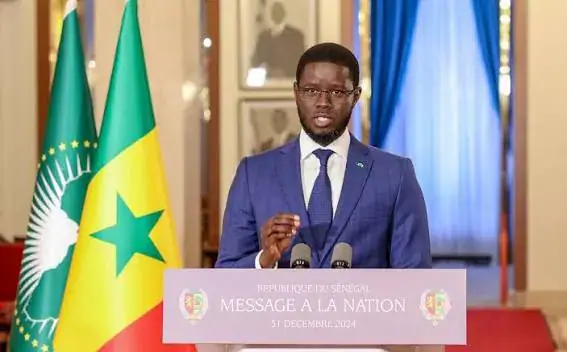
A recent video circulating on social media claims that if the PASTEF party wins the upcoming legislative and local elections in Senegal, President Bassirou Diomaye Faye would be forced to either govern with the party or resign. However, this claim has been debunked by fact-checkers. According to the Constitution of Senegal, the President has the power to determine the nation's policy and is not bound by the composition of the National Assembly.
The Senegalese political landscape has been marked by divisions within the PASTEF party, which President Bassirou Diomaye Faye was a part of before his election. The party has experienced a split since the President removed Ousmane Sonko, the party's president, from his position as Prime Minister by decree on May 22, 2026. This move has led to speculation about the party's future and its relationship with the President.
The Constitution of Senegal establishes a presidential regime, where the President has significant powers and is directly elected by the people. According to Article 42 of the Constitution, the President determines the nation's policy, and Article 49 gives him the power to appoint and dismiss the Prime Minister without being bound by the composition of the National Assembly.
The Prime Minister is responsible for implementing the President's policy and is accountable to both the President and the National Assembly. The President can dissolve the National Assembly by decree, and the Assembly can only bring down the government through a motion of censure, which can only be voted once per session.
Experts have confirmed that the President's mandate comes from the people, not the National Assembly, and that a victory by the PASTEF party in the elections would not obligate him to resign or govern with the party. Yacine Diagne, a political scientist, notes that the Senegalese regime is characterized by a strong presidency, and the President has significant discretion in appointing and dismissing the Prime Minister.
The confusion about the President's obligations may stem from the influence of French law on Senegalese institutions, but the two systems differ significantly. In France, the government is responsible for determining and conducting the nation's policy, whereas in Senegal, this responsibility lies with the President.
In conclusion, President Bassirou Diomaye Faye is not constitutionally obligated to govern with the PASTEF party if it wins the upcoming elections, and he cannot be forced to resign. The Constitution of Senegal grants significant powers to the President, and he is free to make decisions about the composition of the government.
Key points
- The President of Senegal has significant powers under the country's presidential regime and is not obligated to govern with the PASTEF party if it wins the elections.