In Senegal's Pointe-Sarène village, a shift in agricultural practices is underway. The village, located in the Mbour department, is transitioning from traditional crops like peanuts, millet, and maize to NERICA rice cultivation. This change is driven by the growing interest of local producers and support from the Mbour Departmental Rural Development Service. The introduction of NERICA rice, a cross between Asian and African rice, aims to enhance food security and reduce reliance on imported rice.
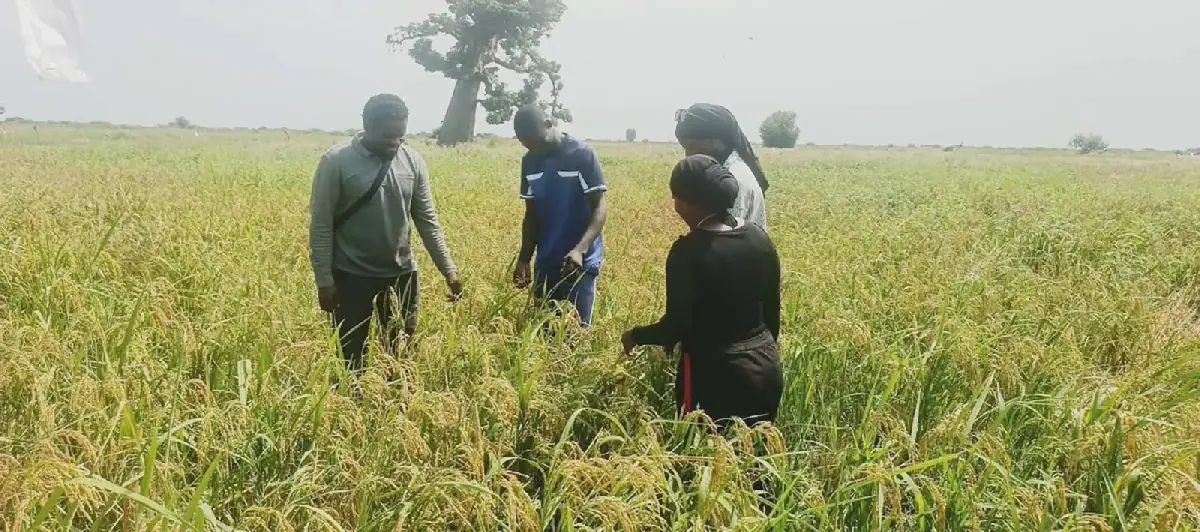
The landscape of Pointe-Sarène is transforming, with vast expanses of green and golden rice plants. According to local actors, nearly 70% of the village's land is now dedicated to rainfed rice cultivation. Alassane Sonko, a 40-year-old seed producer, is among those who have adopted this new crop. He sees it as a promising opportunity, having previously considered irregular migration. Sonko emphasizes the need to learn new techniques and master the different stages of rice cultivation.
Mbaye Sarr, another local producer, has been growing NERICA rice for three years. He notes that the village's interest in this crop is increasing, with more residents participating each year. The Mbour Departmental Rural Development Service plays a crucial role in supporting producers, providing guidance on land preparation, sowing, fertilizer application, and plot monitoring. The service aims to make Pointe-Sarène a hub for rainfed rice cultivation.
The NERICA variety, with a 92-day growth cycle, has been chosen for its adaptability to the region's climate. Lamp Mbacké, head of the seed department at the Mbour Departmental Agricultural Service, highlights the importance of this variety. He explains that the goal is not only to boost production but also to strengthen the department's seed capital and support the expansion of rice cultivation.
Diatou Ciss, a young agricultural volunteer, is involved in monitoring producers and facilitating access to seeds. Despite challenges, including a recent rainfall pause, Ciss notes that the chosen variety is resilient to climate-related risks. The evolution of rice cultivation in Pointe-Sarène raises hopes for increased rice supply and improved food security.
The introduction of NERICA rice in Pointe-Sarène offers opportunities for growth and development. The Mbour Departmental Rural Development Service aims to promote rainfed rice cultivation and disseminate best practices. With the support of local producers and volunteers, the village is poised to become a model for sustainable rice production in Senegal.
As the rice cultivation season progresses, producers in Pointe-Sarène remain optimistic about their harvests. With the help of the Mbour Departmental Rural Development Service, they are working to overcome challenges and ensure a successful yield. The success of NERICA rice cultivation in Pointe-Sarène could have a positive impact on Senegal's food security and economy.
Key points
- NERICA rice cultivation has been adopted by nearly 70% of Pointe-Sarène's land.
- The Mbour Departmental Rural Development Service supports producers in Pointe-Sarène.
- The NERICA variety has a 92-day growth cycle, suitable for the region's climate.