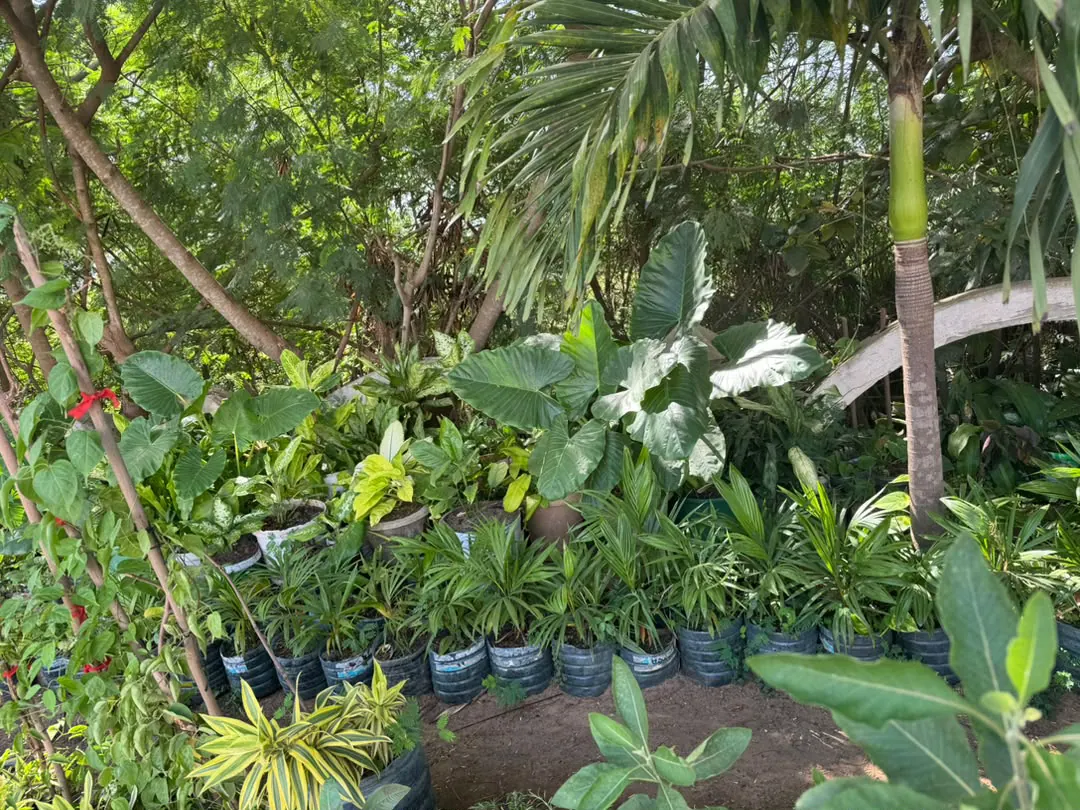
In the heart of Pikine-Technopole, a vibrant oasis has emerged, defying the urban landscape's harsh conditions. The area is home to numerous pépiniéristes, who have made it their mission to bring life and greenery to this previously barren land. Despite the scorching sun and salty soil, these artisans have created a thriving floriculture industry, showcasing their skills and dedication to their craft. The oasis has become a popular spot for locals and passersby, who come to admire the beauty and tranquility it offers.
Mame Gor Ndiaye, a pépiniériste, has been operating in Pikine-Technopole since 2018. He inherited the business from his father and has continued to nurture and grow it. His nursery, "Touba Jardin," is a haven for plant enthusiasts, offering a wide variety of flowers, trees, and other greenery. Ndiaye takes pride in his work, stating that his business welcomes people from all walks of life, regardless of age or social status. His dedication to his craft is evident in the care and attention he gives to each plant.
The floriculture industry in Pikine-Technopole faces its challenges, particularly with regards to soil salinity. The high salt content in the soil makes it difficult for plants to thrive, forcing pépiniéristes to adopt innovative methods to overcome this issue. Ndiaye has developed his own technique, using biological fertilizers and soil amendments to reduce the soil's salinity. This approach requires significant financial investment, but it has allowed him to maintain a healthy and diverse range of plants.
Ibou Tine, another pépiniériste, has been operating in Pikine-Technopole for three years. He began his career in 2004, working as a garden maintenance professional. Tine's experience has taught him to be resourceful and adaptable, as the industry is often unpredictable. He notes that clients' purchasing habits can vary greatly, with some buying only a single pot, while others purchase dozens of plants. Despite this uncertainty, Tine's business allows him to support himself and his family.
The pépiniéristes in Pikine-Technopole have developed ingenious methods to overcome the challenges they face. Bathie Sène, for example, creates makeshift pots from 10-liter plastic containers, which he uses to nurture young plants. His nursery offers a diverse range of plants, including oreilles d'éléphant, crotons, and sapins. Sène uses natural methods to combat soil salinity, including the use of manure to reduce the soil's salt content.
The impact of the floriculture industry in Pikine-Technopole extends beyond the economic benefits. The oasis has become a vital green space, providing a tranquil escape from the urban landscape. The pépiniéristes' efforts have also contributed to the area's beautification, reducing insecurity and promoting a sense of community. The Senegalese government has recognized the importance of this initiative, providing support and resources to help the industry thrive.
As the industry continues to grow, the pépiniéristes are optimistic about its future prospects. With the upcoming Jeux Olympiques de la Jeunesse, they hope to capitalize on the event's momentum, providing services and products to support the celebrations. The pépiniéristes' dedication to their craft and their resilience in the face of challenges have transformed Pikine-Technopole into a vibrant oasis, showcasing the potential for floriculture to drive economic growth and environmental sustainability in Senegal.
Key points
- The pépiniéristes in Pikine-Technopole have created a thriving floriculture industry, despite the challenges posed by soil salinity and unpredictable client purchasing habits.