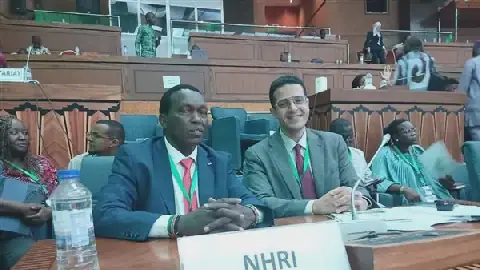
The Senegalese Parliament has launched an initiative to establish parliamentary commissions to audit and interrogate public portfolio managers. This move is seen as a significant step towards promoting transparency and accountability in the management of public resources. The initiative aligns with the country's commitment to good governance and open government, as emphasized by the Observatoire International de la Démocratie Participative en Afrique (OIDP Afrique).
The initiative is part of a broader effort to consolidate an open, responsible, and citizen-centric government. Senegal's adhesion to the Partnership for Open Government (PGO) in July 2018 marked a significant milestone in its commitment to promoting access to information, transparency, and citizen participation. The PGO initiative was launched in September 2011 at the United Nations General Assembly in New York.
Several reforms and initiatives have been undertaken to promote open government in Senegal, including the establishment of an independent anti-corruption agency, the adoption of a program-based budget, and adherence to the Extractive Industries Transparency Initiative (EITI). The country has also participated in the Peer Review Mechanism (PRM) and established the Strategic Orientation Committee for Oil and Gas (COS-PETROGAZ).
The parliamentary commissions will play a crucial role in ensuring that public policies are implemented effectively and that resources are utilized efficiently. The commissions will have the power to summon public officials and private individuals to provide information on the management of public resources. This move is expected to enhance transparency and accountability in the use of public funds.
The initiative has been welcomed by stakeholders, who see it as an opportunity to strengthen the coherence between Senegal's international commitments to open government and its national practices. The African Assizes on Open Government (AAGO) held in Rabat, Morocco, in May 2026, emphasized the importance of parliamentary engagement in promoting transparency and accountability.
The parliamentary initiative is expected to contribute to improved public management by promoting a culture of transparency, participation, and accountability. The initiative will also provide citizens with better information on public choices and their consequences. By enhancing transparency and accountability, the initiative aims to improve the quality of public management and promote citizen trust in government.
The success of the initiative will depend on its effective implementation and the ability of the parliamentary commissions to hold public officials accountable. The initiative offers an opportunity for Senegal to translate its commitments to transparency and accountability into concrete institutional mechanisms. The outcome of the initiative will be closely watched by stakeholders, who expect it to contribute to improved governance and citizen well-being.
Key points
- The Senegalese Parliament's initiative to establish parliamentary commissions to audit public portfolios aims to enhance transparency and accountability in governance.
- The initiative aligns with Senegal's commitment to good governance and open government, as emphasized by the Observatoire International de la Démocratie Participative en Afrique (OIDP Afrique).
- The parliamentary commissions will play a crucial role in ensuring that public policies are implemented effectively and that resources are utilized efficiently.