Senegal's National Assembly, dominated by the opposition Pastef party, has rejected a revised version of the country's budget bill. The bill was seen as crucial to restoring public finances as the country finalizes an IMF bailout. The rejection comes amid a dramatic political feud between Pastef's leader Ousmane Sonko and President Bassirou Diomaye Faye. The bill's rejection may impact Senegal's ability to secure a $2.2-billion IMF debt program aimed at stabilizing its public finances.
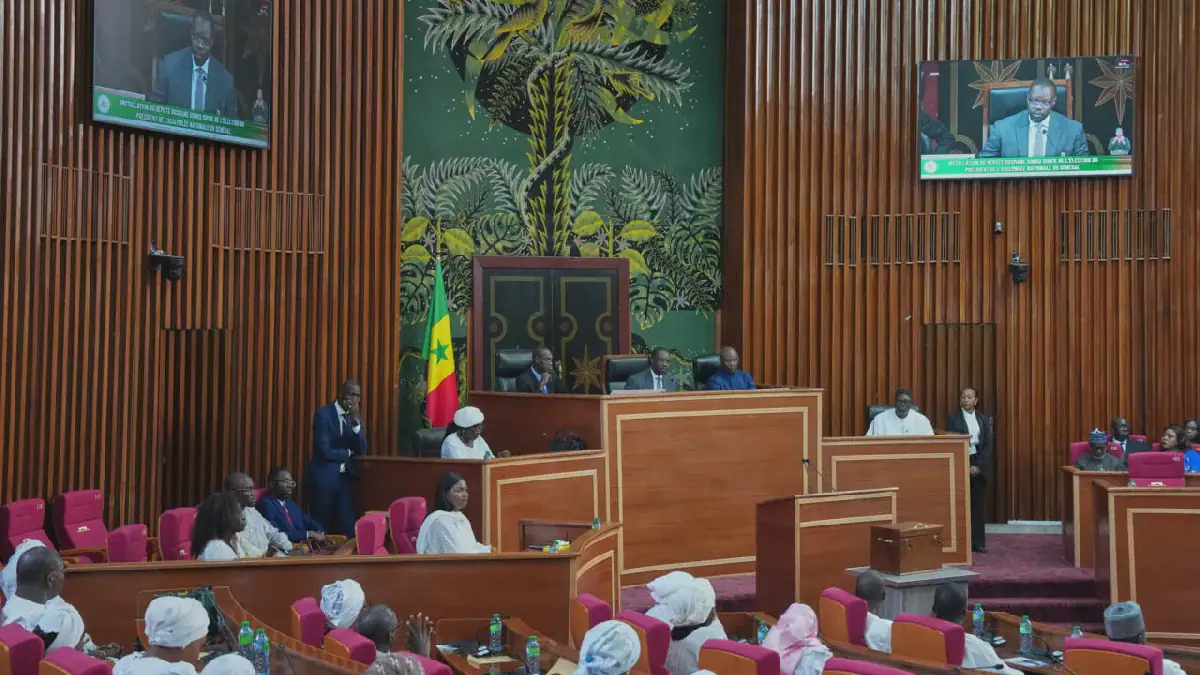
The revised budget aimed to account for a sharp rise in hydrocarbon prices driven by tensions in the Middle East, a decline in projected tax revenue following a recent government recovery plan, and an increase in debt-servicing costs. Finance Minister Cheikh Diba attended the debate in the National Assembly, which began at 10:00 am local time. The session's presiding lawmaker, El Malick Ndiaye, announced that the bill was rejected with 109 lawmakers voting against it, 20 voting for it, and three abstaining.
The Pastef party, led by Ousmane Sonko, has long made clear its rejection of the 2026 revised budget. The party's majority in the finance committee had previously rejected the bill twice. Sonko, who is also the speaker of the National Assembly, has been engaged in a dramatic political feud with President Bassirou Diomaye Faye. The Ministry of the Economy released a statement saying that Pastef's rejection comes in a context of severely limited room for maneuvering and ongoing negotiations with the IMF.
Senegal announced in September that it had struck a $2.2-billion IMF debt program aimed at stabilizing its public finances. However, the IMF has yet to announce executive board approval, and the bailout is subject to certain conditions. The rejection of the revised budget bill may impact the country's ability to secure the IMF bailout and stabilize its public finances.
The National Assembly had previously sent the bill back to committee a week ago. The Pastef majority in the finance committee had rejected the bill twice, and the party's leader, Ousmane Sonko, has made it clear that he will not support the bill. The rejection of the bill has significant implications for Senegal's economic future and its ability to access financial markets.
The Ministry of the Economy warned that the rejection of the bill comes at a time of severely limited room for maneuvering and difficulties in accessing financial markets. The ongoing negotiations with the IMF are critical to Senegal's economic stability, and the rejection of the bill may impact the country's ability to secure the bailout.
The rejection of the revised budget bill has significant implications for Senegal's economic future. The country's ability to access financial markets and secure the IMF bailout is critical to its economic stability. The ongoing political feud between Pastef's leader Ousmane Sonko and President Bassirou Diomaye Faye may be contributing to the country's economic uncertainty.
Key points
- The rejection of the revised budget bill may impact Senegal's ability to secure a $2.2-billion IMF debt program aimed at stabilizing its public finances.
- The Pastef party, led by Ousmane Sonko, has long made clear its rejection of the 2026 revised budget.
- The rejection of the bill comes amid a dramatic political feud between Pastef's leader Ousmane Sonko and President Bassirou Diomaye Faye.