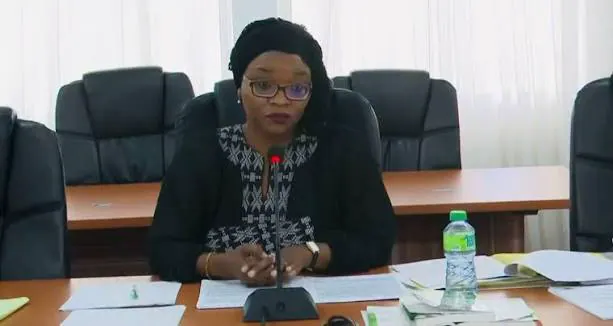
The Senegalese National Assembly's commission of inquiry began hearings on October 5, 2026, regarding the 'One Student, One Computer' program. Mame Penda BA, Director of Financing for Higher Education Institutions, was the first to testify. She revealed that despite the program involving the purchase of 25,000 computers, no contracts were found. BA stated that she took the initiative to investigate the program upon her installation and discovered that it had never been formalized with a contract binding the stakeholders.
BA's testimony highlighted the lack of transparency in the program, with no contracts available even among the parties involved. She mentioned approaching the payment manager, Monsieur NDIAYE, who also did not have a copy of the contracts. BA's search extended to the General Directorate and the Secretariat General, but no one had any information or copies of the contracts. The only documents she found were three that she mentioned, indicating a significant gap in the program's documentation.
The program, which has been criticized for several months, involves commitments estimated at 48 billion FCFA. BA's investigation revealed that the coordinator of the market passation cell, M. Mountaga DIA, was unaware of the program's details. DIA had been in his position since at least 2021 and had never been involved in any procedure related to this market. This lack of information raises concerns about the program's management and oversight.
The 'One Student, One Computer' program has several unresolved issues. There are 13 bank accounts and sub-accounts, whereas only three were mentioned in a procès-verbal. A 2 billion FCFA guarantee fund was placed at Ecobank, and over 1,700 allocations remain unpaid. Additionally, many computers are immobilized at the Port of Dakar, further complicating the program's implementation.
BA's testimony emphasized the extent of her investigation, which included searching through various levels of authority. Despite her efforts, she was unable to find any contracts or substantial documentation for the program. Her findings suggest a significant lack of transparency and accountability in the management of the 'One Student, One Computer' program.
The Senegalese National Assembly's commission of inquiry aims to shed light on the discrepancies and challenges within the program. With the involvement of multiple stakeholders and the substantial financial commitments, understanding the program's shortcomings is crucial. The commission's investigation will likely continue to uncover more details about the program's management and the reasons behind its current state.
As the investigation continues, it is clear that the 'One Student, One Computer' program faces significant challenges. The lack of contracts and transparency raises questions about the program's effectiveness and the use of public funds. The National Assembly's findings will be crucial in determining the future of the program and ensuring that students receive the resources they need.
Key points
- The 'One Student, One Computer' program in Senegal lacks contracts for the purchase of 25,000 computers.
- The program involves financial commitments estimated at 48 billion FCFA.
- The investigation revealed a significant lack of transparency and accountability in the program's management.