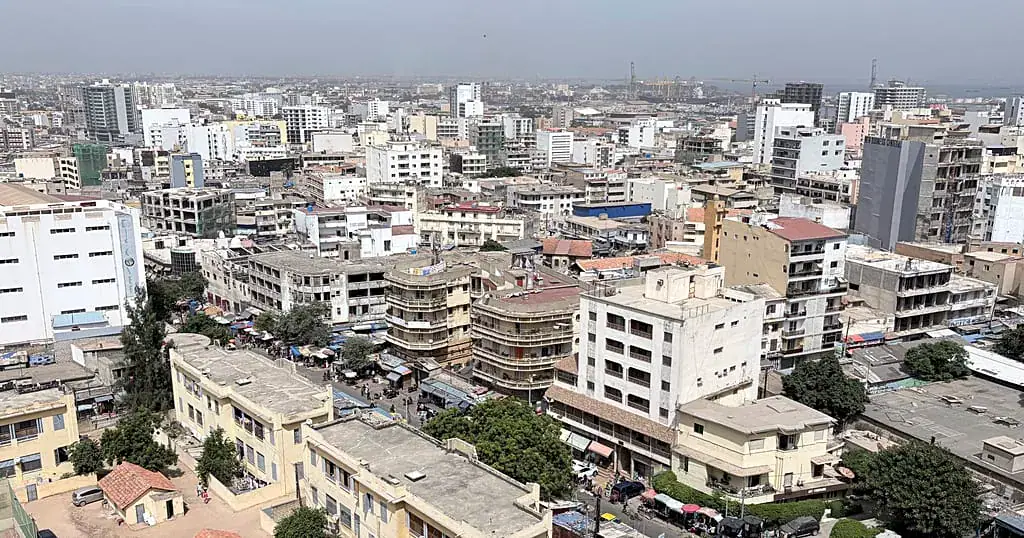
Senegal is set to host the Dakar Youth Olympics, the first Olympic event in Africa, with approximately 2,700 athletes competing in Dakar and nearby cities. The Games, which run through November 13, have generated excitement, but for many residents, the enthusiasm is overshadowed by rising living costs and economic hardships. The event offers young people opportunities through a learning academy and volunteer program, but many young Senegalese are focused on a more immediate challenge: earning barely enough to get by as frustration grows over the country's worsening cost-of-living crisis.
Mamadou Wadji, a shoemaker in Dakar's working-class Medina neighborhood, was evicted from his family's shop in September to make way for a stadium expansion for the 2026 Youth Olympics. Wadji and other artisans were relocated to an unfinished school behind a neighborhood market. He expressed concerns that the general population, especially those in the informal sector, have not benefited from the preparations for the Games. Wadji's situation highlights the impact of the Olympic preparations on the livelihoods of some residents.
The Dakar Youth Olympics have significant financial backing, with the Senegalese government committing 36 billion CFA francs ($60 million) to organizing the Games. This includes 11.3 billion CFA francs ($19 million) for renovations of sports venues. However, Senegal's debt crisis has left little money to help families facing rising costs. Many residents question whether the funds spent on the Games could have been used to address more pressing needs, such as lowering the cost of living or boosting the purchasing power of the average citizen.
Youth unemployment in Senegal stands at about 23%, with most of those who do have a job working in the informal sector. Around 75% of Senegal's population is under 35, according to the country's national statistics agency. Momar Assane Diouf, a 33-year-old entrepreneur, juggles several jobs to support his family and believes Olympic spending could do more to help ordinary Senegalese people. He thinks the funds could have been better spent on addressing the cost-of-living crisis.
Diouf's sentiments are shared by many young Senegalese who are struggling to make ends meet. The cost-of-living crisis has become a pressing concern, with rising costs of basic necessities such as food and housing. The situation has led to growing frustration among the population, with some questioning the priorities of the government. The Olympic Games, which are expected to bring international attention to Senegal, have also raised concerns about the displacement of residents and the impact on local businesses.
The Senegalese government and Olympic officials say the event offers young people opportunities through a learning academy and volunteer program. However, for many residents, the benefits of the Games are not yet clear. The government's commitment to spending 36 billion CFA francs ($60 million) on the Games has raised questions about the allocation of resources. Some argue that the funds could have been used to address more pressing needs, such as poverty and unemployment.
As the Dakar Youth Olympics approach their conclusion on November 13, the focus will be on the athletes competing and the impact of the Games on the host country. While the event has generated excitement, it has also highlighted the challenges facing many Senegalese residents. The government's priorities and the allocation of resources will continue to be debated, with many calling for more attention to be paid to addressing the cost-of-living crisis and supporting the informal sector.
Key points
- The Senegalese government has committed 36 billion CFA francs ($60 million) to organizing the Games.
- Youth unemployment in Senegal stands at about 23%, with most of those who do have a job working in the informal sector.
- Around 75% of Senegal's population is under 35, according to the country's national statistics agency.