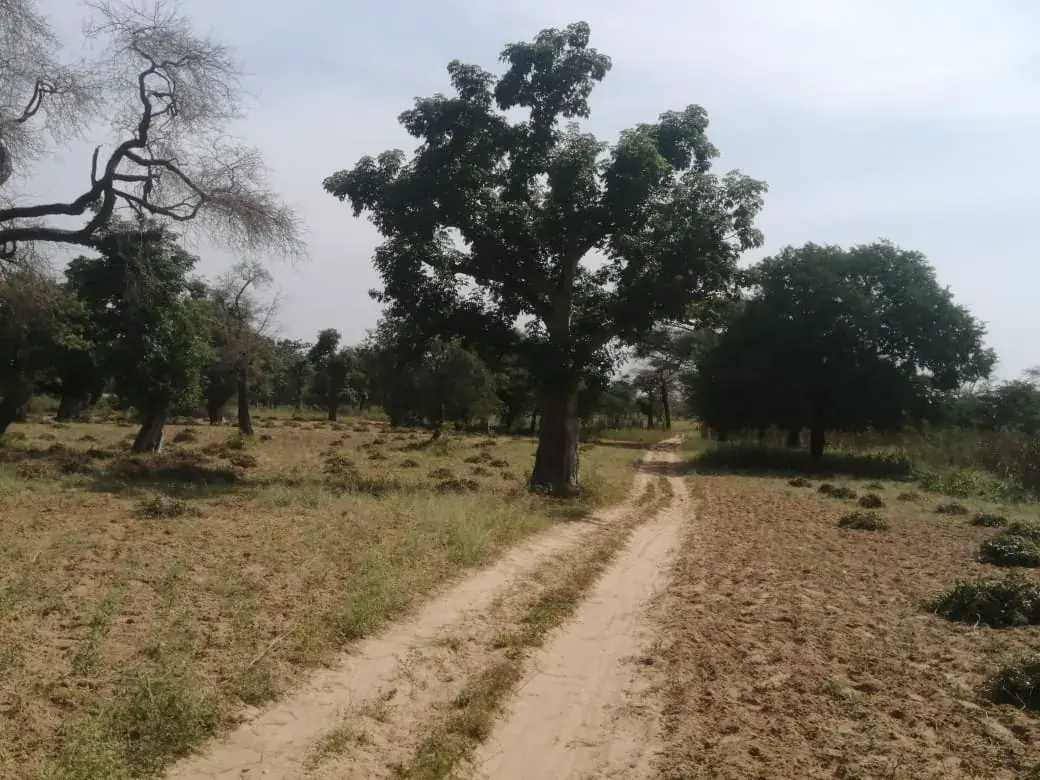
Nguiguis, a village in the commune of Mérina Dakhar, Senegal, has a rich history dating back to the Cayor kingdom. The village was once the seat of the National Assembly of the Damels of Cayor, where advisors of Lat-Dior would convene. Today, Nguiguis is a modern town with a population of approximately 4,000 people, comprising seven hamlets. The village is home to a centuries-old baobab tree named "Guy Lat-Dior" and a tamarind tree, which are significant historical landmarks.
The village's history is deeply connected to Lat-Dior, a prominent Damel of Cayor. According to tradition, Lat-Dior attached a talisman to a pigeon, which flew over several areas before landing in Nguiguis, signifying the village's importance. The village's name is derived from this event. Aymérou Gningue, former mayor of Mérina Dakhar, highlights Nguiguis' significance as a strategic location where the Damels' advisors would meet to defend the kingdom.
For centuries, Nguiguis was a sacred and closed site, reserved for those with royal connections. However, with the introduction of modern amenities, the village has opened up to the outside world. The installation of a water network by Baye Khoye Loum and the construction of a grand borehole for irrigation have improved living conditions. Additionally, the village now has electricity and a connecting road to the national highway.
The modernization of Nguiguis has led to a significant reduction in rural exodus. Instead, people from urban areas, such as Dakar and Thiès, are now requesting plots of land in the village. Lamane Diop, the village chief, attributes this trend to the improved living conditions and access to basic services. However, the village still requires additional infrastructure, including mini-solar boreholes and a reinforced healthcare structure.
Efforts to preserve Nguiguis' historical significance and promote cultural tourism are underway. Aymérou Gningue emphasizes the importance of preserving the village's heritage and developing cultural tourism. Mouhamadou Wade, former sub-prefect of Mérina Dakhar, shares this view, highlighting the region's potential for religious and cultural tourism due to its historical figures and sites.
The rehabilitation of the Ngaye-Thilmakha road is expected to boost tourism in the area. The region's rich history, including its connection to Cheikh Ahmadou Bamba and Seydi El Hadji Malick Sy, provides a solid foundation for cultural tourism. As Nguiguis continues to evolve, it balances its historical significance with modern development.
The transformation of Nguiguis serves as a model for other villages in Senegal. By preserving its heritage and investing in modern infrastructure, Nguiguis is poised to become a hub for cultural tourism, promoting the country's rich history and cultural diversity. The village's journey from a sacred site to a modern hub is a testament to the power of balanced development and preservation.
Key points
- Nguiguis village has transformed from a sacred royal site to a modern town with access to water, electricity, and roads.
- The village aims to develop cultural tourism while preserving its historical significance.
- The rehabilitation of the Ngaye-Thilmakha road is expected to boost tourism in the area.