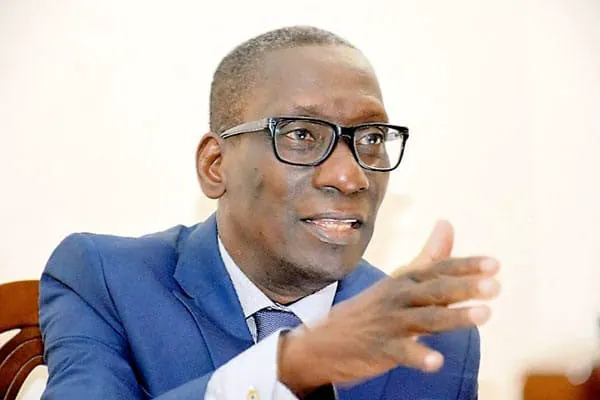
The recent public debate in Senegal has centered around the notions of nationalism, sovereignty, and xenophobia, with various individuals contributing to the discussion. Mamadou Diop, in his article, highlights the importance of understanding these concepts in the context of Senegal's history and contemporary realities. He emphasizes that the country's primary wealth lies not in its natural resources, but in its peace and internal stability, which are essential for sustainable development.
Diop notes that the concepts of nationalism, sovereignty, and xenophobia are often used as slogans without being thoroughly discussed or clarified. Xenophobia, in particular, is defined as a posture of hostility, fear, or rejection of foreigners, cultural differences, or nationalities. However, Diop argues that Senegalese people have historically been tolerant and welcoming, with no significant cultural or religious differences that would lead to fear or hostility towards one another.
The phenomenon of globalization has led to a multidimensional crisis, giving rise to extreme right-wing political currents that thrive on social contradictions. Diop stresses that it is essential to distinguish between xenophobia and other issues, as confusing them can lead to avoidable problems. When xenophobia becomes a part of public debate, it not only threatens foreign communities but also undermines national cohesion, relationships with neighboring countries, and the foundations of democratic society.
To understand these complexities, Diop suggests examining Senegal's history, particularly the evolution of its borders. The current borders separating West African states were not always in place, and prior to colonization, vast political empires existed in the region, including the Ghana, Mali, and Songhai empires. These empires organized spaces for trade, commerce, and relations between diverse populations, long before the colonial era.
During the colonial period, the French West African Federation (AOF) was established in 1895, comprising several territories, including Senegal, Mauritania, and others. The AOF was a vast administrative entity governed by a governor-general, with Dakar as its capital. For many Africans, these colonial borders held little significance, and they continued to interact and trade across the region without restriction.
The legacy of colonialism has had a lasting impact on Senegal and its relationships with neighboring countries. Diop cites examples of individuals who have held positions in multiple countries, highlighting the artificial nature of the borders. He also references the work of historians, such as Joseph Ki-Zerbo, who have emphasized the need to understand the complexities of African history and its impact on contemporary society.
Key points
- The concepts of nationalism, sovereignty, and xenophobia must be understood in the context of Senegal's history and contemporary realities.
- Xenophobia threatens not only foreign communities but also national cohesion and relationships with neighboring countries.
- Understanding Senegal's history, particularly the evolution of its borders, is essential for grasping the complexities of nationalism, sovereignty, and xenophobia.