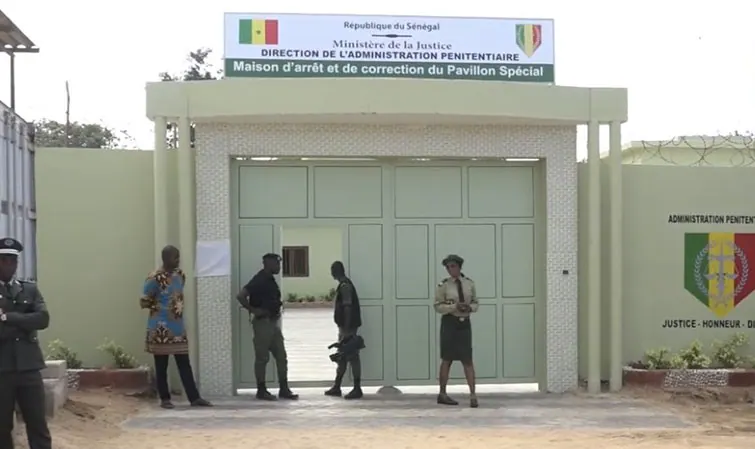
On September 30, 2026, the Senegalese National Assembly unanimously adopted a bill aimed at improving healthcare in prisons. The bill, numbered 39/2026, seeks to establish a normative framework to guarantee equitable access to healthcare for individuals deprived of their liberty. The adoption took place in the presence of Health and Public Hygiene Minister Ibrahima Sy. This development comes amid significant pressure on penitentiary establishments and their healthcare services.
According to the 2025 annual report of the National Observatory of Places of Detention (ONLPL), there were 15,462 people detained in Senegal as of the last week of December 2025. The report highlights that 6,493 detainees were in Dakar's penitentiary establishments. Four Dakar-based establishments studied by the ONLPL housed 5,139 detainees, with an average overcrowding rate of 233.5%. This overcrowding affects the provision of medical care, with many facilities facing significant challenges.
The ONLPL's report reveals that healthcare services in prisons are frequently visited by detainees. For instance, the infirmary in Tambacounda receives around 60 sick detainees daily, while the Camp pénal de Liberté VI receives between 30 and 40 patients daily. Similarly, establishments in Rufisque, Foundiougne, and Tivaouane report around 30 patients per day. However, many of these facilities have limited medical personnel, often fewer than three agents.
The material conditions of healthcare facilities in prisons also pose significant challenges. The ONLPL notes that some healthcare premises are cramped, and in certain prisons, the healthcare room also serves as an observation room. This situation has been observed in Tivaouane and Rufisque. Furthermore, hygiene and sanitation conditions are a concern, with difficulties related to access to water and the state of sanitary installations.
The ONLPL's report also highlights issues related to disciplinary detention conditions. In four establishments, the observatory found a 60% non-compliance rate with five studied indicators. The report notes insufficiently ventilated cells, difficulties related to water and hygiene, and inadequate medical follow-up. Detainees in disciplinary cells can spend 22 hours or more isolated.
The adoption of the bill is seen as a step towards better regulation of healthcare in prisons. Deputies emphasized the need to guarantee detainees healthcare that aligns with human dignity and fundamental rights. The bill aligns with Senegal's international and regional commitments, including the UN's Mandela Rules and the African Charter on Human and Peoples' Rights.
The bill establishes fundamental principles and guarantees applicable to healthcare in prisons. The organization of services, staffing, and equipment will be determined by competent authorities. The adoption of the bill comes as data highlights the dual challenge of prison overcrowding and the capacity of penitentiary healthcare structures to respond to significant demand in sometimes difficult material conditions.
Key points
- The Senegalese National Assembly has adopted a bill to improve healthcare in prisons, aiming to guarantee equitable access to healthcare for detainees.
- The bill aligns with Senegal's international and regional commitments, including the UN's Mandela Rules and the African Charter on Human and Peoples' Rights.
- The adoption of the bill is a step towards addressing the challenges of prison overcrowding and the capacity of penitentiary healthcare structures.