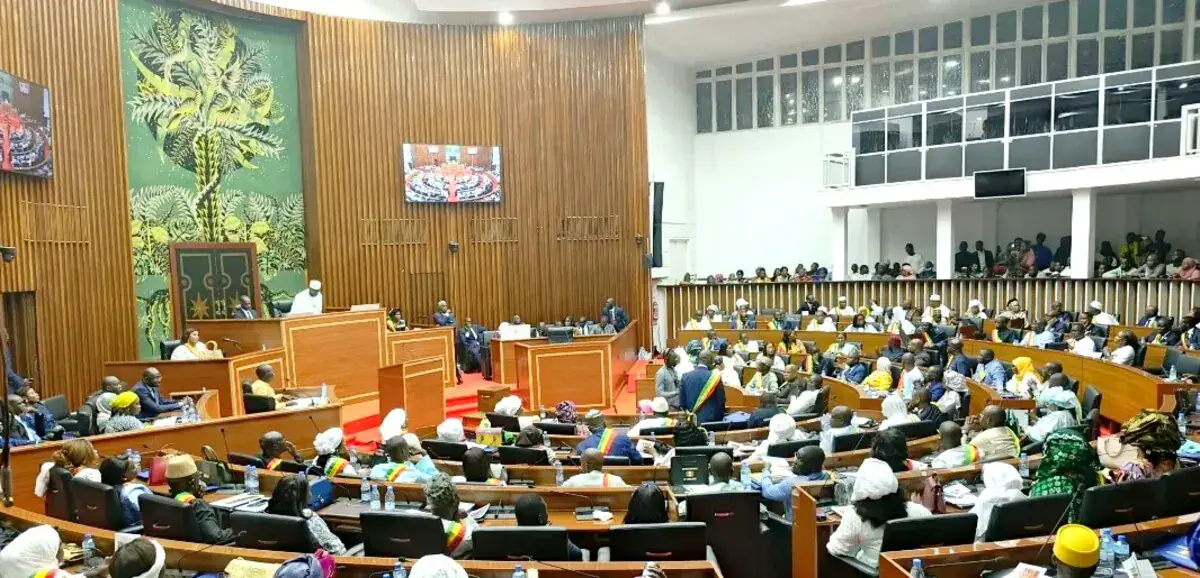
The Senegalese National Assembly rejected the government's 2026 budget revision on Tuesday, marking a significant setback for the administration. The budget revision was deemed essential for addressing the country's substantial debt and stabilizing its economy. The rejection occurred during a plenary session presided over by El Malick Ndiaye, who announced that "the project of law is rejected."
This rejection marks the second time the budget revision has been rejected by the parliamentary majority, which is dominated by the opposition. The budget revision had previously been rejected twice in committee in October. The government's efforts to pass the budget revision are crucial, as Senegal engages in negotiations with the International Monetary Fund (IMF) for financial support.
The budget revision was seen as a critical step in Senegal's efforts to restore its public finances, amid significant debt and financial difficulties. The country's negotiations with the IMF are a major concern for the authorities, who must reestablish the trust of financial partners and stabilize the economic situation.
The rejection of the budget revision opens a new period of political and budgetary uncertainty for the government. The administration had presented the budget revision as a key element in its efforts to address the country's financial challenges. The opposition's majority in the National Assembly has been a significant hurdle for the government's legislative agenda.
The Senegalese government faces significant challenges in addressing the country's debt and financial difficulties. The rejection of the budget revision is a setback for the administration, which had hoped to secure IMF support. The government's efforts to stabilize the economy and restore public finances will likely face continued opposition from the parliamentary majority.
The IMF negotiations are a critical issue for the Senegalese authorities, who must demonstrate their commitment to fiscal discipline and economic reform. The rejection of the budget revision may complicate these negotiations, which are aimed at securing financial support for the country.
The Senegalese government's efforts to address the country's financial challenges will likely continue to face significant hurdles. The rejection of the budget revision is a setback for the administration, which must now regroup and develop a new strategy for addressing the country's debt and financial difficulties.
Key points
- The Senegalese National Assembly's rejection of the 2026 budget revision is a significant setback for the government.
- The rejection marks the second time the budget revision has been rejected by the parliamentary majority.
- The government's efforts to secure IMF support and stabilize the economy will likely face continued opposition from the parliamentary majority.