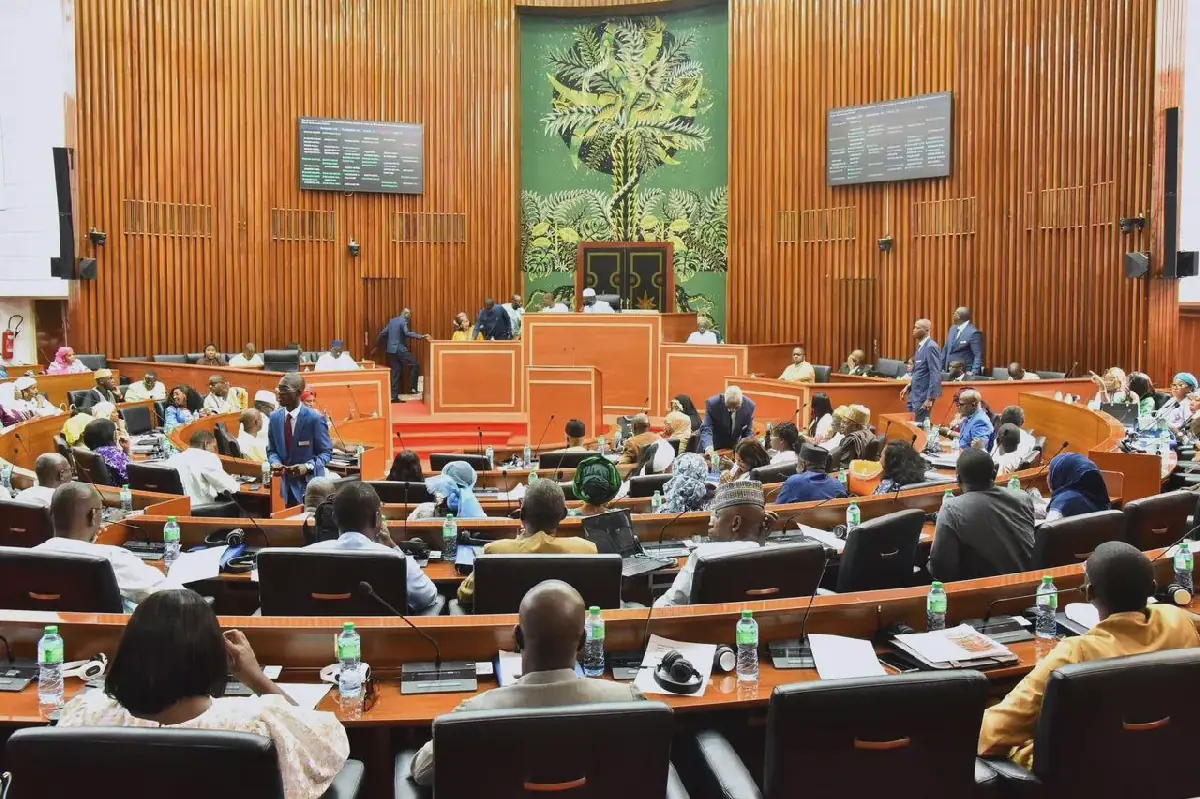
The National Assembly of Senegal is set to continue examining the implications of the rejected 2026 supplementary finance law. An intercommission comprising members of the Finance and Budget Control Committee and the Committee on Laws, Decentralization, Labor, and Human Rights has been convened for a meeting on Tuesday, November 24, 2026, at 10 am. The meeting will take place in the Marie Joséphine Diallo room within the new National Assembly building.
The intercommission will review a resolution proposal related to decree n° 2026-2416, issued on November 19, 2026. This decree concerns the implementation of the rejected law n° 40/2026 on the 2026 supplementary finance law and the responsibilities arising from its execution. The meeting aims to allow the two committees to discuss the implications of this decision and the responsibilities tied to the application of the decree.
The National Assembly initially rejected the 2026 supplementary finance law. Since then, the government has taken steps to ensure the continued functioning of the state through the decree. The intercommission's review of the resolution proposal will likely focus on the legitimacy and potential consequences of the government's actions.
The intercommission meeting is a crucial step in the ongoing process surrounding the 2026 supplementary finance law. The Finance and Budget Control Committee, as well as the Committee on Laws, Decentralization, Labor, and Human Rights, play essential roles in scrutinizing the government's financial decisions. Their joint examination of the resolution proposal will help determine the next course of action.
The decree in question allows for the implementation of certain provisions of the rejected law. However, the legitimacy of this approach may be questioned by some lawmakers. As a result, the intercommission's discussion will likely center on the balance between the government's need to ensure state continuity and the National Assembly's role in approving or rejecting key financial decisions.
The meeting's outcome may have significant implications for Senegal's financial governance. A thorough examination of the resolution proposal will enable the intercommission to provide recommendations on the matter. These recommendations may influence the government's future actions regarding the 2026 supplementary finance law and similar financial decisions.
The National Assembly's proceedings are closely watched by the Senegalese public, who expect transparency and accountability in the country's financial management. As the intercommission reviews the resolution proposal, lawmakers will need to balance competing interests and priorities. Ultimately, their decision will contribute to shaping Senegal's economic and financial landscape.
Key points
- The intercommission will review a resolution proposal related to the decree implementing the rejected 2026 supplementary finance law.