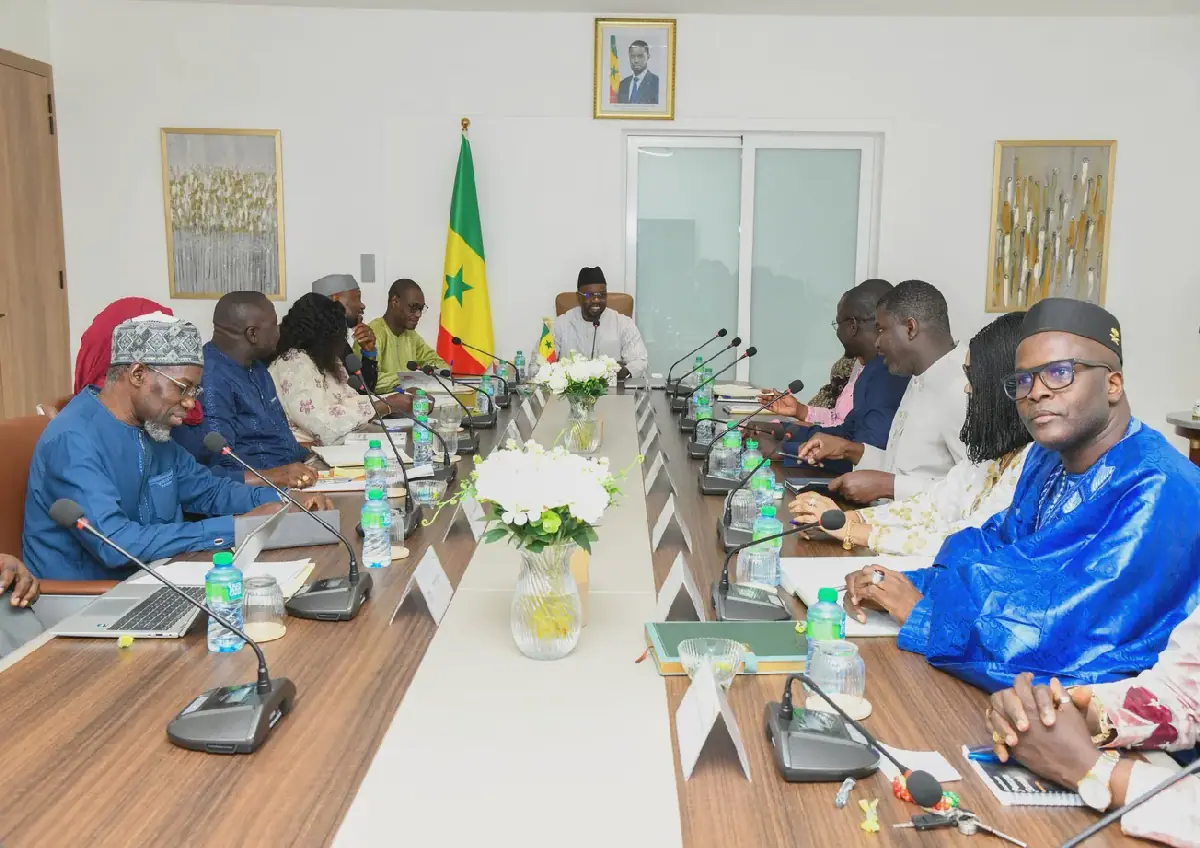
The Senegalese National Assembly Bureau, led by Ousmane Sonko, has adopted four resolutions to establish parliamentary inquiry commissions. These commissions will investigate several significant financial matters and public programs. According to the Assembly's communiqué, the investigations will focus on the management of Senegal's public debt from 2012 to 2026, the mobilization and execution of financing for public projects by Banco Santander, the Decennial Flood Management Program and a sanitation project for 10 cities, and the management of special funds by the Prime Minister's office, the High Council of Territorial Collectivities, and the Economic, Social and Environmental Council from 2004 to 2026.
The adopted resolutions were submitted to the National Assembly president, who will forward them to the Minister of Justice. The Minister is required to provide an opinion within 15 days on potential interferences with ongoing judicial procedures related to the same facts. This step is in accordance with Article 54 of the unicameral Parliament's internal regulations. Additionally, the National Assembly Bureau examined and adopted the General Administrative Regulation, which outlines the functioning of parliamentary services in the event of the Assembly's dissolution.
This development occurs amid heightened tensions between the executive and legislative branches of the Senegalese government. Ousmane Sonko, in a video address to his supporters, emphasized the need for a resolution in the current political impasse. He suggested that either he or President Bassirou Diomaye Faye should step down, or the National Assembly should be dissolved. Sonko stated that if he had the authority, he would dissolve the Assembly on December 2, marking the second anniversary of the legislature's installation.
The relationship between President Bassirou Diomaye Faye and Ousmane Sonko has been strained since Sonko's dismissal as Prime Minister in May 2026. Their tensions were further highlighted by the recent rejection of the 2026 supplementary finance bill by parliament, its subsequent implementation by presidential decree, and the vote by deputies to require the decree's withdrawal. These events underscore the deepening crisis between the executive and legislative branches.
The four proposed inquiry commissions aim to scrutinize critical areas, including public debt management, the involvement of Banco Santander in public projects, and the implementation of significant public programs. These investigations may reveal insights into the financial and administrative practices of the Senegalese government and its entities. The commissions' findings could have implications for the country's governance and accountability.
Ousmane Sonko's statement on the potential dissolution of the National Assembly has heightened speculation about the country's political future. According to the Constitution, the President can dissolve the Parliament and call for early legislative elections within 60 to 90 days after the Assembly's dissolution. This scenario could lead to significant changes in Senegal's political landscape.
The Senegalese government's institutional crisis has been escalating, with the rejection of key legislation and the use of presidential decrees to bypass parliamentary approval. The establishment of parliamentary inquiry commissions is a move to assert the legislative body's oversight role. The outcome of these investigations and the potential dissolution of the National Assembly will likely have far-reaching consequences for Senegal's democracy and governance.
Key points
- The National Assembly Bureau adopted four resolutions to create parliamentary inquiry commissions on public debt, public projects, and special funds management.
- The investigations are a response to heightened tensions between the executive and legislative branches.
- The potential dissolution of the National Assembly has been suggested as a possible resolution to the current political crisis.