From September 9 to 15, Senegal's Minister of Urbanism, Construction, Territories, and Aménagement (MUCTAT), Moussa Bala Fofana, led a mission to Milan, Lille, and Paris. The mission aimed to attract private capital into the country's urban and real estate sectors. During the week-long trip, the MUCTAT delegation met with investors, industrialists, financiers, researchers, and members of the diaspora.
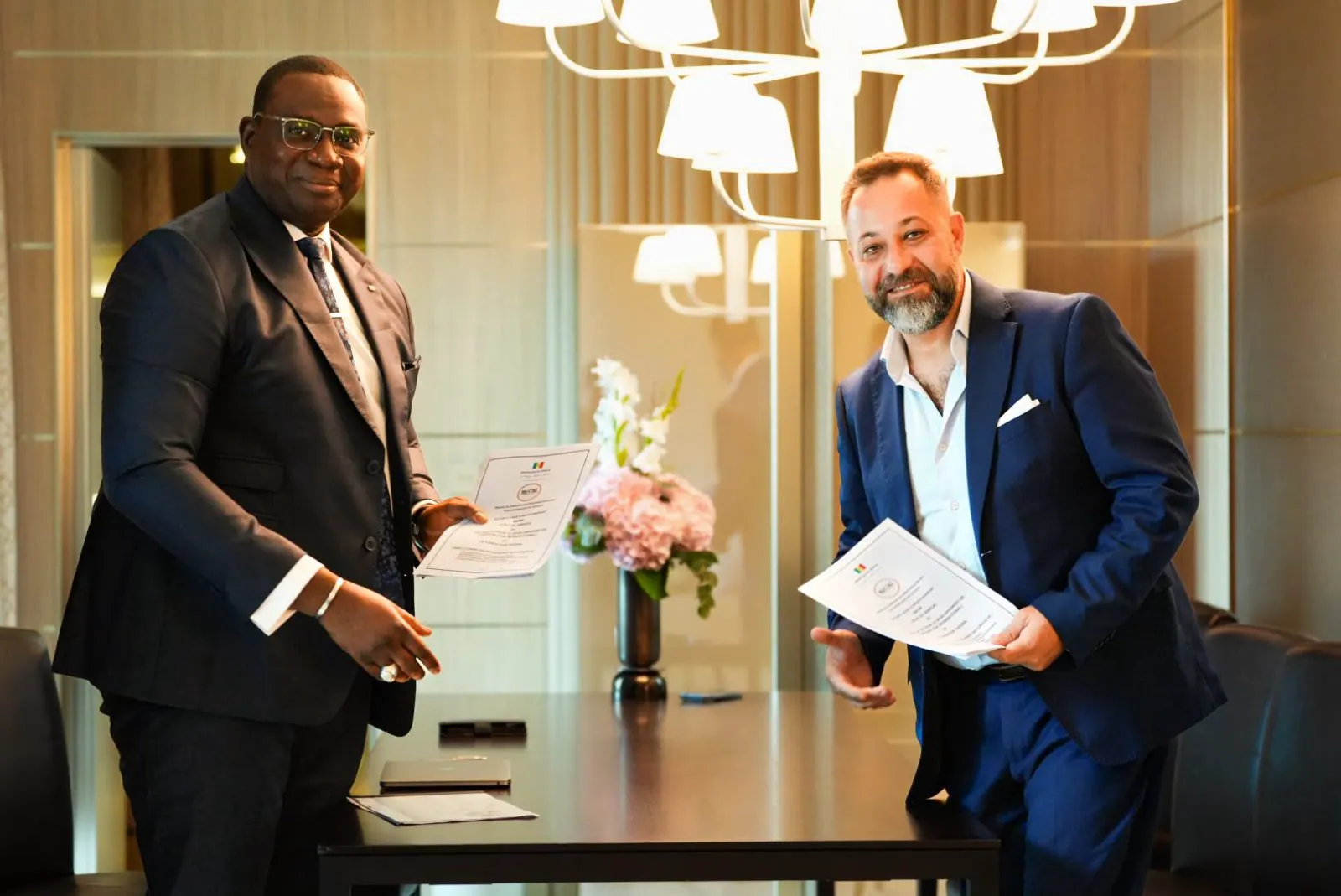
A significant outcome of the mission was the signing of a 3.5 billion euro investment agreement between MUCTAT, Groupe IDA International, and Fondation THESAN in Milan. This seven-year agreement, valued at approximately 2,300 billion FCFA, marks a substantial commitment to Senegal's urban development. A pilot project worth 50 million euros is set to be activated immediately, with Sicilian construction and materials companies expressing interest in entering the Senegalese market.
To entice investors, the Senegalese government is offering 35,000 hectares of land, including 15,000 hectares for industrial zones and 20,000 hectares for housing. The government also plans to implement a pre-financing model for internal roads and drainage (VRD). Additionally, a digital platform for accessing housing, which has already garnered over 300,000 applicants, is slated for official launch in October during the SENHABITAT forum.
The strategy for attracting investment is based on eight territorial poles, including rice in Casamance, salt in Kaolack, agro-industry in Diamniadio, and livestock in Matam. A ninth, virtual pole is dedicated to the diaspora. On September 14, the delegation met with representatives from Auchan in Villeneuve-d'Ascq, discussing urban renewal and new cities.
In Paris, the focus was on the Thiès eco-neighborhood project, involving Groupe Alpha, Build Africa, Manergy, and the NGE-TSO-SADE consortium. Spanning 1,600 hectares, the project includes an initial phase of 2,000 homes. The goal is to move away from the traditional "dormitory town" model. Innovations include the use of local mortar "Teranga" and a cold network and treated wastewater reuse.
For Dakar, the ministry envisions densification, renaturation, and reconstruction of degraded areas. A pilot project in Colobane involves constructing "suspended buildings" above roads to free up land and reorganize commerce. The pre-financing of VRD for Thiès is estimated at 50 to 100 billion FCFA, based on the "buyer-payer" principle.
The mission concluded with a tight schedule: selecting a financial partner between September and October 2026, finalizing the setup by December, and starting the first phase of the Thiès eco-neighborhood in January 2027. The overall objective is to deliver 110,000 homes, with investors being sought in Europe, the United States, and China.
Key points
- The MUCTAT mission secured a 3.5 billion euro investment agreement for Senegal's urban development.
- The Thiès eco-neighborhood project aims to deliver 2,000 homes in its first phase.
- Senegal's government is offering 35,000 hectares of land to attract investors.