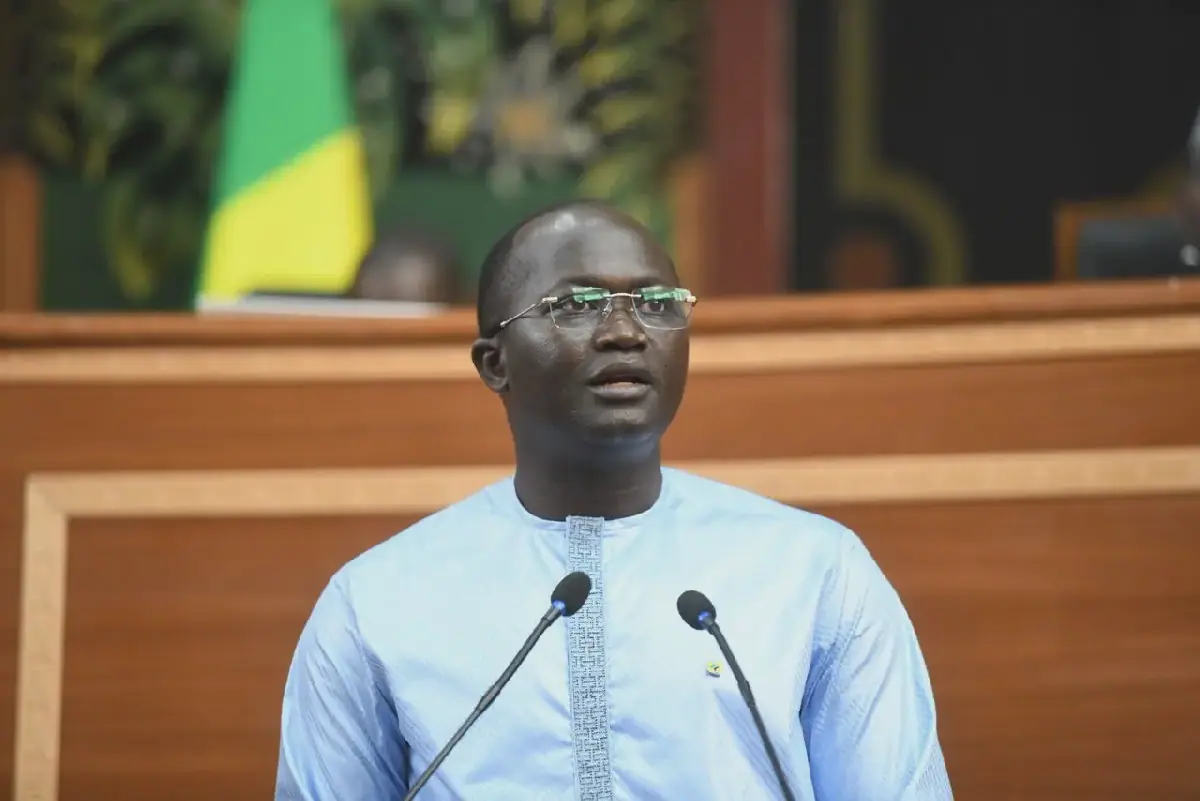
Senegal's Minister of Armed Forces, Yankhoba Diémé, has publicly criticized the parliamentary majority for rejecting the 2026 rectified finance law, citing that they are prioritizing political calculations over the general interest. According to Diémé, some lawmakers are blocking projects that were previously requested, such as the Émile-Badiane bridge and the Ziguinchor level 3 hospital, in an attempt to undermine President Bassirou Diomaye Faye's administration.
The Émile-Badiane bridge is set to receive 5 billion CFA francs for reinforcement work, while the Ziguinchor hospital has been allocated 95 billion CFA francs. Diémé argues that these investments should not be rejected simply because they may bring recognition to the President. He also mentioned other measures included in the rectified finance law, such as energy subsidies and doubled family allowances, which he believes are essential for the population's well-being.
Yankhoba Diémé emphasized that politics is about managing the nation for the happiness of its citizens. He stated that President Bassirou Diomaye Faye, having been elected by the Senegalese people, should work for the benefit of all citizens, not just a specific political group. Diémé described the rejection of the rectified finance law as an institutional blockage, which was voted on without examining its content on November 3.
The minister justified the President's decision to decree the law on November 19, invoking Article 68 of the Constitution. This move allowed the law to come into effect, despite the parliamentary majority's rejection. Diémé expressed concern about the consequences of this confrontation on the functioning of the state, citing the rejection of credits for the ministries of Armed Forces and Interior.
Yankhoba Diémé stressed that the budget is essential for the functioning of the Republic, describing it as the "car fuel." He assured that the President will take necessary measures to ensure the continuity of institutions, education, healthcare, and security. While he did not comment on potential future actions for the 2027 finance law, he emphasized the importance of preserving the nation's well-being.
Diémé also questioned the argument of budget insincerity raised by the deputies, stating that a budget is a forecast and not an intangible document. He recalled that the rectified finance law was submitted on September 18, with the aim of adjusting predictions to actual revenues and expenditures.
The controversy surrounding the President's decision to decree the law has sparked debate, with some questioning its legality. Yankhoba Diémé referred those with concerns to the available legal recourse, choosing not to engage further on the matter.
Key points
- Minister Yankhoba Diémé accuses parliamentary majority of prioritizing political interests over national needs.
- Rejected 2026 rectified finance law included crucial projects and social measures.
- President Bassirou Diomaye Faye's administration seeks to ensure continuity of state functions amid institutional blockage.