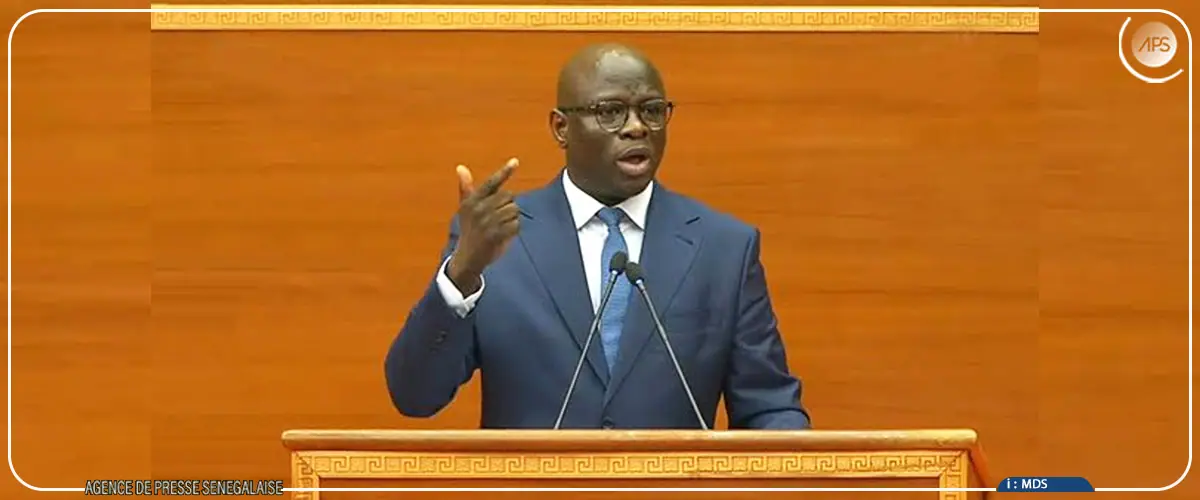
The debate over Senegal's 2026 budget rectification bill remains intense in the National Assembly. On November 3, Minister of Economy, Finance, and Planning Cheikh DIBA addressed parliamentarians who questioned the government's sincerity regarding the bill. He recalled the history of budget adjustments to demonstrate the Executive's good faith. DIBA firmly stated that the debate should not focus on budgetary sincerity.
Minister DIBA provided a timeline of recent finance laws to support his argument. In 2025, the Assembly voted on the initial finance law, and before December, a rectification law was presented. This, he claimed, was an example of addressing budgetary sincerity. He added that another rectification law was presented in December, just before the year's end. DIBA emphasized his commitment to transparency and dialogue with the National Assembly.
DIBA explained that he has always been open to revisiting initial projections and presenting modifications to get back on track. He described this as the essence of budgetary sincerity. According to him, the tools for achieving this are provided by the Organic Law on Budget Laws (LOLF) and the finance law. The minister expressed disappointment that some were using budgetary sincerity as a pretext to block the process.
The minister directly accused some deputies of using the budgetary sincerity argument to challenge the bill's objectives. He emphasized that the government is committed to its positions and believes the bill is essential for the country's economic survival. DIBA's statements reflect the government's stance on the importance of the 2026 budget rectification bill.
The tension between the government and parliamentarians highlights the challenges of budget planning in Senegal. The National Assembly's scrutiny of the bill reflects concerns about the country's economic management. The government's determination to push the bill through suggests that it sees it as crucial for Senegal's economic stability.
The debate over the 2026 budget rectification bill has significant implications for Senegal's economic policy. The bill aims to adjust the country's budget in response to changing economic conditions. The government's commitment to transparency and dialogue will be crucial in resolving the impasse with parliamentarians.
The outcome of the debate will be closely watched by economic observers and Senegalese citizens. The country's economic management has been under scrutiny in recent times, and the 2026 budget rectification bill is seen as a key test of the government's economic policies. Minister DIBA's defense of the bill reflects the government's determination to implement its economic agenda.
Key points
- The Senegalese government is pushing for the adoption of the 2026 budget rectification bill despite opposition from some parliamentarians.