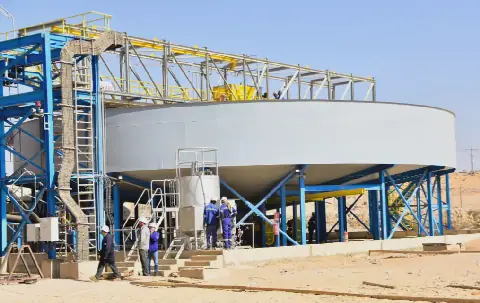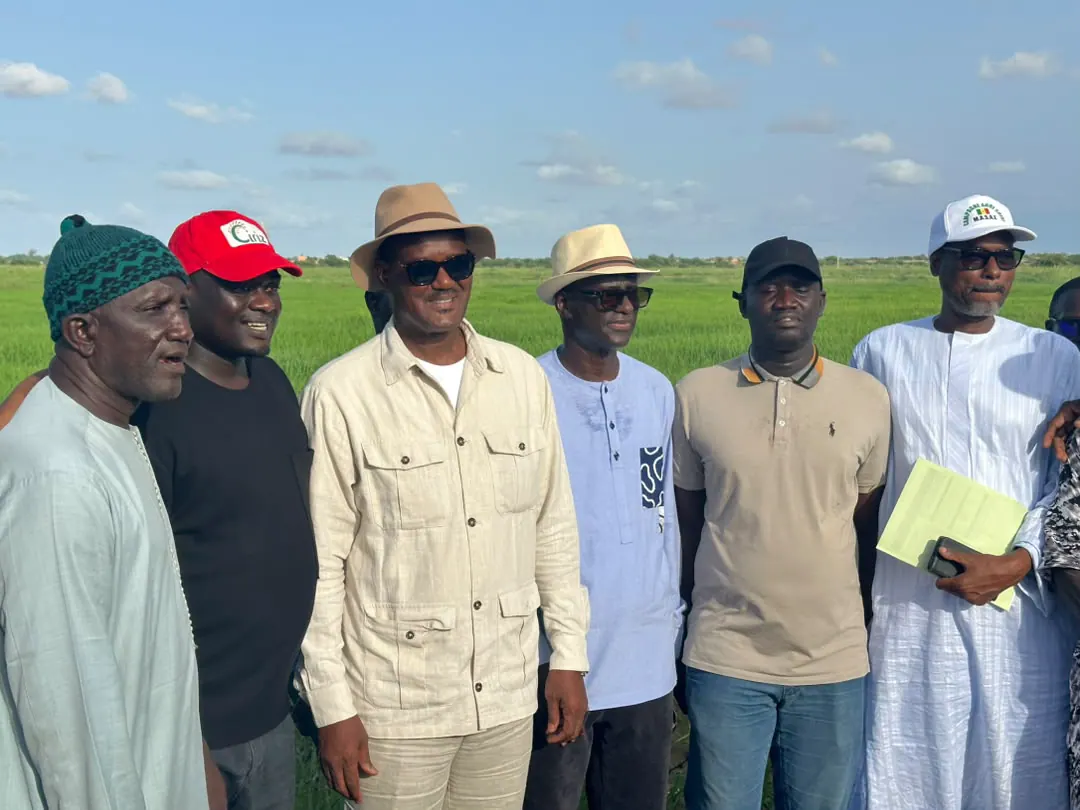
Dr. Cheikh Oumar Bâ, Senegal's Minister of Agriculture, Food Sovereignty, and Livestock, recently embarked on a tour to monitor the 2026 agricultural campaign in the northern region, starting with the Dagana department. His first stop was Ndiaye, where he visited a rice casier, the Agricultural Mechanization Center, and the SFA rice processing plant. These visits aimed to assess the state of the rainy season campaign and the challenges faced by actors in the Senegal River valley.
At the Ndiaye Union's rice casier, the minister interacted with producers and explored the Agricultural Mechanization Center, where mechanization was a key topic of discussion. The day concluded at the Société sénégalaise des filières alimentaires (SFA) rice processing plant, with representatives from the Interprofessional Rice Committee (CIRIZ), the National Rice Agency, and organizations of producers and transformers. The minister identified several challenges, including infrastructure development, drainage, mechanization, and energy costs.
The minister highlighted that electricity accounts for approximately 40% of production costs, making solarization a potential solution. Discussions primarily focused on the difficulties of marketing local rice. Alioune Diagne, president of the National Association of Rice Growers, reported that 42,000 tons of rice were in storage, with around 12,000 tons already removed. He requested that the government work with them to find lasting solutions.
Pape Sandiour Dièye, president of CIRIZ, called for the acceleration of stock removal to facilitate the flow of paddy held by producers. Mamadou Moustapha Mbodj, president of the Federation of Small Agricultural Transformation Units, sought better government support, particularly for access to subsidies and equipment modernization. Hassane Koffi, general director of SFA, emphasized the need for contracts with small producers, adapted financing, and market regulation, urging Senegalese to prioritize local rice.
Following the discussions, Dr. Cheikh Oumar Bâ announced continued consultations with CIRIZ and the National Rice Agency to examine problems and identify solutions. He stressed the importance of resolving issues on the spot, where possible. The minister's engagement with rice sector actors demonstrates the government's commitment to addressing their concerns and finding ways to improve the sector.
The challenges faced by the rice sector in Senegal are multifaceted, involving infrastructure, mechanization, energy costs, and marketing. The minister's visit and interactions with sector actors underscore the need for a comprehensive approach to address these issues. By working together, the government and sector stakeholders can develop effective solutions to enhance the competitiveness and sustainability of Senegal's rice sector.
The visit by Dr. Cheikh Oumar Bâ to Ndiaye highlights the government's focus on the agricultural sector, particularly rice, which is a critical crop for food security and economic development in Senegal. The minister's engagement with sector actors and commitment to finding solutions reflect a proactive approach to addressing the challenges faced by the rice sector.
Key points
- Dr. Cheikh Oumar Bâ identifies infrastructure development, mechanization, and energy costs as key challenges in Senegal's rice sector.