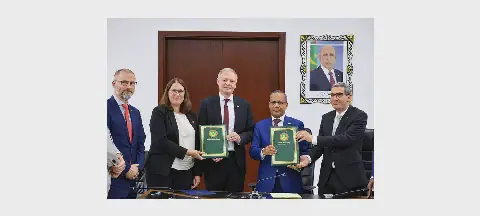
The Senegalese government has taken a significant step towards regulating the country's artisanal gold mining sector. On November 3, 2026, the Ministry of Mines and Geology and the Ministry of Armed Forces signed a two-year strategic partnership agreement. This alliance aims to structure, secure, and formalize artisanal gold mining, an activity that is crucial to the socio-economic and environmental dynamics of the region. The partnership is part of the government's efforts to address the challenges associated with informal mining.
Artisanal gold mining supports the livelihoods of over 31,000 people in Senegal's southeastern region, with the number of miners steadily increasing. However, the unregulated expansion of this activity has led to significant concerns. These include health and security risks due to precarious working conditions, infiltration of informal circuits, and increased security threats in border areas. Additionally, the environmental impact has been severe, with pollution of vital watercourses, such as the Falémé River, and accelerated soil degradation. The lack of formalization also results in lost revenue for the national treasury and local communities.
To address these challenges, the Senegalese government has set ambitious targets. By 2029, the aim is to formalize at least 50% of artisanal gold miners and establish 35 regulated mining corridors, with 10 pilot corridors. The government has identified the southeastern regions of Kédougou and Tambacounda as key areas for this initiative. The project involves significant investment and collaboration between the Ministry of Mines and Geology and the Ministry of Armed Forces.
A key component of this initiative is the involvement of the military in the establishment of secure mining corridors. The Génie militaire, a branch of the Senegalese Armed Forces, will oversee the development and demarcation of seven pilot corridors in Kédougou and Tambacounda regions. This project has been allocated a budget of 488,397,875 FCFA. Each pilot site will cover an area of 1 km² and will be equipped with enhanced security features, including galvanized wire fencing, concertina wire, and controlled access points.
The first phase of the project involves the development of three priority sites in the Kédougou region: Ngary, Kaviar Sekhoto, and other areas to be determined. The remaining sites, including Alinguel and Samba Yaye in Tambacounda, will be developed once cadastral and environmental studies are completed. This initiative not only aims to secure and formalize artisanal gold mining but also to provide miners with better working and living conditions.
A unique aspect of this project is its focus on social inclusivity and human-centered development. The regulated mining corridors will be equipped with basic infrastructure, including water points, solar electrification, dining areas, prayer rooms, and sanitary facilities. Additionally, integrated childcare facilities will be provided to support women miners who often work with their children. This approach seeks to improve the health, safety, and well-being of artisanal gold miners.
The partnership between the Senegalese military and the Ministry of Mines and Geology underscores the government's commitment to addressing the challenges of artisanal gold mining. By leveraging the expertise and capabilities of the military, the government aims to establish a more secure, formalized, and sustainable mining sector. This initiative is part of the broader strategic plan for the mining sector (2026-2029) and aligns with Senegal's Vision 2050.
Key points
- The Senegalese government has launched a two-year partnership between the Ministry of Mines and Geology and the Ministry of Armed Forces to regulate artisanal gold mining in the southeastern region.
- The initiative aims to formalize at least 50% of artisanal gold miners by 2029 and establish 35 regulated mining corridors.
- The project involves significant investment in infrastructure and security, with a focus on improving the working and living conditions of miners.