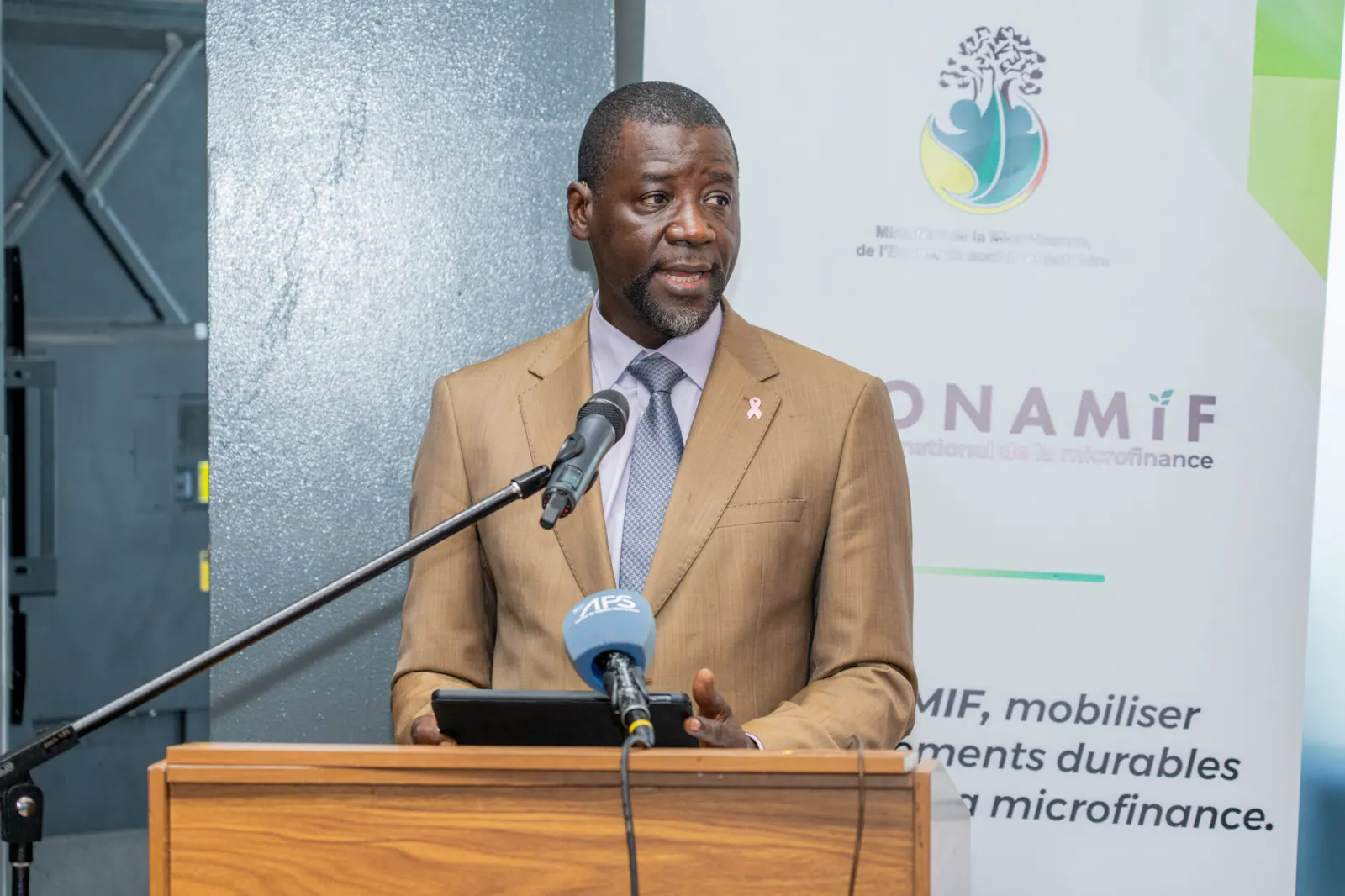
Senegal's Minister of Microfinance and Social and Solidarity Economy, Alioune Dione, has called for increased mobilization of sustainable financing for the microfinance sector. Speaking at the 30th session of the National Committee for Coordination of Microfinance Activities (CNC) in Dakar, Dione emphasized the importance of adapting financing to economic, social, and environmental challenges. The microfinance sector now plays a significant role in financial inclusion and financing of the Senegalese economy.
According to Dione, microfinance institutions in Senegal serve over 4.7 million members and clients. As of 2025, the sector's outstanding credits reached 849.9 billion CFA francs, compared to 634.7 billion CFA francs in savings. The sector's equity stands at 230.6 billion CFA francs. These figures position Senegal as the leader in microfinance within the West African Economic and Monetary Union (UEMOA), with 15.5% of the union's microfinance accounts.
Despite these achievements, Dione highlighted several challenges facing the sector, including non-performing loans, which account for 6% of outstanding credits, exceeding the 3% prudential norm. He also stressed the need for microfinance institutions to comply with the new regulatory framework introduced by Law No. 2025-04 of February 19, 2025, aimed at consolidating a more solid, transparent, and secure sector.
Dione cited the changing international financing environment, with reduced subsidies and lines of credit, and difficulties in accessing long-term resources, as major concerns. He encouraged microfinance institutions to diversify their funding sources and explore new instruments, such as green and climate finance, social and sustainable bonds, and partial portfolio guarantees.
The minister also recalled the government's main orientations for financial inclusion, as outlined in the Targeted Finance Strategy adopted in December 2024. The Pact for Universal Financial Inclusion (PACTIFU) aims to strengthen client protection, improve institutional governance, develop financial culture, and facilitate access to financing for productive activities, with a focus on agriculture, fishing, livestock, and local product processing.
Dione announced that nearly 12 billion CFA francs have already been mobilized under PACTIFU, and praised the contribution of the FONGIP and CDMP SA, a subsidiary of the Caisse des Dépôts et Consignations, which have provided guarantee and refinancing lines of over 3 billion CFA francs to microfinance institutions.
The minister called for better coordination among technical and financial partners, and invited them to work closely with public structures to ensure coherence with national priorities and avoid duplication. He also urged microfinance institution leaders to continue efforts in resource diversification, governance, portfolio management, and integration of environmental and social criteria.
Key points
- The Senegalese microfinance sector is seeking sustainable financing to address challenges and consolidate its gains.
- The sector serves over 4.7 million members and clients, with outstanding credits of 849.9 billion CFA francs as of 2025.
- The government has launched the Pact for Universal Financial Inclusion (PACTIFU) to strengthen financial inclusion and support the sector's development.