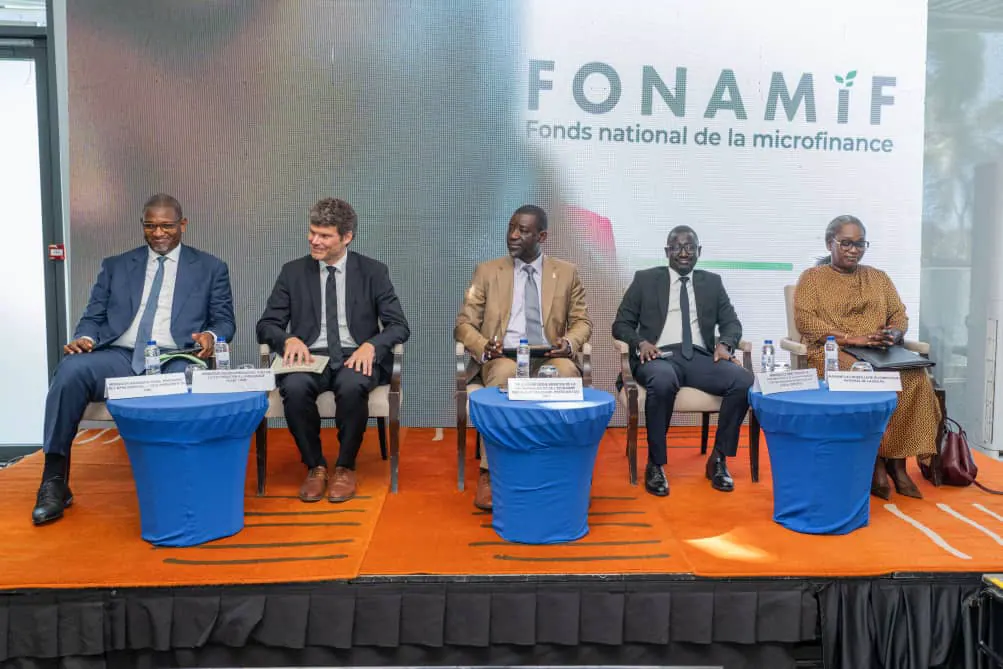
The 30th coordination session of Senegal's microfinance activities took place on October 1, 2026, in Dakar. The event was organized by the National Impulse Fund for Microfinance (Fonamif), the Association of Microfinance Institutions Professionals (Apim), and the German Cooperation (Giz). The session was presided over by Minister of Microfinance and Social and Solidarity Economy, Dr. Alioune Dione. The meeting brought together stakeholders to discuss the challenges of accessing sustainable financing.
Dr. Alioune Dione emphasized that microfinance is a pillar of financial inclusion and economic financing in Senegal. He cited impressive statistics, with microfinance institutions serving over 4.7 million members and clients, disbursing 849.9 billion FCFA in credits and collecting 634.7 billion FCFA in savings. The sector's performance ranks Senegal first in the UEMOA space with 15.5% of union accounts. However, Dr. Dione noted that the sector faces difficulties, including non-performing loans constituting 6.0% of credit stock, exceeding the 3% prudential norm.
The minister highlighted the need for sector actors to comply with regulations to establish a more solid, transparent, and secure sector. He noted that the global financial environment has changed, with subsidies and concessional credit lines dwindling, and access to long-term resources facing significant juridical constraints. Dr. Dione stressed that financial viability has become a condition for survival. He welcomed emerging instruments such as green and climate finance, social bonds, local refinancing, and partial portfolio guarantees.
The session's theme, "Microfinance facing sustainable financing challenges," aimed to secure stable, diversified, and adapted resources. Dr. Dione emphasized the need to balance social and financial inclusion missions with long-term economic viability while respecting environmental protection. The event provided a platform for stakeholders to discuss ways to address the challenges facing the microfinance sector.
The microfinance sector in Senegal has grown significantly, with 849.9 billion FCFA in credits disbursed and 634.7 billion FCFA in savings collected. However, the sector faces challenges, including non-performing loans and limited access to long-term resources. Dr. Dione emphasized the need for innovative financing solutions to support the sector's growth.
The German Cooperation (Giz) and other partners have been working with the Senegalese government to support the microfinance sector. The 30th coordination session provided an opportunity for stakeholders to discuss progress and challenges in the sector. The event aimed to promote sustainable financing solutions and enhance financial inclusion in Senegal.
The microfinance sector plays a vital role in Senegal's economy, providing financial services to millions of people. The sector's growth has contributed to the country's economic development, and efforts to promote sustainable financing solutions will be crucial to its continued success. The government and stakeholders must work together to address the challenges facing the sector and promote financial inclusion.
Key points
- The Senegalese microfinance sector emphasizes sustainable financing solutions to address challenges.
- The sector serves over 4.7 million members and clients, with 849.9 billion FCFA in credits disbursed.
- The government and stakeholders are working together to promote financial inclusion and sustainable financing solutions.