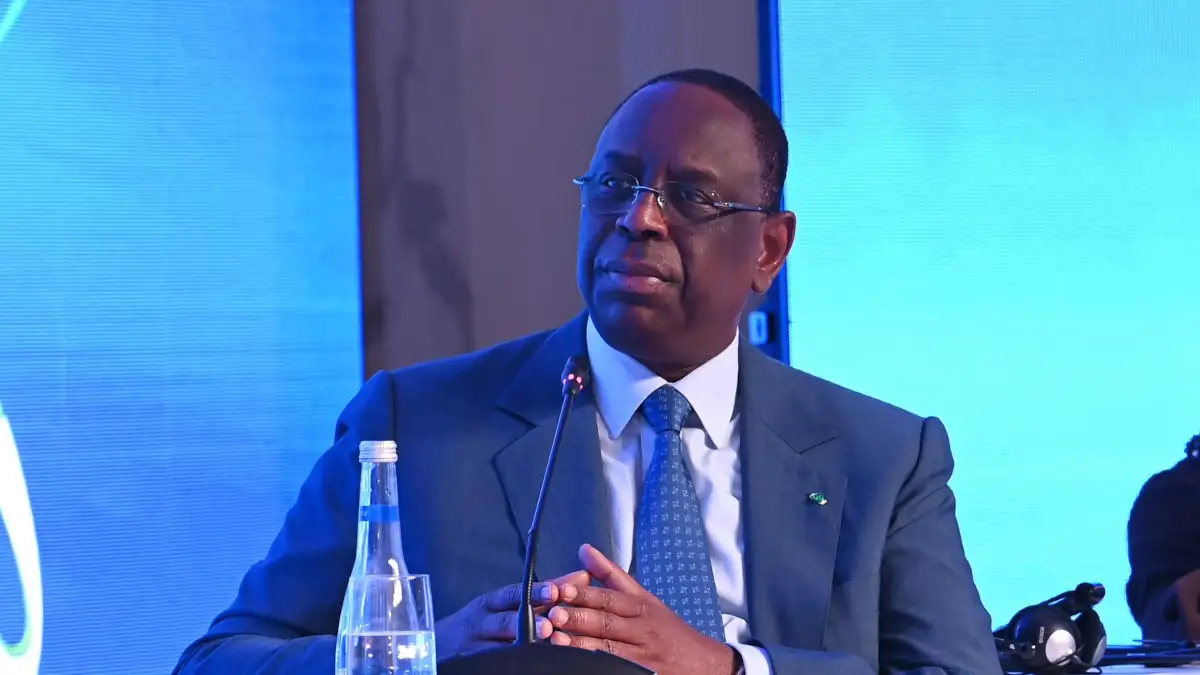
Former Senegalese President Macky Sall's bid to become the next UN Secretary-General has received a lukewarm response from the UN Security Council. In the latest indicative vote on September 29, Sall garnered only five favorable votes out of 15, with nine unfavorable votes and one abstention. This result is identical to the one obtained on September 18. The vote has raised questions about the impact of Sall's candidacy on his chances of succeeding current Secretary-General António Guterres.
The Senegalese government's support for Sall's candidacy, announced on July 20, has been seen as a significant development. However, it is worth noting that President Bassirou Diomaye Faye, Sall's successor, had initially expressed surprise at the candidacy, stating that he had not been informed or involved in the decision. Faye's government has since thrown its support behind Sall, with Faye himself calling on UN member states to back his predecessor's bid.
Sall's candidacy was initially presented by Burundi on March 2, with Senegal not joining the effort at the time. However, after a change in government in Senegal, Faye announced on July 20 that his country would support Sall's bid. The first indicative vote on July 30 gave Sall six favorable votes, seven unfavorable votes, and two abstentions, placing him fifth out of seven candidates.
To be recommended to the UN General Assembly, a candidate must receive at least nine favorable votes without a veto from a permanent member of the Security Council. The voting process is secret, making it impossible to know if the unfavorable votes came from the five permanent members. Despite the challenges, Faye has continued to express his support for Sall, stating that "who better than Macky Sall to defend Africa's place at the UN?"
The race for the UN Secretary-General position is dominated by other candidates, including Rebeca Grynspan of Costa Rica, who leads with 10 favorable votes, three unfavorable votes, and two abstentions. Carolyn Rodrigues-Birkett of Guyana and Rafael Grossi of Argentina each have eight favorable votes, while Olara Otunnu of Uganda, the second African candidate, has five favorable votes, tied with Sall.
The support expressed by Faye for Sall has not gone unnoticed on the domestic front. On September 25, three associations of victims of political violence from 2021 to 2024 expressed their "discomfort" and called for the memory of the victims not to be erased. The development highlights the complexities of Sall's candidacy and the challenges he faces in his bid to become the next UN Secretary-General.
The competition for the UN Secretary-General position remains fierce, with seven candidates still in the running following the withdrawal of Michelle Bachelet of Chile. Sall's candidacy will likely continue to face scrutiny as the selection process unfolds. The UN Security Council will continue to hold indicative votes to determine the most suitable candidate for the position.
Key points
- Macky Sall received only five favorable votes in the latest indicative vote for the UN Secretary-General position.
- Senegalese President Bassirou Diomaye Faye has expressed support for Sall's candidacy despite initial reservations.
- The competition for the UN Secretary-General position is dominated by candidates from other regions, with Rebeca Grynspan of Costa Rica leading the pack.