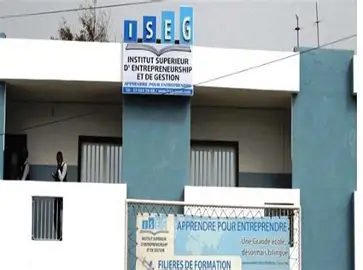
The Institut Supérieur d’Entrepreneurship et de Gestion (ISEG) in Senegal has publicly disputed its inclusion on a list of private higher education institutions not recognized by the Ministry of Higher Education, Research, and Innovation. In a recent statement, ISEG's administration asserted that it possesses all necessary authorizations to operate and refutes allegations that it has functioned outside the regulatory framework.
ISEG has been active in Senegal's private higher education sector for nearly four decades. According to the institution, it has received a definitive approval since 1996 and holds an accreditation from the ANAQ-Sup for distance learning, which it has practiced since 2008. This accreditation, the institution claims, validates its educational programs and operations.
The controversy also involves ISEG's multiple campuses located in various regions and suburbs of Senegal, established since 2010. The institution states that these campuses had obtained provisional approvals from the relevant authorities. ISEG further emphasizes that several of its licenses and master's programs had received approvals or accreditations from the CAMES until the 2020-2021 academic year.
In addition to its national accreditations, ISEG highlights its partnerships with European universities, particularly within the framework of the Erasmus Mundus and Erasmus Plus programs. These international collaborations, the institution suggests, enhance its academic credibility and standards. ISEG's dispute with the government centers on its perceived unfair inclusion on the blacklist.
ISEG's administration, led by Babacar NGOM, argues that being listed as an unrecognized institution damages its reputation and affects the interests of its faculty, staff, students, and alumni. In response, the institution has announced its decision to pursue legal action against the government's decision. ISEG is confident in its legal standing and is prepared to defend its rights in court.
Despite its decision to take legal action, ISEG expresses its willingness to continue dialogue with the authorities. The institution reaffirms its commitment to adhering to regulatory requirements and standards in higher education. ISEG seeks to resolve the dispute amicably while also protecting its institutional integrity and credibility.
The dispute between ISEG and the Senegalese government highlights the complexities of regulating private higher education institutions. ISEG's case underscores the need for clear communication and transparent processes in the accreditation and recognition of educational institutions. The outcome of ISEG's legal challenge and its implications for the higher education sector in Senegal remain to be seen.
Key points
- ISEG disputes Senegal gov't recognition decision
- Institution cites necessary authorizations, long history
- ISEG to pursue legal action, dialogue with authorities