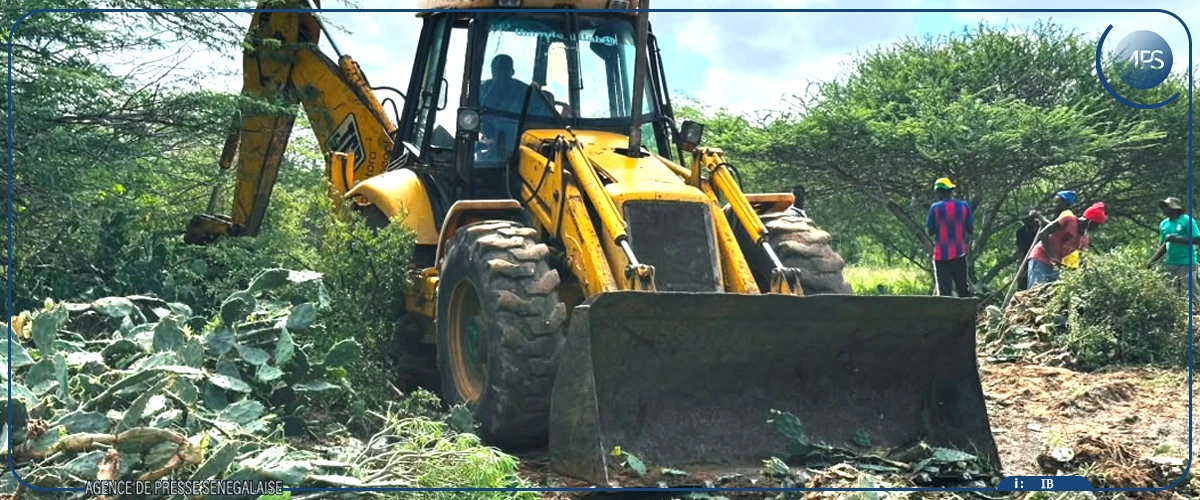
The Guembeul Special Fauna Reserve in Senegal has initiated a cactus removal operation to restore degraded ecosystems. Located near Saint-Louis, the reserve has been battling the invasive cactus, also known as "garga mbossé" in Wolof, for two decades. The cactus was introduced to repair a faulty perimeter fence but has since spread, occupying at least 13% of the savanicole ecosystems.
The removal effort, which began several years ago, has evolved to include both mechanical and manual techniques. The reserve's conservator, Captain Oumar Kane, stated that local communities are being mobilized to participate in the operation. The initiative is supported by partners such as the COPEJ project, Bioparc, and the Senegal River Delta Transboundary Biosphere Reserve project.
The COPEJ project, implemented by the Cégep de la Gaspésie et des Îles du Sénégal, has provided technical and financial support for the operation. The project's local agent, Djibril Sangaré, emphasized the need to restore and reclaim lost space. The removal effort not only has an ecological impact but also provides income opportunities for local communities.
The operation involves mobilizing local youth and community members, who are paid 5,000 CFA francs per day. The workdays run from 8 am to 1 pm, with a break in between. Captain Kane noted that 70% of the funds allocated for the operation go towards paying workers' daily wages.
The cactus removal initiative also aims to explore ways to valorize the plant. Captain Kane revealed that thousands of tons of cactus are buried in the reserve each year. The COPEJ project is working on transforming the cactus into biogas, which can help reduce greenhouse gas emissions and combat climate change.
Additionally, the cactus can be converted into animal feed and compost, which can benefit local farmers and gardeners. Captain Kane stated that resource persons have been identified nationwide to strengthen community capacities for cactus valorization. The initiative is expected to have a positive impact on the environment and local communities.
The Guembeul reserve, covering 720 hectares, is entirely fenced and home to various species, including the patas monkey. The cactus removal effort is a significant step towards preserving the reserve's ecosystem and promoting sustainable development. Local communities have welcomed the initiative, which provides them with income-generating opportunities.
Key points
- The Guembeul Special Fauna Reserve has launched a cactus removal operation to restore degraded ecosystems and explore ways to valorize the invasive plant.
- The initiative is supported by partners such as the COPEJ project, Bioparc, and the Senegal River Delta Transboundary Biosphere Reserve project.
- The operation not only has an ecological impact but also provides income opportunities for local communities.